




Here is how much time you should spend at least each day with your dog, and above all, how to spend it to ensure true development for the animal. Dr Pierre Fabing, emergency veterinarian, gives us his advice.
It’s no secret that dogs are social animals that need companionship to thrive. Descendants of wolves who live in packs, our four-legged best friends are not made for a solitary life and can therefore be very unhappy when they lack interaction and contact with their beloved master. But all dog owners know: with the pace imposed by active life, it’s not easy to spend a lot of time with your dog during the day. But after how long does loneliness become burdensome for a dog? How much time do you have to spend with him for him to be truly satisfied?
After reading everything and its opposite among the recommendations on the web, we asked Dr Pierre Fabing the question. The emergency veterinarian tells us that it is more a question of quality than quantity: “It’s not because we telework all day with our dog that we are there for him. The fact that we are there reassures the dog but that is not enough.” If there is no immutable rule, the veterinarian still recommends passing “an active hour with your pet” at least per day, and ideally between an hour and a half and two hours. A time which can of course be split into several moments during the day.
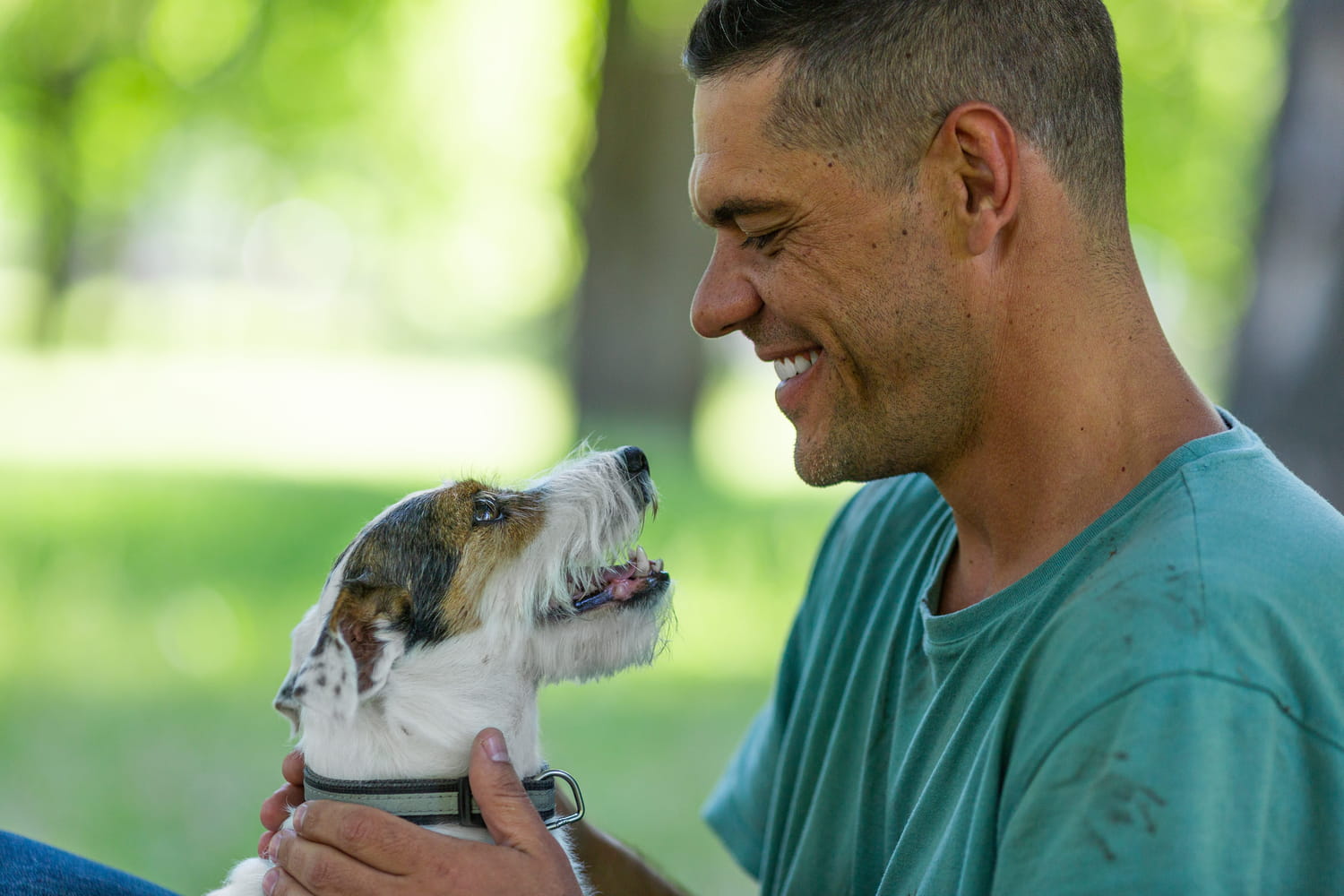
So, it’s not just about being present, but also about paying real attention to your dog. “That is to say, we spend an hour taking care of him, playing, talking. What I struggle against is the passive walk where we are on our phone.” It is therefore better to have a short but stimulating walk, giving orders to your dog, playing with him, cuddling him, showing him a new route, rather than a long walk where you don’t really take care of him. Pierre Fabing is categorical: “Thirty active minutes will be more qualitative than eight hours next to him without interacting.” Besides, the walk is not just about doing its business or expending its energy, your dog really wants your company.
A dog who has access to a large garden all day will always need to share quality time with his owner. “It’s like a golden prison, he’s not stimulated. I’m not saying you can’t let your dog go out alone, but that doesn’t replace real time together.” According to the veterinarian, the dog “starts to feel a little worse after six or seven hours of solitude”. But with working days, which generally exceed this duration, the practice is more nuanced. Pierre Fabing reassures us as follows: “It’s not because you are absent from 9 a.m. to 6 p.m. that you are a bad owner. But in this case, you will have to increase the time spent with the dog a little in the morning and evening.” Because the risk facing a companion who feels alone is that he develops behavioral problems such as destruction, compulsive barking, even episodes of depression or even certain forms of self-mutilation.
And what about our other friends, the cats? If they are indeed more independent and more solitary than dogs, they too need daily interactions with their master to be balanced and fulfilled. Pierre Fabing specifies that “the durations are much more divided and the time required for discussion is less. We spend fifteen to twenty minutes per day. For example, three times five minutes is perfect.” But here again, we’re talking about quality time, with games that stimulate their hunting instincts, and cuddles to strengthen the emotional bond. “They still need a presence every day”reminds the veterinarian.