





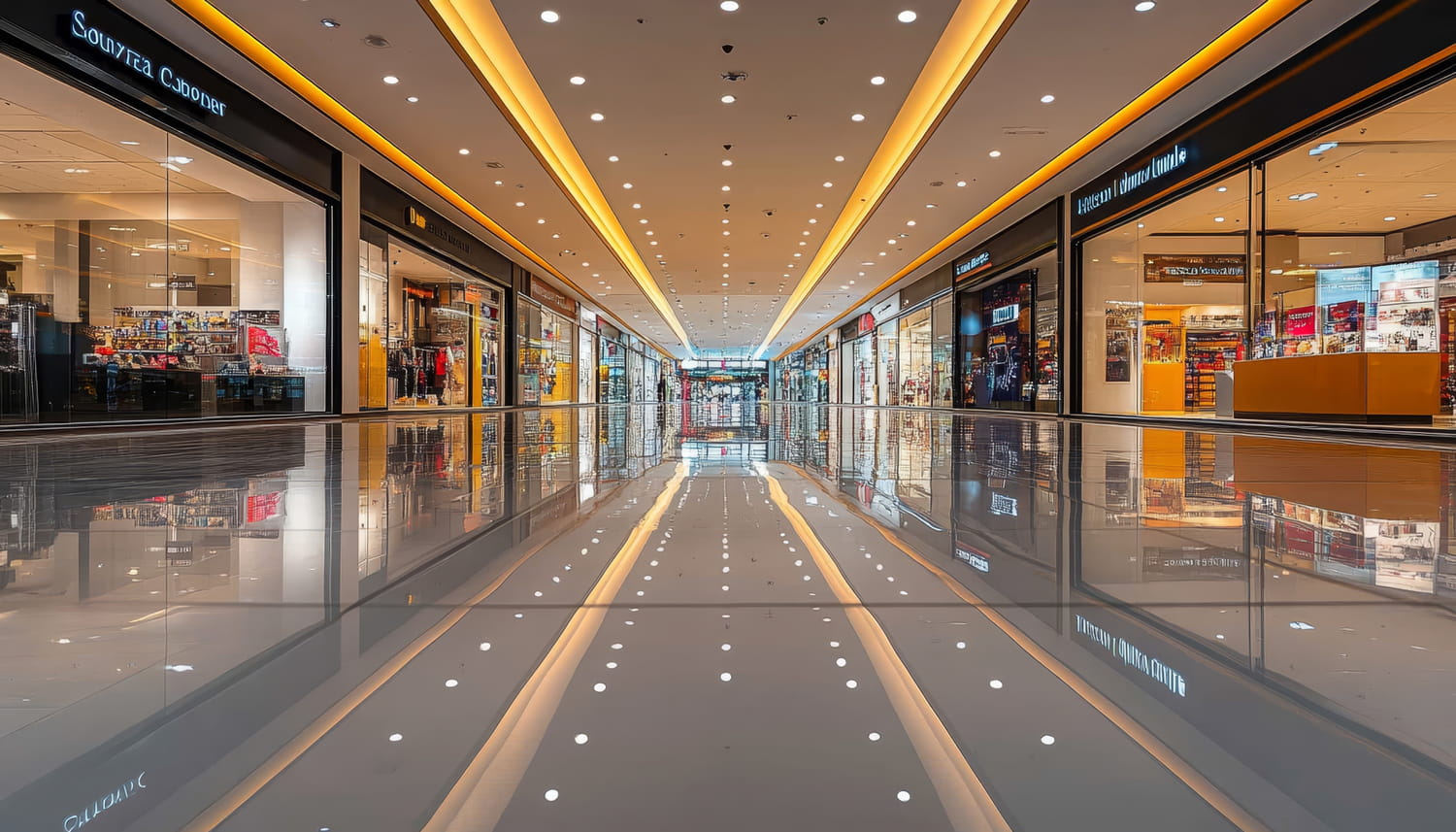
Once bursting at the seams, this cult shopping center on the outskirts of Paris is living out its final months in chilling silence before its definitive closure.
There isn’t much time left to see it as we knew it. On the outskirts of Paris, this icon of mass distribution continues to impose its steel and glass silhouette on the urban landscape. The countdown is on for this benchmark shopping center, long a pillar of Ile-de-France retail. Behind its monumental glass roof, its suspended walkways and its futuristic design, it housed a dense offering of major brands, supermarkets, fashion, leisure and home equipment. Generations of consumers have filled their shopping carts, hunted for promotions and rediscovered the standards of intensive shopping, in a setting that has become familiar.
Designed by Renzo Piano and inaugurated in 1990, this shopping center of nearly 36,000 m² embodied the golden age of peripheral department stores and scripted shopping. The routes were designed as a permanent parade, where we passed from one window to another, from the ready-to-wear departments to the aisles of the hypermarket. Consumer brands like Zara, Sephora, or the food locomotive Carrefour have long participated in this commercial excitement. But time has done its work: fewer visitors, closed shops, lowered iron curtains… The place has taken on this strange appearance of an “undead” shopping complex, suspended between its past as a temple of consumption and an already planned future.
Its name, Bercy 2, evokes an entire era: that of supermarkets and XXL regional shopping centers, designed for automobiles and weekend shopping trips where everything was found under the same roof, from household appliances to clothing. Located in Charenton-le-Pont, on the border of the 12th arrondissement of Paris, it is today at the heart of a vast urban project, the ZAC Charenton-Bercy, which must transform this strategic sector into a new district combining housing, offices, local shops and green spaces. After the declaration of public utility obtained in 2025, demolition is planned between 2027 and 2028, before a gradual transformation of the site in the 2030s.
For an entire generation, this shopping center is also an album of memories. Saturday trips with friends, the first jeans bought in fashion boutiques without parents, snack breaks after the cinema, bags brandished like trophies. In the 1990s and 2000s, people came here as if they were going to a futuristic department store, with the impression of entering a separate world, punctuated by neon lights, pop music and ever-changing windows.
This calendar gives an almost emotional dimension to his disappearance. Because with Bercy 2, an emblematic urban silhouette will disappear, like a fashion house closing a historic flagship store. The model is changing: end of large isolated temples, room for lively streets, integrated businesses, a more fluid city closer to daily uses.