





This segment of vintage clothing is growing faster than second hand itself.
On the clothing side, if second hand goods reach new heights without ever plateauing (+127% in 2026 according to World Economic Forum), there is a sector which seems to grow stronger than the others, regardless of temporality. It constantly generates income for its sellers and its success depends neither on current trends, nor on the seasons, nor on the vagaries of the weather. The proof is: it has risen to the heart of all digital conversations, with an increase of 475% in 3 years in France alone. However, fashion fans don’t spontaneously think of it when we talk to them about vintage… except parents. You will have understood, it is about children’s fashion.
Eloïse, Vintie for 10 years, sells both adult and children’s clothing on the Baltic platform. She sees this enthusiasm even on a small scale: “Among everything I sell, it’s only my daughter’s clothes that go.” The young mother has been buying and selling since the birth of the little girl.
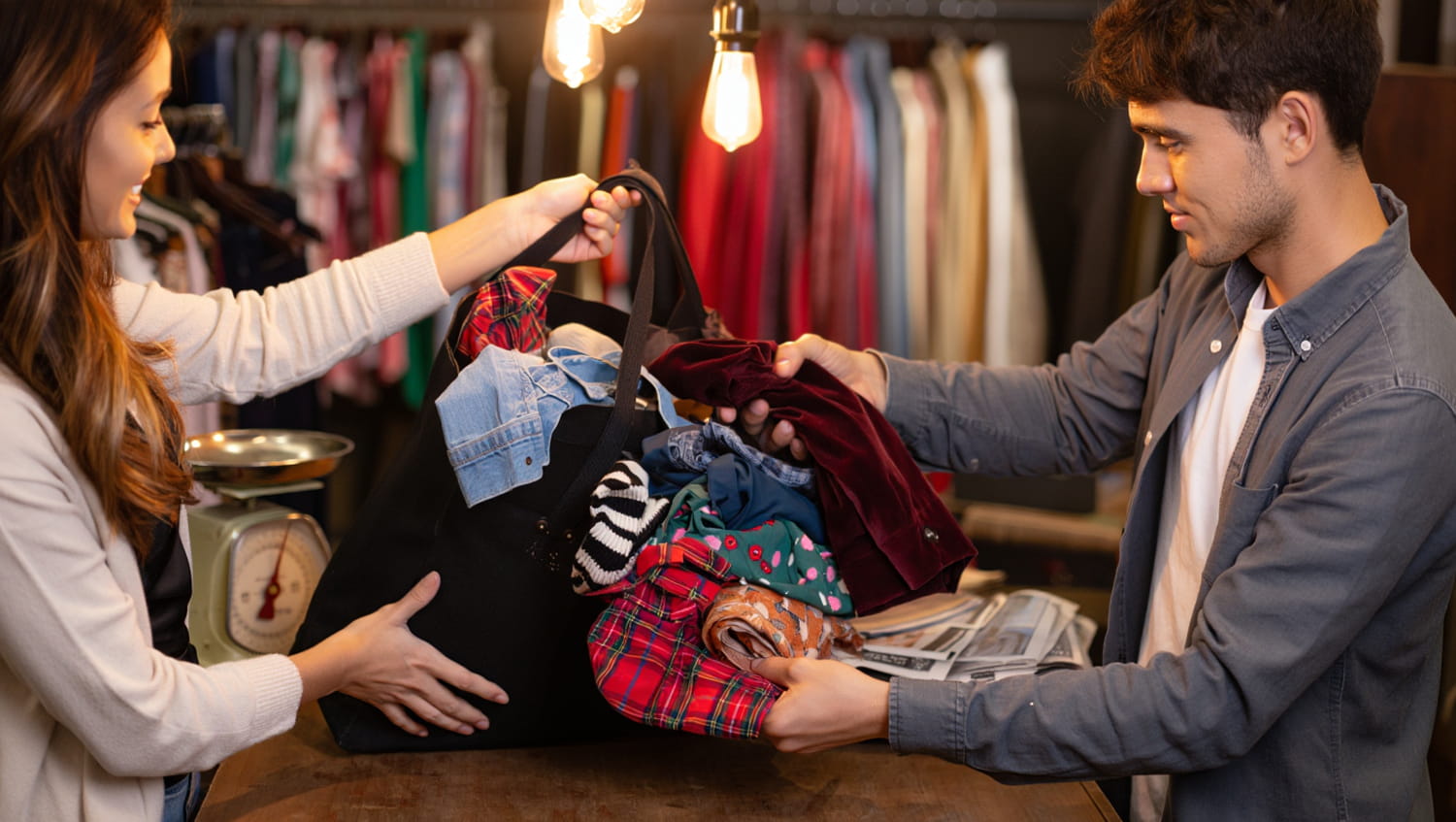
Like all parents, it was for financial reasons that she had to do it. “I turned to second hand as a child because the price of new clothes is much too expensive.” Today, she almost only buys through this channel: “In terms of distribution, I estimate that second-hand clothes represent 80% of my consumption and new clothes, 20%.” Flea markets, rural homes, resale platforms, resource centers: Eloïse does not lack resources, it goes without saying.
“I then resell the clothes that no longer fit my daughter on these platforms, which allows me to recover money and buy other clothes adapted to her size.” Another point highlighted by Eloïse, and which explains the immense success of the vintage kids market. Affected by an even more ephemeral nature than women’s or men’s fashion, children’s textiles must deal with the growth of said kids. A piece of clothing therefore has a shorter lifespan than for adults: “As children grow up quickly, money is thrown out the window,” regrets Eloise. “You buy clothes for €30-50 for only one or two uses, it’s not profitable.” Hence his preference for vintage, which allows him to find pieces for barely €2.
A practice that bears so much fruit that it conquers even the most skeptical. Today won over, Eloïse was yesterday one of the cautious ones: “At first, I wasn’t super excited about second hand as a child. Then when I started buying to prepare for the arrival of my daughter, I saw the prices and I quickly got cold feet.”
Sensing the right vein, ready-to-wear brands like Small Boat or even Kiabi began offering their own second-hand clothing service. Obviously, the world of second-hand children goes well beyond rags: toys, childcare equipment… everything can be resold. But that’s a story that other specialists will tell you.