


Beyond individual files, which specialties record the best admission rates on Parcoursup? Official figures from last year highlight very variable results from one profile to another.
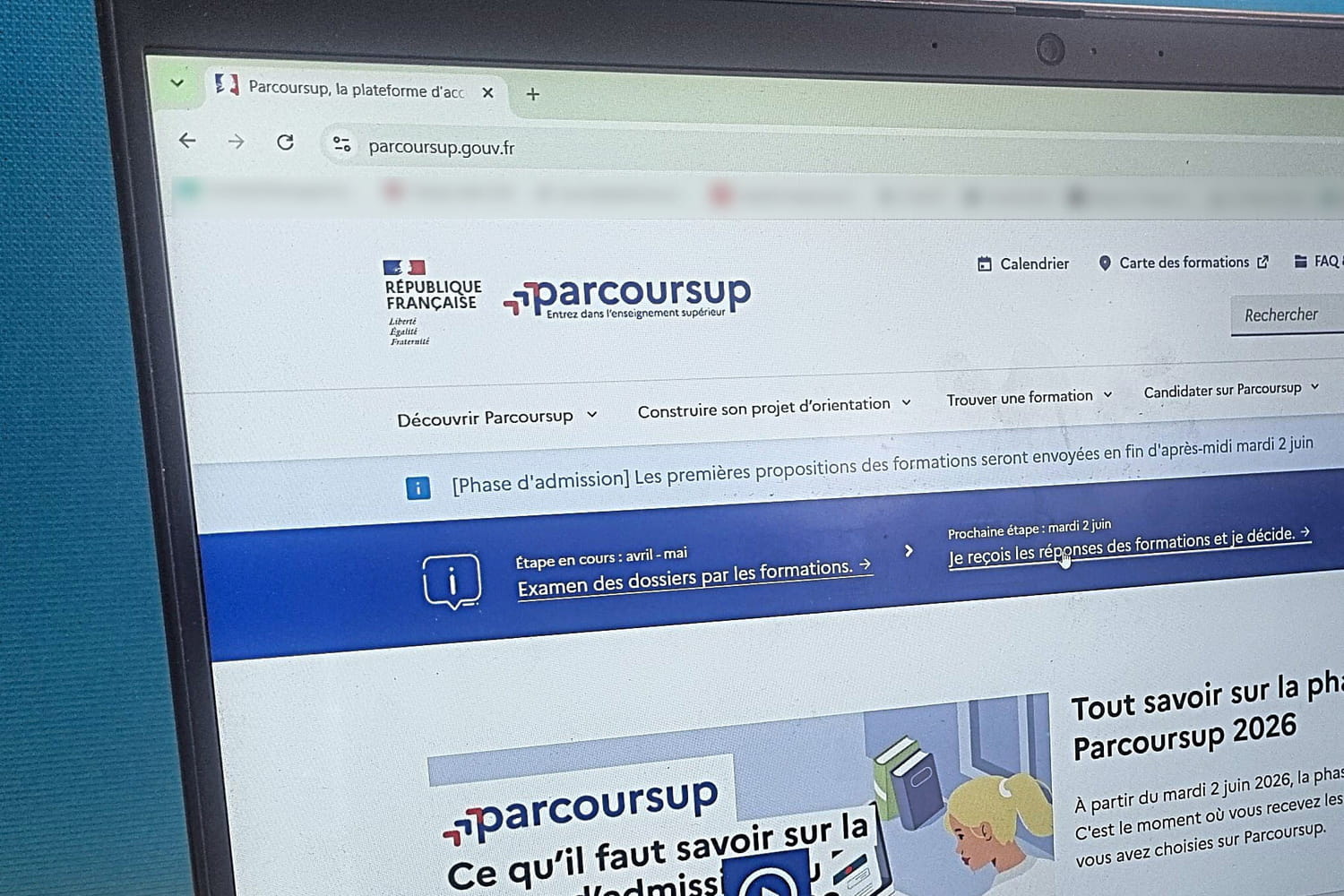
We are entering a phase of critical stress for all final year students: not only are the baccalaureate exams fast approaching, but to the anxiety of the exams is added the very anxiety-provoking Parcoursup procedure. The admissions phase is officially launched, and this is the time when future high school graduates must wait patiently for answers to their wishes… and make choices that will shape their student and professional future.
While each training has its own selection criteria, high school students are entitled to wonder what could tip the scales in their favor. It goes without saying that each student’s career path depends primarily on their grades and their assessments. However, from a purely statistical point of view, we see that baccalaureate graduates who have chosen certain specialty courses display significantly higher success rates on Parcoursup. In any case, this is what the 2025 figures from the Ministry of Higher Education show.
According to these data, by voluntarily excluding the specialties which gave rise to fewer than 100 wishes throughout France, the students who jointly chose “Mathematics” and “Physics-Chemistry” are those who received the most offers of admission on Parcoursup, and who accepted them. Among last year’s high school graduates who took these two specialties, 83,925 of them confirmed at least one wish on the platform. 82,650, or more than 98% of them, received at least one admission offer. At the end of this laborious process, 77,154 people accepted an offer, representing a final admission percentage of nearly 92%.

Those who chose to keep the courses in “Mathematics” and “Humanities, Literature and Philosophy” for the baccalaureate also have a more than 98% chance of receiving an admission offer. As well as high school students who preferred to study “Biology, Ecology” and “Physics-Chemistry”, or those who followed the specialties of “Mathematics” and “History-Geo, Geopolitics, Political Sciences”. For these three combos, around 90% of students ultimately accepted an offer.
But other high school students can rest assured, no choice of specialty has led to a total absence of proposals: the figures do not fall below 88%. On the other hand, the rates vary more among the candidates themselves. For example, only 65% of baccalaureate graduates who followed “Art” and “Digital and Computer Sciences” courses accepted an offer at the end of the Parcoursup procedure, while 88% had received at least one. Same observation among those who chose “Economic and Social Sciences” and “Digital and Computer Sciences”, or even “Art” and “Economic and Social Sciences”, two combos for which less than three-quarters of the students ultimately accepted an offer.
It is difficult to know if students who chose the Mathematics specialty have more predispositions to succeed at school, and therefore better records, or if the subject itself tends to reassure training. Conversely, profiles focused on art, digital technology or the economy display a real singularity: if they receive offers, they are much less likely to say “yes” when the final choice is made. Here again, it is difficult to know whether these high school graduates face more refusals for their heartfelt wishes, or whether they are simply more demanding in the face of the answers received. One thing is certain, if the statistics show trends, they above all remind us that no path is completely blocked and that the coherence of your project remains your best weapon.