





«At the origin of this work there was a meeting with a thirteen-year-old boy who told me “you know, I got a girlfriend, but I made her with artificial intelligence: blonde, tall and with blue eyes”. This quotation mark from Ivano Zoppi to understand how the “adolescent-artificial intelligence” relationship can be absolutely unhealthy and problematic. We can no longer ignore what risks, in all respects, becoming a social plague, especially because the time to intervene exists. But the gap is becoming increasingly narrow. To analyze (and analyze ourselves) this world so complex and full of facets, the conference was held, TO OUR CHILDREN, Artificial Intelligence and free information, the responsibility of the word to protect the digital generations organized by the Gruppo Editoriale San Paolo and its Famiglia Cristiana and Cisf entities, with the Carolina Foundation and in collaboration with UCSI Lombardia, with a reminder to the adult world regarding educational responsibility towards children.
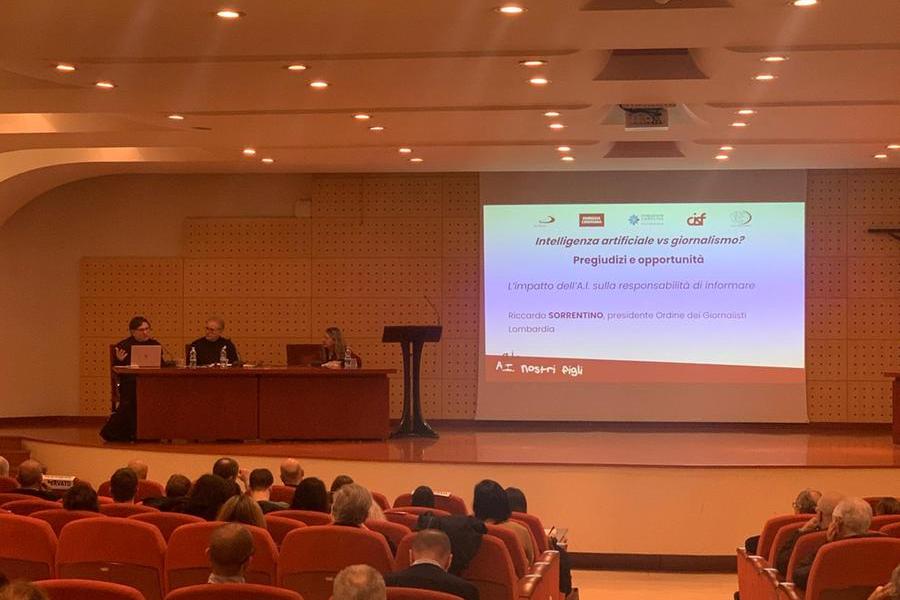
The meeting unfolded through three discussion tables, each with its own themes. The first was moderated by Don Stefano Stimamigliodirector of Famiglia Cristiana, and saw the precious collaboration of Antonella Marchettidirector of the Psychology Department of the Catholic University of the Sacred Heart, e Riccardo Sorrentinopresident of the Order of Journalists of Lombardy. The central theme of this first space of debate is the relationship between the world of journalism and artificial intelligence. Professor Marchetti opened the debate by underlining that the human being is “body, heart and mind”. Interaction with AI hides various psychological pitfalls: «as human beings, when we interact with artificial intelligence, if we do not consider that they do not have a body and a heart, there is an error in the report». We are influenced and fascinated by chatbots, as they use a fluid language that tunes into our requests, needs and wants. They have behaviors that should be taken for granted, for example they respect their turn during the conversation (absolutely unusual in today’s relationships), which help us to have the impression of interacting with someone “similar to me”.
Speaking about the relationship between journalism and artificial intelligence, Riccardo Sorrentino explains how the latter cannot replace the role of disseminator played by those who work on the news. AI doesn’t know what it’s saying, it’s a statistical machine with combinatorial creativity. He doesn’t know what’s real and he doesn’t know the meaning of what he says. It can be useful for analyzing a large amount of data, but it can never replace the journalist, whose work is based precisely on the indissoluble relationship with reality.
At the second table, dedicated to “photographs of the digital future”they intervened Marta Macellaristatistics from the Carolina Foundation Study Center, Ivano Zoppigeneral secretary of the Carolina Foundation, e Francesco BellettiCISF director, with the coordination of Benedetta Verrinijournalist and CISF communication area. He opened the conversation Paolo Picchiohonorary president of the Carolina Foundation, with a touching speech in which he remembered his daughter Carolina, the first recognized victim of cyberbullying. This space has returned interesting data, which helps to frame young people’s relationship with chatbots. Nearly one in four uses artificial intelligence on a daily basis. But the data, expertly explained and analyzed by Marta Macellari that should turn on the alarm signal are those that highlight how over 25% of under-15s use chatbots as a safe space to discuss and one in three appreciates them as “digital friends”. «These data pose a question that we cannot avoid: what are we offering, as adults, as educators, as a society, to our children? If they look for a friend in artificial intelligence, doesn’t it mean that the spaces we offer them are instead perceived as hostile? If they look elsewhere for availability and immediate listening, we are evidently unable to guarantee them the presence and attention they need», he comments Ivano Zoppi.
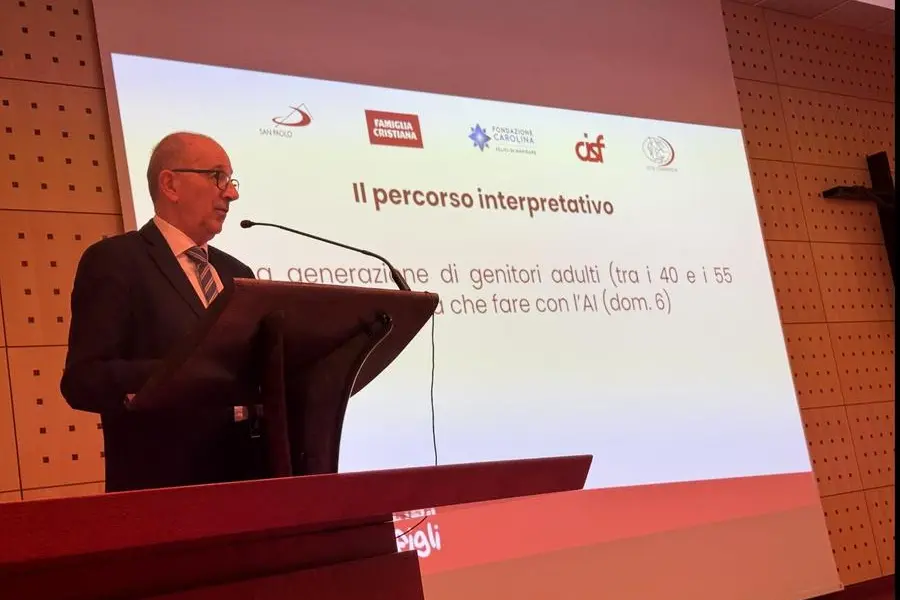
Equally interesting is the study brought to the attention of the room by the director of the CISF Francesco Belletti. A research that deals with the interpretative path of parents’ point of view towards the use of artificial intelligence by their children in life and at school. Interesting statements emerged, such as that of a father of a fifteen-year-old teenager who attends scientific high school: «I use it every day at work, making software, and the secret lies right there: if you use it actively, if you guide it and are aware of what you are doing, it is now an irreplaceable tool. If, however, you abandon yourself to her, you risk making those blunders…”. A mother of a sixteen-year-old who “never uses it and I consider myself lucky” has completely different views.

Almost opposite opinions on the instrument, but what they have in common is that everyone sees dangers in it. To conclude the table, a video by Filippo Caccamo on the use of AI at school.
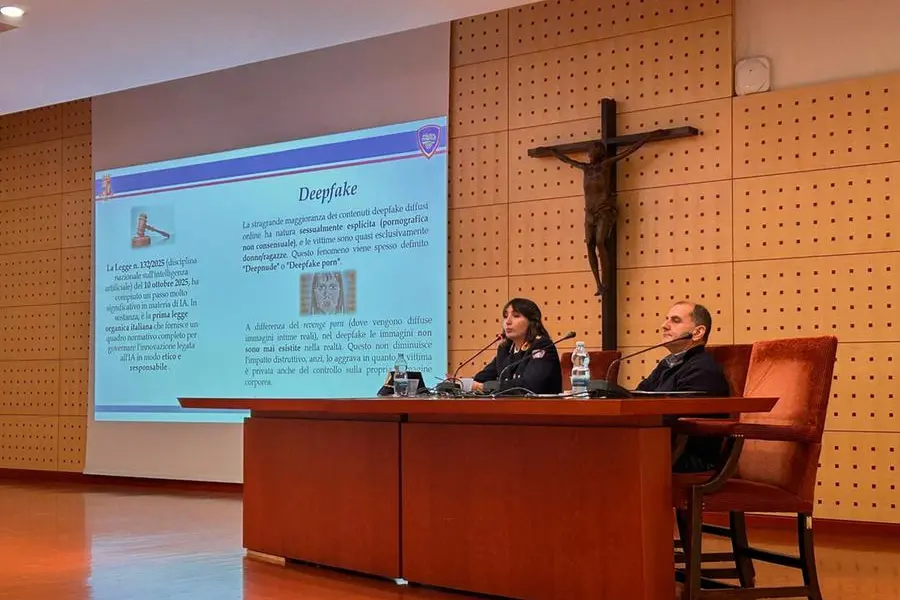
During the third and final table, “Letters for AI, challenges for the common good”, they spoke Alberto Pellaidoctor and psychotherapist, Stefano Pastateacher and researcher at the Department of Pedagogy of the Catholic University and member of Cremit, Federico Tonionihead of the first Center for web pathology of the Gemelli Polyclinic Foundation in Rome and Federica Bensipsychologist of the State Police, moderated by Paolo Perazzoloeditor-in-chief of the Christian family. Pasta focused on managing the smartphone and technologies in the family. Around 50% of kids use the devices massively, while the other half declare a more moderate use. In 53% of cases there are rules in the familybut the problem is not just “if” they exist, but how they are applied. The conflict erupts above all over usage time, which takes away space from other vital activities. Bensi’s speech was extremely enlightening, as he analyzed the problems related to sexortion (sex + extortion, blackmail that takes place online) e Deepfakes (when pornographic images are disseminated which however never existed and were therefore created with AI). His speech was enriched by a detailed explanation of the illusions that characterize minor perpetrators of this type of crime, the beliefs that a victim lives within himself (especially the sense of guilt) and the impact that the incident has on the lives of the latter.
Alberto Pellaifinally, he spoke about the value of shame, about how important it is to blush in a situation that makes us uncomfortable: only in this way can we grow and improve. Skills that are not gained if you remain behind the screen, in your comfort zone. The psychotherapist also strongly supports the need for school environments without cell phones, to encourage socialization. And he comments with a reproach to adults: «We have handed over the growth of children to multinationals. They must be provided with a context that does not manipulate, cheat and seduce their creativity and spontaneity, which at that moment is
in the phase of greatest development”.
At the end of the event, questions were asked directly to Chatgpt. The answer the chatbot gave to the question is sobering: «Are you aware that pre-teens and teenagers are looking for a friend in you? Why do they do it?”, the chatbot replied: “I’m just a tool, kids look for me because I don’t judge, I’m quick and always available. You (the adults) must be the ones to promote alternatives to the emotional needs of teenagers and pre-adolescents”. Hence the urgency of a new digital humanism, founded on the responsibility of words, on the quality of information and on a conscious use of technology, in the interest not only of today’s users, but of tomorrow’s generations.