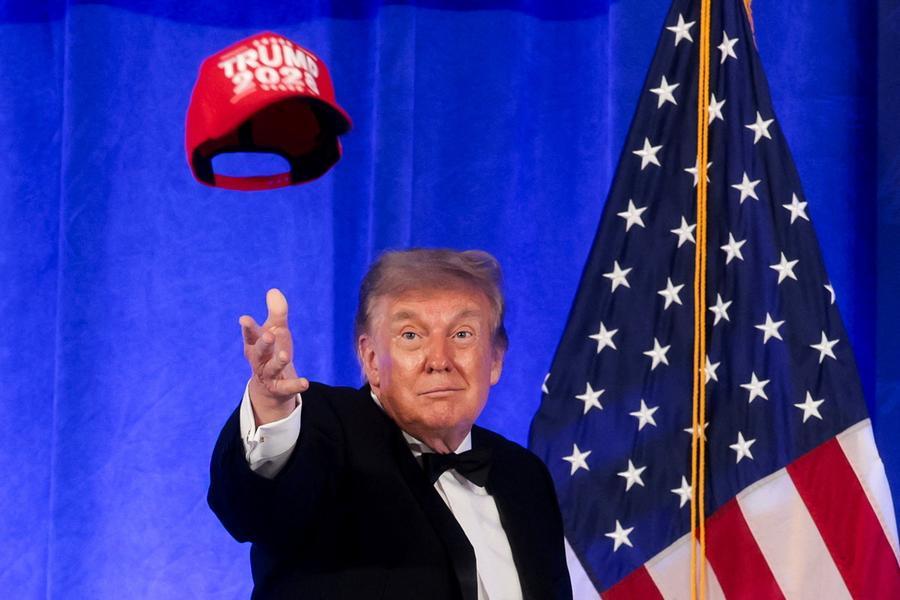






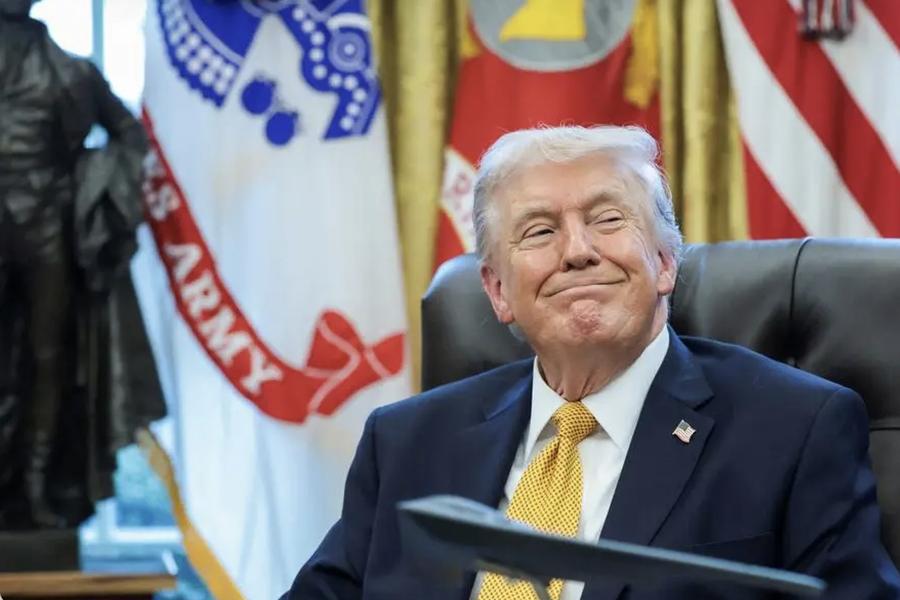
Immersed in the quagmire of the Iranian crisis from which he cannot extract himself, Donald Trump sings and plays it. He continues to say that the agreement with Iran is within reach (we have now lost count of the times in which he has given it as imminent) and in an interview he even went so far as to say that, in the case of an agreement, he would be available to meet the Supreme Leader of Iran, the Ayatollah Mojtaba Khameneiwho succeeded his father killed in the bombing of Tehran on 28 February.
Trump said that although US and Israeli strikes killed his father and other members of his family, he expects Khamenei to behave like a “professional”. “In certain circles, he actually has a very good reputation,” he added. However, Iranian Foreign Minister Abbas Araghchi effectively ruled out any possibility of a meeting between Iranian Supreme Leader Mojtaba Khamenei and Donald Trump. “I saw an article in which Trump implied that he was ready for a meeting or that he would like to organize one,” Araghchi said in an interview on the Lebanese channel Al-Mayadeen. “But I think we have to be realistic,” he clarified.
Trump meanwhile maintains that negotiations with Iran continue and has denied reports that the talks have been definitively interrupted, stating that contacts continue through mediators. The stated goal is an agreement that: prevents Iran from developing nuclear weapons; eliminate or destroy stockpiles of highly enriched uranium; contribute to the reopening of the Strait of Hormuz.
Tehran announced in recent days the suspension of indirect negotiations with Washington, accusing Israel of having violated ceasefire agreements through operations in Lebanon. However, several sources indicate that indirect diplomatic channels remain open.
According to Secretary of State Marco Rubio, any sanctions relief will depend on dismantling Iran’s nuclear program. Washington insists that Iran cannot maintain significant uranium enrichment capabilities.
The International Atomic Energy Agency (IAEA) has released a new report saying that despite months of war and bombing, much information about Iran’s uranium stockpile remains unknown. Inspectors do not have full access to the affected sites and are not sure where all the enriched nuclear material is located.
Meanwhile, political pressure on Trump is growing in the United States. The House of Representatives approved by a vote of 215 to 208 a resolution aimed at limiting further military operations against Iran without congressional authorization. Four Republicans joined Democrats in voting, signaling some bipartisan discontent over the handling of the conflict. The four are Thomas Massie, Tom Barrett (twenty years of service in the US army), Warren Davidson and Brian Fitzpatrick (a former FBI agent). Trump called them evil and unpatriotic, adding that they should be ashamed. It is not easy for Congress to force Trump to end hostilities, but pressure is mounting on the White House to find a way out of an unpopular, congressionally unauthorized war that has caused a surge in energy prices.