





Ugly Shoes Aren’t Going Anywhere: From Fashion Joke to Industry Staple
Once dismissed as fashion mistakes, “ugly” shoes have become one of the most influential footwear movements of the last decade. Chunky soles, foam clogs, orthopedic-style sandals, split-toe boots and exaggerated sneakers—shapes that would have been mocked in the early 2000s—are now embedded in both luxury and mainstream fashion. What began as a rebellious, ironic aesthetic has matured into a design philosophy that prioritizes comfort, disruption and individuality over traditional ideas of beauty.
The ugly shoe is no longer a novelty item. It has become a visual language of modern fashion.
The Shoes and Brands That Defined the Trend
The trend’s true turning point arrived in the late 2010s, when luxury fashion deliberately embraced awkwardness. Balenciaga’s Triple S sneaker became the poster shoe of the movement. Its stacked, overbuilt sole and aggressively bulky shape rejected slim trainers entirely and made maximalism aspirational. Balenciaga extends this philosophy with its now-legendary platform Crocs collaborations, sending foam clogs––previously associated with practicality and ridicule down luxury runways.
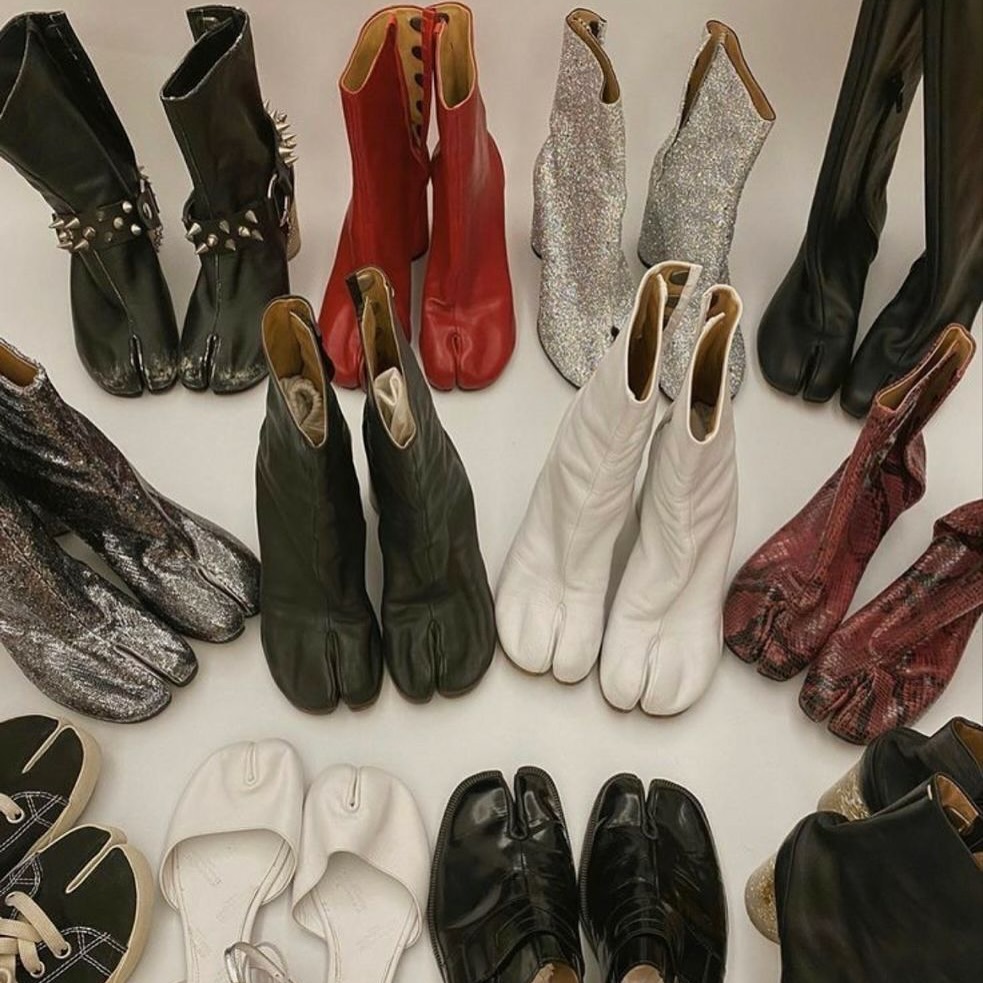
Maison Margiela’s Tabi boots played a parallel role, representing the more conceptual side of the ugly shoe movement. The split-toe design, inspired by traditional Japanese footwear, polarized audiences but ultimately normalized the idea that shoes could be intellectually strange rather than conventionally fluttering. The Tabi became a symbol of fashion literacy and insider taste.
Heritage comfort brands also rose to prominence during this era. Birkenstock’s Arizona and Boston styles were reimagined through luxury collaborations and high-fashion styling, transforming health-oriented sandals into global fashion staples. Dr. Martens’ Jadon boots, with their exaggerated platforms and industrial soles, pushed utilitarian footwear firmly into statement territory. Meanwhile, UGG’s Classic boots, once mocked as unfashionable, were reclaimed by a new generation through Y2K nostalgia and celebrity endorsement.
Luxury houses refined and legitimized the trend further. Prada’s chunky lug-sole loafers merged school-shoe nostalgia with industrial heaviness, becoming a uniform for fashion students and editors alike. Bottega Veneta introduced padded, sculptural clogs and boots with swollen-looking soles, while The Row offered its own version of “quiet ugly” through stark, orthopedic-inspired leather boots and sandals that looked almost clinical in their restraint.
These shoes didn’t just follow a trend — they created a new aesthetic standard.


Maison Margiela’s Tabi loafers
Why Ugly Shoes Became Fashionable
The rise of ugly shoes reflects cultural shifts. Comfort transformed from a private need into a public statement. Shoes were no longer just supposed to feel good; they were designed to look supportive, cushioned, grounded and wearable. Thick soles, wide straps, foam materials and cork footbeds weren’t hidden — they were exaggerated.
At the same time, fashion developed a hunger for imperfection. In an era of curated Instagram perfection, the ugly shoe functioned as a deliberate disruption. It signaled irony, self-awareness and taste that sat outside traditional beauty standards. Wearing “ugly” became a sign of cultural fluency: you understood fashion well enough to break its rules.
Nostalgia also played a crucial role. Many of the most successful ugly shoes referenced historically “unfashionable” silhouettes — orthopedic sandals, work clogs, grandma flats, and 90s chunky sneakers — bringing forgotten or ridiculed designs back into relevance.
Is This a Long-Term Trend or Will It End by 2026?
By most fashion forecasting signals, the ugly shoe is unlikely to disappear by 2026. Instead, the trend is shifting out of its most extreme phase. The cartoonishly oversized soles and hyper-exaggerated shapes are already softening, but the underlying design philosophy remains intact.
Rather than a clean break, the industry is entering a refinement stage. Designers are moving towards “quieter” versions of ugliness: slightly distorted proportions instead of extreme bulk, unusual materials rather than shock-value shapes, and hybrid silhouettes that sit somewhere between function and fantasy. Sneaker-loafers, ballet-clog hybrids and technical sandals signal that the trend is evolving rather than collapsing.
Ugly shoes are no longer about being loudly strange — they are about being subtly off.
What Ugly Shoes Will Look Like After 2026
The future of the ugly shoe lies in what could be described as strange elegance. Chunky soles will remain, but slimmer and more sculpted. Leathers, suedes and brushed metals will replace exaggerated foams. The silhouettes will still feel unconventional, but more controlled and intentional.
By 2026, footwear is unlikely to swing back to ultra-fragile, purely decorative minimalism. Instead, discomfort with discomfort has become permanent. Fashion has learned to value support, practicality and wearability — and that shift is difficult to reverse.