



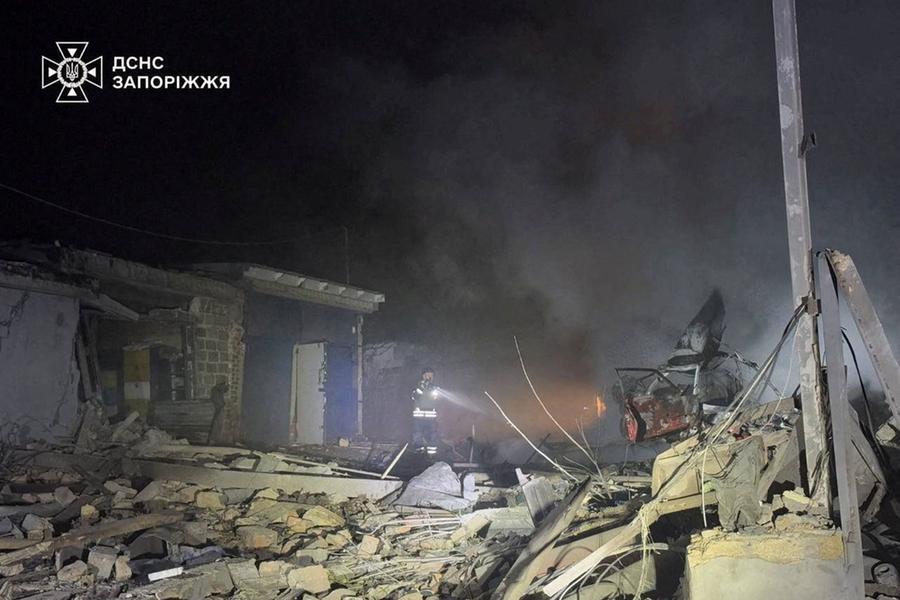
The Ukrainians are preparing to celebrate the fourth Christmas in war under the bombings that know no respite, in the cold, with frequent and prolonged blackouts due to Russian raids targeting energy infrastructure across the country, while the winter becomes increasingly harsh.
Meanwhile, diplomacy is proceeding quickly with negotiations to reach the definition of a peace agreement that has a long-lasting and sustainable character while providing the right security guarantees to Kyiv. Ukrainian President Zelensky revealed the draft of the 20-point peace plan drawn up by Washington, Kyiv and European countries, and sent to Moscow, with changes compared to the first 28-point draft presented in November by Trump.
In summary, the draft reaffirms the sovereignty of Ukraine, defines a non-aggression agreement between Kyiv and Moscow, establishes strong security guarantees for Ukraine which reflect the functioning of Article 5 of NATO (military intervention by NATO countries in the event of aggression); compared to the previous plan, it reconfirms the Ukrainian army’s capacity of 800 thousand soldiers in peacetime (the previous plan had reduced it to 600 thousand units). It establishes a series of measures and interventions as part of a comprehensive package for the reconstruction of Ukraine starting with the creation of a Development Fund. Ukraine will join the European Union.

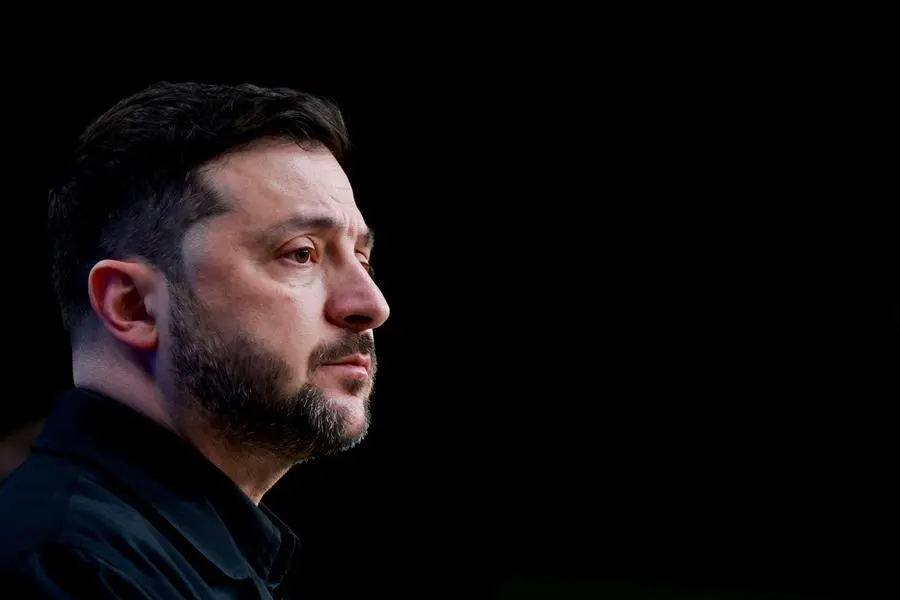
Ukrainian President Volodymyr Zelensky at the summit with EU leaders in Brussels on 18 December.
(REUTERS)
The thorniest points are those concerning the Zaporizhzhia nuclear power plant, under Russian control since the first days of the invasion, and the occupied territories. The plan envisages that the plant will be entrusted to joint management between the USA, Russia and Ukraine, which however Zelensky sees as very unrealistic and practicable. The issue of the occupied territories remains highly controversial: Moscow claims the entire Donbas as Russian and Putin has threatened several times to take it by force if Kyiv does not withdraw its troops from the territory. The new peace plan establishes that in the regions of Donetsk, Luhansk, Zaporizhzhia and Kherson the current line of contact is effectively frozen and recognized as a line of separation between the troops of the two sides. International forces will be deployed along the contact line. Russia will have to withdraw its troops from the Dnipropetrovsk, Mikolaiv, Sumy and Kharkiv regions.
Now, it remains to be seen how Moscow will respond to the presented peace draft, which modifies several points of the previously developed plan and, in particular, does not accept Russian requests regarding Donbas.
But what do Russian citizens think? As he says The Kyiv independenta survey published today, December 24, conducted by a state-controlled institute in 80 regions of the Russian Federation, interviewing 1,600 citizens, reveals that 55% of Russians expect the war in Ukraine to end in 2026 and hope for a return to what respondents define as “normal life”. The majority of Russians reached by the survey say, however, that they hope that the war will end with the achievement of the objectives proclaimed by Moscow, demonstrating an alignment that continues to be stable towards the Kremlin’s actions. Support for Vladimir Putin remains vast: according to the survey, 79% of those interviewed have confidence in the Russian president, 74% approve of Moscow’s foreign policy.
The data collected and published on December 22 by an independent center, which the Russian authorities brand as a “foreign agent” – underlines The Kyiv independent –, they are different and reveal that only 25% of Russians interviewed support the continuation of the war, the lowest figure since February 2022, when the Russian invasion of Ukraine began. Support for the war remains high among those who rely on state TV information and approve of Putin’s actions. 66% of respondents think Moscow should accept peace talks.
Last night Moscow was again the scene of an attack. In a place near where General Fanil Sarvarov died on Monday 22nd, killed by the explosion of a bomb placed under his car, this time it was two policemen who died, again due to the explosion of a car. Ukrainian defense intelligence sources revealed to the newspaper Kyiv Post That the two policemen had fought in Ukraine and tortured prisoners of war. According to intelligence reports, a local resident killed them as a sign of disapproval of the Kremlin’s policy of aggression.