




How do teenagers experience love relationships? The data from the new report Save the Children highlight how aggressive behavior and controlling attitudes are still very widespread, even if they only come to light in the most extreme situations, they are sometimes the norm in the dynamic between the two young partners.

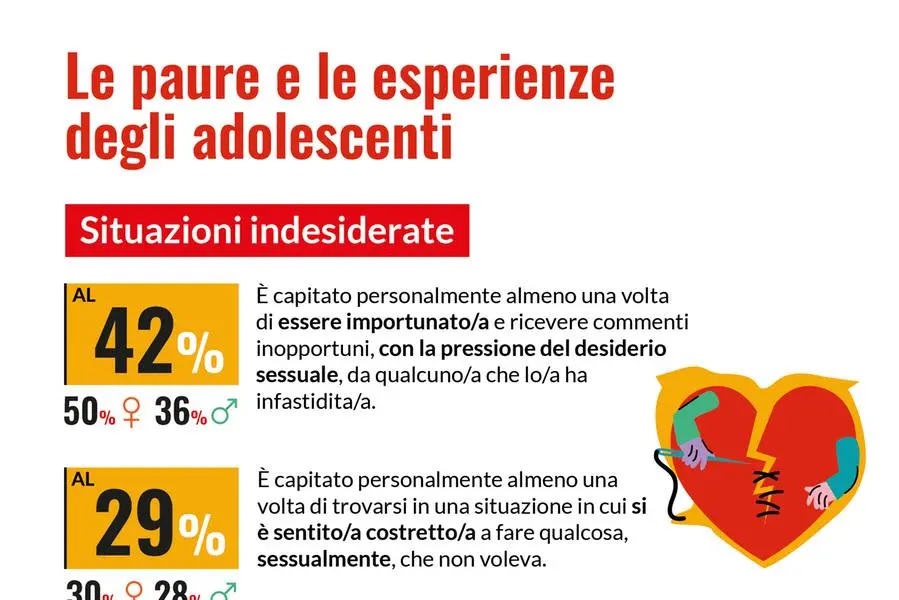
The “I was just kidding” relationship. New evidence on violence in adolescent relationships”, which contains the results of a survey carried out in collaboration with IPSOS DOXA shows how one in four has been scared at least once with violent behavior (slaps, punches, pushes, throwing objects) by the person with whom they have or have had a relationship, and more than one in three (36%) have been addressed by their partner with violent language (screaming, insults). One in three was geolocalized by the partner. 28% have been pressured to send intimate photos or videos. These dynamics do not only concern the private sphere, but also the public space, both online and offline: more than 4 out of ten teenagers have been annoyed with comments and sexual advances by someone who has annoyed them – a percentage which rises to 50% in girls -, 28% have had intimate images of themselves shared without consent and 29% have felt forced to perform unwanted sexual acts at least once. 36% have experienced insults or teasing about their gender or sexual orientation.
Victims but also more aware
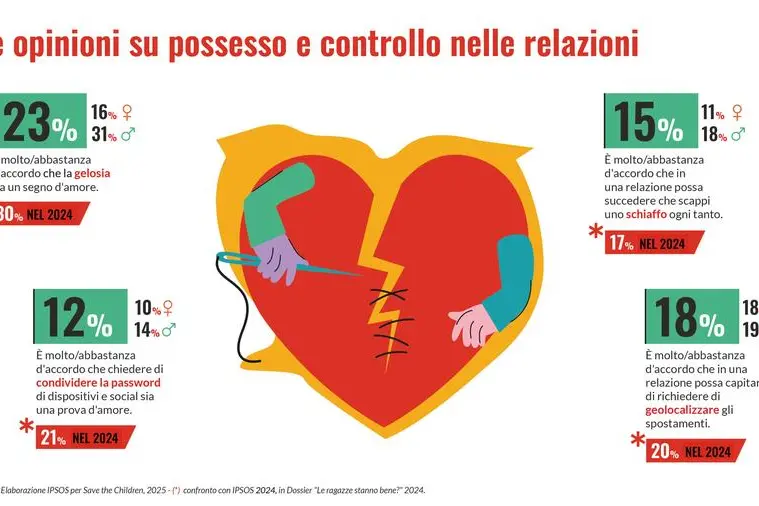
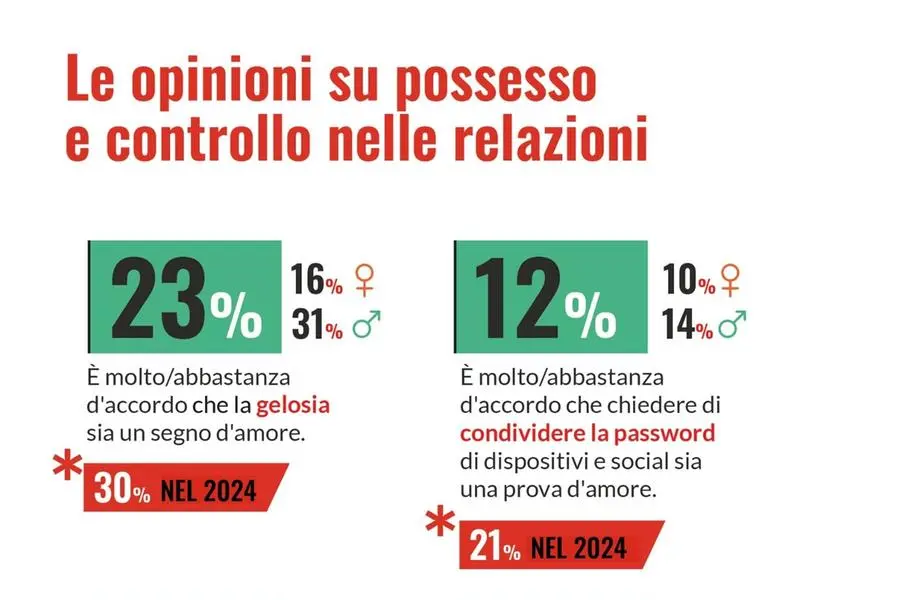
In any case, girls pay the highest price in terms of risks, sacrifices and stigma, confirming that violence and control have asymmetrical repercussions. 66% of girls have experienced catcalling on the street or in public spaces70% feel unsafe on the street (a lot, quite a bit or a little), almost half (49%) choose not to take public transport alone in the evening. Although compared to the report published by the Organization in 2024, “Are the girls okay?” who investigated the same phenomenon, adolescents – and especially girls – seem more aware today, with un decline in those who consider certain attitudes of possession and control to be “normal”.
The bad example is often family
The report shows how the family context also weighs: living in conflictual families or where one is exposed to violence often leads to the reproduction of such models. The percentages of adolescents who suffer or implement emotional blackmail, violent or controlling attitudes in relationships are systematically higher in boys and girls who live in a family climate that they themselves define as tense, violent and/or conflictual. For example, 39% of the latter use violent language and 30% have had violent attitudes towards their partner, compared to 28% and 18% of the general sample respectively.


Emotional controls and blackmail
When they are questioned about violent and controlling behavior and emotional blackmail in the relationships they experience, an almost overlap emerges between what the boys and girls say they have suffered and what they say they have implemented themselves, although it is more often the boys who admit to engaging in this type of behaviour. At least once, 28% have used violent language (32% boys, 24% girls), 28% used emotions to make people feel guilty and obtain something (31% boys, 24% girls)21% have pressured to obtain intimate photos or videos (24% boys, 18% girls), 18% have scared the person they have or have had a relationship with with violent attitudes (21% boys, 13% girls).

When the relationship ends
The end of the relationship is a critical moment in managing the relationship between teenagers. 27% say they have persistently looked for a partner after the end of the relationship (28% boys, 25% girls), 20% have threatened to harm themselves in case of refusal or interruption of the relationship (22% boys, 17% girls), 20% have shared or threatened to share messages, photos or private information for revenge (23% boys, 16% girls).

Casual encounters, games and sexual challenges
Save the Children’s research also highlights the spread among a significant percentage of adolescents of practices and situations that can become an area of vulnerability when they are intertwined with dynamics of abuse, social pressure and lack of consent. 28% of those interviewed had at least once had occasional intimate encounters after drinking too much and did not remember the circumstances well the next day, a percentage that rose to 31% among boys (25% among girls). THE40% believe it is common among peers to drink alcohol excessively to uninhibit themselves sexually – 49% among those living in a negative family climate, 24% use substances or drugs to disinhibit (36% among those living in a negative family climate), 23% participate in group sexual games or challenges (44% among those living in a negative family climate). Almost 1 in ten thinks that participating in group sexual challenges and games is done to feel part of a group or to be accepted by one’s friends, while 31% believe that the possible personal or social consequences are underestimated.

Save the Children’s recommendations
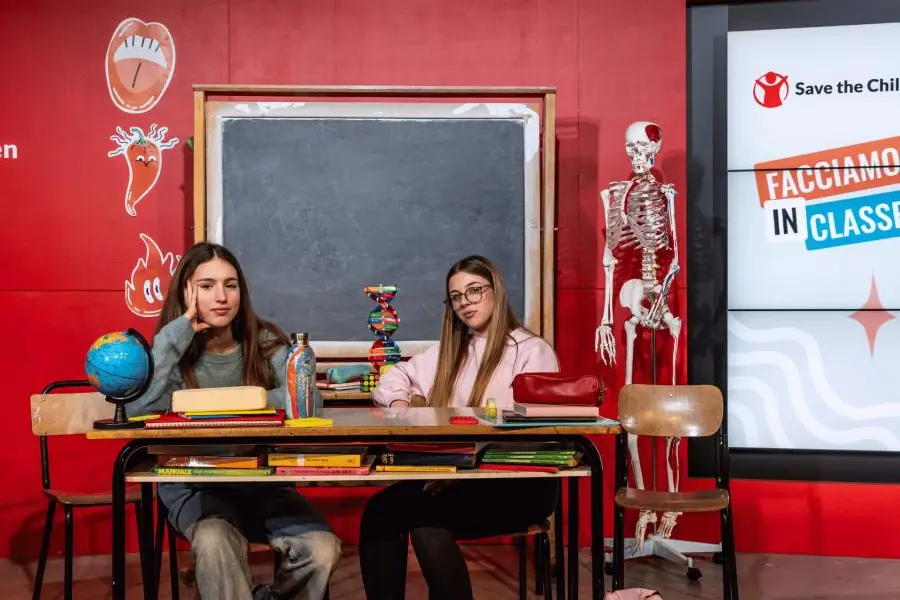
With lhe #Let’s do it in class campaign, Save the Children returns to ask for the approval of a law that provides mandatory courses of education on affectivity and sexuality, in accordance with the UNESCO Guidelines on Comprehensive Sexual Education (CSE) and the Standards of the World Health Organization, starting from nursery school up to secondary school, within the training plans and in ways appropriate to the age of the beneficiaries. The courses should be held by expert figures in collaboration with adequately trained teaching staff and the active participation of students. It is also essential that they include specific modules on the conscious use of digital technologies, on the risks and forms of abuse and violence that can occur onlineand, on the diffusion of stereotyped content, which helps boys and girls in developing critical thinking and the ability to protect their psychological well-being and act online in a respectful and safe way.

Among other recommendations, the Organization also believes it is essential that the Government allocates resources to guarantee free and timely access to psychological and psychotherapeutic support coursesor for minor victims of gender violence.