



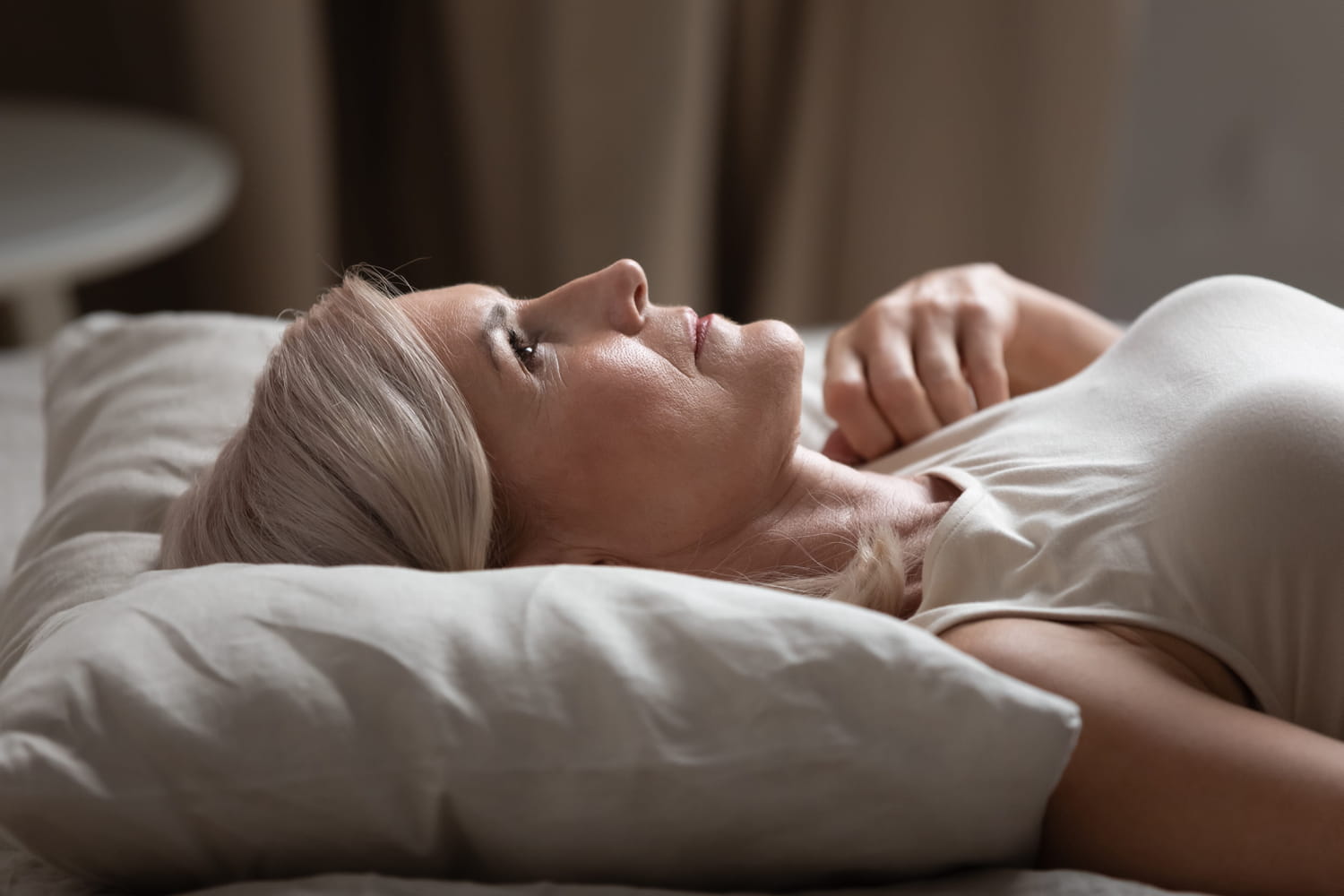


Do you wake up at dawn for no reason, do you feel like you’re sleeping less well than before? Professor Pierre-Alexis Geoffroy tells us what is normal, what is not, and how to act.
With age, many begin to notice it: the nights get shorter, the awakenings come earlier, sleep seems less deep than before. It’s even worse when we don’t sleep at home. But this is not an impression: sleep does indeed change over the years, and biology is the main explanation. Professor Pierre-Alexis Geoffroy, professor of psychiatry and sleep doctor, explains to us how and at what age these changes occur.
It all starts with changes in the biological clock. “As we get older, it changes a little, we live more in the morning”explains the doctor. This phenomenon, which specialists call “phase advance”gradually shifts sleep schedules towards earlier hours: we go to bed earlier and we also get up earlier. An elderly person who got up at 7 a.m. when they were active will be woken up naturally at 6 a.m. Moreover “the depth of sleep is less important.” The night becomes fragmented, punctuated by micro-awakenings. Sleep pressure, the physiological force that builds up during wakefulness to encourage falling asleep, also gradually weakens.
A particular age sees sleep transform: “It’s from the age of 40 that it starts to deteriorate” reports Professor Geoffroy. But “these are still only slight changes in sleep”. Then comes the milestone of fifty, especially for women: “For them, the period of menopause leads to an increased risk of (disturbed) sleep at that time.” Then the effects become significantly stronger from the age of 60. Added to these biological factors are chronic illnesses, drug treatments, anxiety and screens: “The longer we live, the more these kinds of disruptive factors are added.”
We therefore naturally wake up earlier from the age of 40. Before this age, it is not normal to have early awakenings and if they persist, it is better to consult. In general, Professor Geoffroy explains that having difficulty falling asleep, not feeling rested upon waking up despite a full night’s sleep, having sleepiness during the day which disrupts daily activities, difficulty concentrating or even unexplained mood changes must push “to consult a general practitioner or a specialist sleep doctor”. While nearly one in two French people complain about their sleep, our interlocutor insists on the fact that “It’s not normal to sleep poorly, it can be a sign of an illness.” Likewise, “We generally have to sleep 7 hours per night” so an elderly person who only sleeps 3 or 4 hours “has a sleeping sickness” and must also consult there.
To pass the milestone of 40, 50 and 60 years, the specialist recommends “strengthen your biological rhythms” : getting up at set times is “super important”just like exposing yourself to natural light every morning, because it “gives a strong wake-up call”. It is also advisable to go to bed before the hours when sleep is most restorative. During the day, regular physical activity helps stabilize these rhythms while prolonged naps “participates in reducing sleep pressure”. To help you fall asleep, reading “helps to break with the regulation of the day” and thus allows accumulated tensions to be put at bay. These small cumulative adjustments can transform sleep and, as our interlocutor reminds us, “let’s not sleep“.
Thanks to Professor Geoffroy, Professor of psychiatry, sleep doctor and author of “The night belongs to you” (ed. Robert Laffont).