






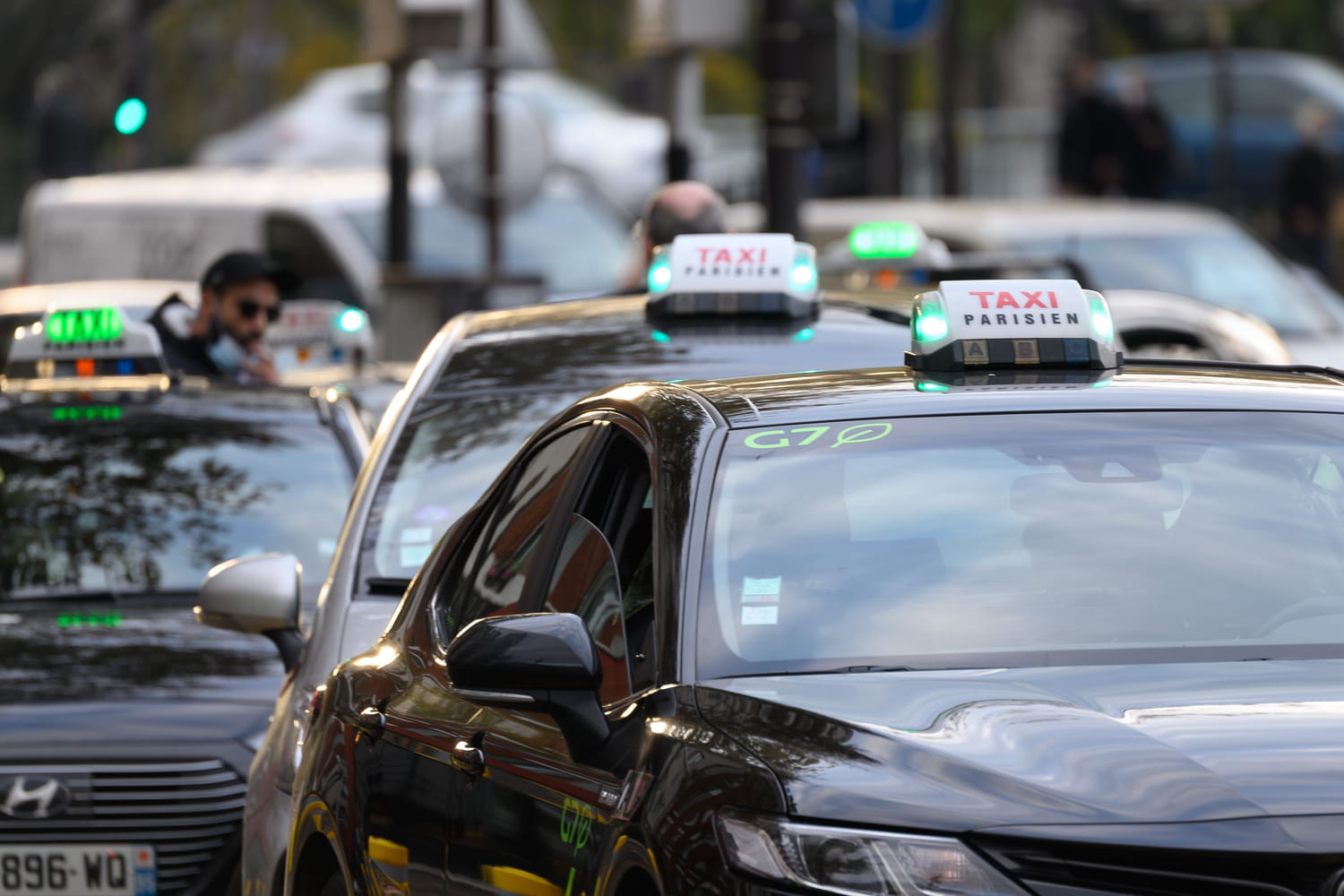
While you think you’ll pay a pittance at the end of your trip, an invisible gesture from the driver can turn your taxi ride into a financial pit. A trap which currently targets tourists in Paris and abroad.
Imagine: you are on vacation in Paris, you leave the airport or the train station, or a tourist monument that you dreamed of visiting. You get in a taxi, heading to your hotel, located just 12 minutes away. The journey goes without a hitch and on arrival, the meter displays a completely ordinary sum of 9 euros. You take out your bank card to pay for the fare, but when you consult your account statement a few days later, it’s a cold shower: you haven’t paid 9 euros, but several hundred, even thousands of euros. A frightening mishap which is by no means an isolated case.
This is what happened to Anna, a British tourist who came to discover the French capital for her vacation. “The meter showed 9.70 euros (…) and when I returned to the hotel, I found that he had charged me 570 euros”she says in the columns of Guardian. And unfortunately, she’s not the only one who didn’t see anything. This scourge recently gave rise to the dismantling of a network of illegal taxis in Paris. Proof that the trap is massive and particularly targets vacationers, nearly 80 travelers have filed complaints, for a total loss of nearly 700,000 euros, in the space of a year.
But how do these fake taxis do it? In reality, everything happens at checkout. “The driver asked me to get out of the taxi and pay by card through the window because the internet connection was poor. While I was paying, he discreetly changed the amount displayed”explains the English tourist. And it is exactly this modus operandi that allowed the drivers arrested in Paris to defraud their victims. Near the Parisiansome say they were charged 2,500 euros instead of 38.50 euros agreed with the taxi, or even 1,900 euros instead of 19 euros. A simple comma out of place, and every vacation turns into a nightmare.
The worst? Their banks refuse to reimburse them. The credit card not having been stolen, the bank considers that there was consent on the part of the customer. “I immediately filed a fraud complaint with my bank, who rejected my claim due to lack of proof of the agreed price”deplores Anna for her part.
Of course, this scam is not limited to the French capital. On travel forums, there are numerous reports of similar techniques in Lisbon taxis, for example, where drivers modify the amount displayed directly from their smartphone, connected via Bluetooth to the TPE. Even outside taxis, this method is very widespread: according to the Guardian, street vendors on Brazilian beaches sometimes excuse a reflection from the sun or a lack of paper in the machine to add a few zeros at the last second.
If this scam is so formidable around the world, it is because it plays on the rise of contactless payment: the transaction is carried out in a flash, without the need to enter your PIN code, and therefore face the TPE. You will have understood that to protect yourself from this scam, there are not 36 solutions: the only thing to do is to never take your eyes off the payment terminal. Also, only use official taxis or VTC applications, which already make recourse in the event of fraud a little easier.