



The story of Wendy Duffy It’s one of those that you can’t read without feeling dizzy. It is an open wound, a question that remains suspended.
Wendy, 56, a former health and social worker from the West Midlands, is not terminally ill, she is not alone. Yet he decided to die. Not for an unappealable diagnosis, but for a pain that has found no limits: the death, at 23, of his son Marcus in a tragic, and in some ways banal, domestic accident that broke her life in 2021. Since then, the woman said, “I don’t live, I exist”. Words that refer to the unfathomable depth of mourning, when it becomes an abyss.
His choice to go to Switzerland, to the Pegasos clinic, the only one that accepts “clients” who decide to end their lives due to serious psychiatric disorders and not terminal illnesses, to undergo assisted suicide and to make his decision public on the eve of his death scheduled for Friday 24 April, has reignited the debate on this very delicate issue in the United Kingdom. A debate that involves politics, law, medicine, but which even before that touches the human heart: what does it mean to accompany those who suffer? And where is the boundary between freedom and responsibility?
«I notified my relatives, my four sisters, my two brothers and friends. I’ve sorted out the house and also chosen the background song when I die, that is Die With A Smile sung by Lady Gaga and Bruno Mars”, the woman told al Daily Mail«because I will really have a smile when I leave forever. It’s my choice. It’s my life.”

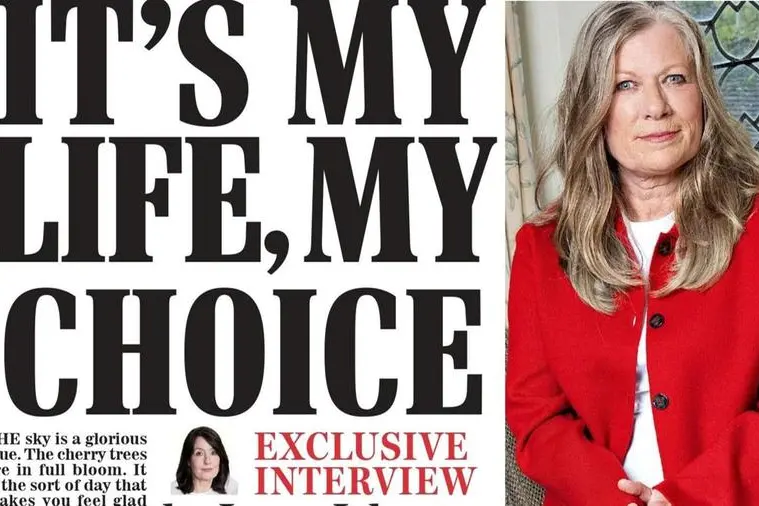
According to Wendy, her son Marcus would not have wanted it to end like this: «Get a dog, mom, get better, he would tell me. But in the end I think he would understand and maybe he will wait for me on the other side.” Wendy said she would wear Marcus’s shirt, “still with his smell”, before voluntarily taking a lethal drug and expiring.
Wendy’s cry cannot be ignored. It would be unfair and inhumane to reduce it to a legislative laboratory case. The pain of losing a child is among the most devastating experiences there is. In the Christian tradition, this pain is echoed in the figure of Mary at the foot of the cross: a mother who sees her son die and remains, without understanding everything, but without fleeing. It is an image that does not offer easy answers, but indicates a presence, a possible company within the night.
And yet, precisely because that pain is so radical, the question that emerges is even more demanding: can death be a response to suffering? Or does it risk becoming a surrender that leaves unresolved what instead asks for relationship, care, time?
Stories like Wendy’s also question our communities. It’s not enough to be moved. We need to ask ourselves where they have been, and where we are, when a person slips into such a profound solitude that they no longer see alternatives. Wendy recounted years of therapy, antidepressants, suicide attempts and trying to start over. Yet something didn’t hold up. This does not authorize shortcuts, but forces serious reflection on the quality of accompaniment, on the ability to support those going through such serious and often invisible traumas.
In the United Kingdom, the euthanasia bill promoted by the MP Kim Leadbeater, after being approved at first reading by the House of Commons, it has been stuck in the House of Lords for months, who will discuss it again on Friday, the day of Wendy’s death by euthanasia, and while opposing pressures are growing. On the one hand those who invoke the “right to choose” even in the absence of terminal illnesses; on the other, those who, like the Labor MP Rachel Maskell, who voted against assisted suicide, fears a drift that progressively broadens the criteria to include increasingly widespread fragilities. It is not an abstract discussion: it is about how a society decides to stand by the most vulnerable.

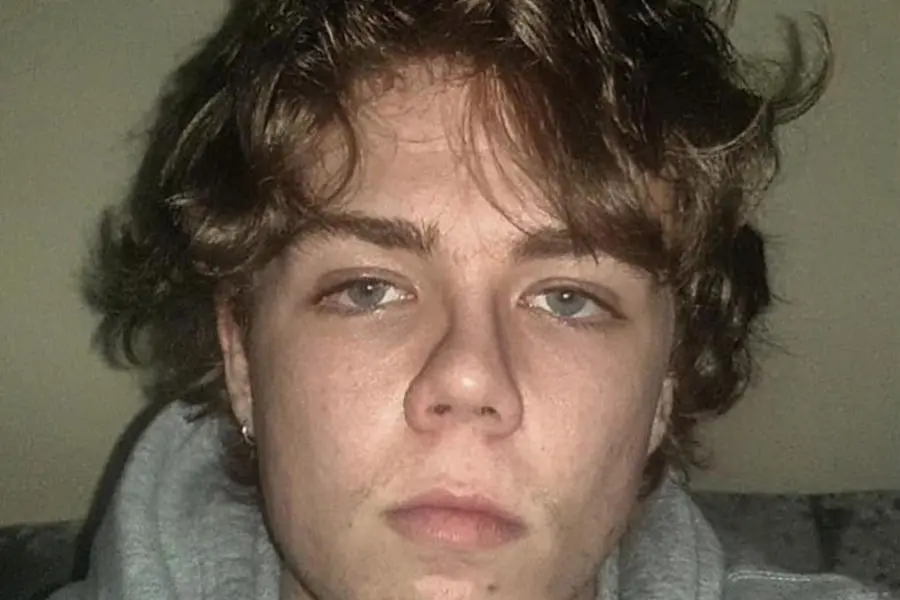
A photo from the Instagram profile of Marcus Dolman, who died four years ago and son of 56-year-old Wendy Duffy, who decided to go to Switzerland for assisted suicide
(HANDLE)
Wendy’s story is part of a European context already crossed by controversial cases, especially when euthanasia concerns mental suffering. Each story is different, but they all ask the same question: are we sure that the most humane response is to shorten life, or rather to intensify treatment?
There is a passage, in Wendy’s words, that is more striking than others: she imagines that her son would tell her to “get a dog and move on”. It is as if, inside her, two voices coexisted: that of desperation and that of a possible recovery. It is in that fragile space that the decisive game is played, and there the presence of others can make the difference.
In the Christian perspective, life remains an unavailable good not due to ideological rigidity, but because it is recognized as a gift, even when it is crossed by pain. This does not mean ignoring suffering. Rather, it means reiterating that no one should be left alone when life seems to lose meaning and that death is never a response to pain but a defeat (also) for those who are challenged by that pain and must take responsibility.