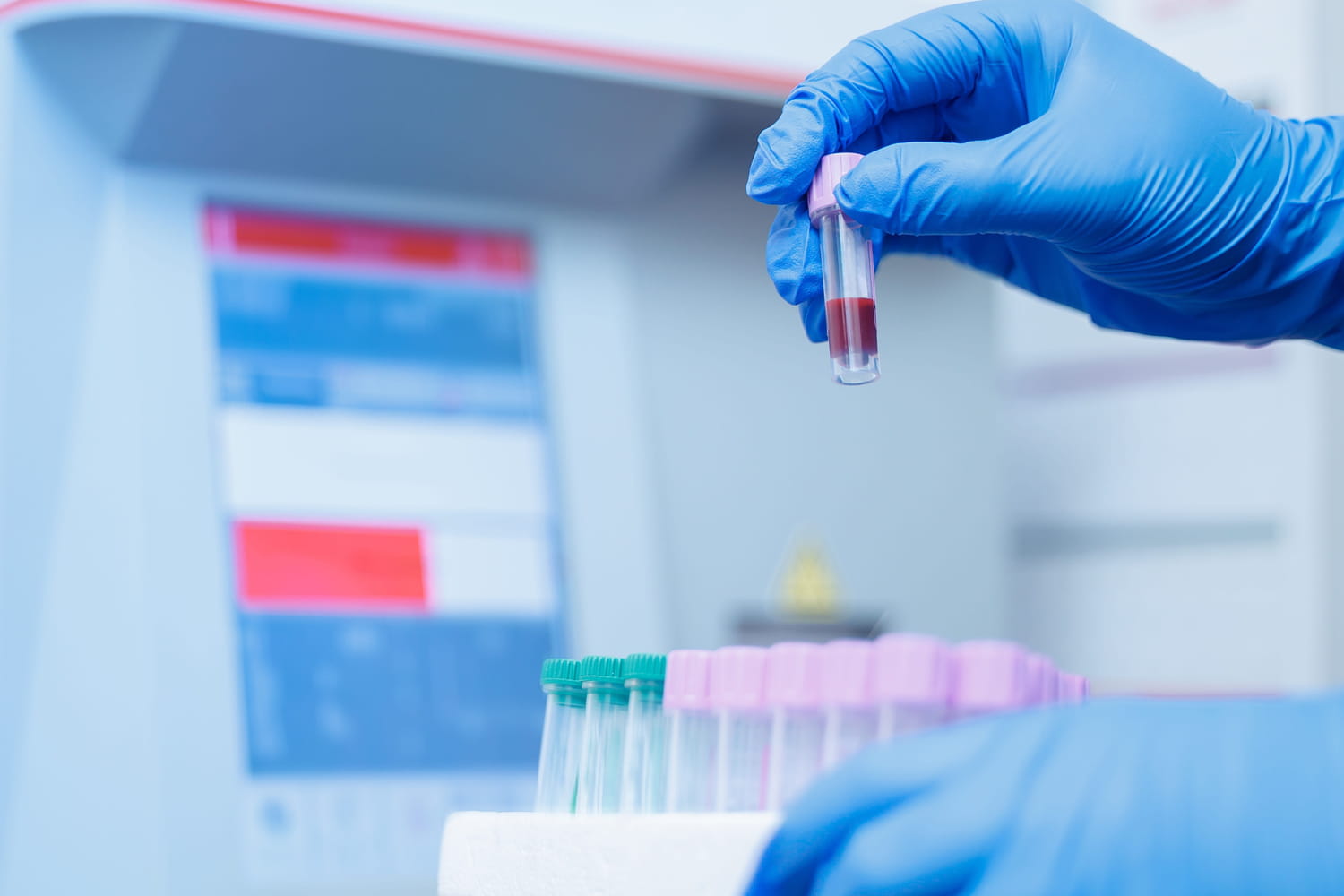







Lymphoma is a blood cancer that affects the lymphatic system, which is responsible for the immune system.
Definition: what is lymphoma?
Lymphoma is a blood cancer that affects the lymphatic system, which is responsible for the immune system. The lymphatic system is made up of lymphocytes, cells that play a major role in the functioning of the immune system. An anarchic proliferation of lymphoid cells is the cause of lymphoma, originating from the lymph nodes or another lymphoid organ such as the spleen or liver for example. These cancerous tumors develop in different organs containing lymphoid tissue, including the lymph nodes, tonsils, lining of the small intestine, spleen, liver, bone marrow, lungs and thymus. There are 2 types of lymphoma: Hodgkin’s lymphoma, also called Hodgkin’s disease (20% of cases), and non-Hodgkin’s lymphoma (80% of cases).
Hodgkin lymphoma: 20% of lymphomas
Hodgkin’s lymphoma is marked by the presence, in the affected organ, of a particular tumor cell “Sternberg cell”. Hodgkin lymphoma mainly affects adolescents (100 cases per year with a ratio of 1.2 boys to 1 girl) and young adults aged 20 to 40. This form of cancer of the lymphatic system is classified into four stages, depending on the degree of damage, which is an indicator for the treatment decision: from stage I (affecting a single lymph node group) to stage IV (affecting one or more viscera). It is an aggressive cancer but the cure rates exceed 80% of cases.
Non-Hodgkin lymphoma: 80% of lymphomas
Non-Hodgkin lymphoma is approximately 5 times more common than Hodgkin lymphoma. This malignant disease develops at the expense of a line of lymphoid cells. The cancer cells involved are distinct from the cell involved in Hodgkin’s disease. Malignant non-Hodgkin’s lymphomas can develop from B lymphocytes, which is the case in 85% of cases, or from T lymphocytes in 15% of cases. Many subcategories arise from this, and the common characteristics are that they generally affect adults after the age of 50 and present with lymphadenopathy, swollen lymph nodes, and an increase in the size of the spleen and liver. Biopsy of a lymph node and analysis of the sample is necessary to make the diagnosis and characterize the type of lymphoma, which will guide treatment.
Large cell non-Hodgkin B lymphoma
Malignant non-Hodgkin’s lymphomas can develop from B lymphocytes, which is the case in 85% of cases, or from T lymphocytes in 15% of cases. Depending on their degree of malignancy, type B non-Hodgkin lymphomas are classified into two large groups: indolent non-Hodgkin lymphomas (low malignancy) and aggressive non-Hodgkin lymphomas (high malignancy).
Mantle cell lymphoma
Mantle cell lymphoma, or mantle cell lymphoma, is one of the non-Hodgkin’s lymphomas, more particularly in men over 50 years old. “It presents in an indolent form often with digestive damage but it is more serious”details Dr Pauline Brice from the hematology department at Saint-Louis Hospital. It must be treated with chemotherapy sessions and autologous bone marrow transplants. And to add: “In case of relapse, targeted oral therapy inhibiting B lymphocytes is effective.”
Follicular lymphoma
Follicular lymphoma is most often located in the peripheral lymph nodes. It is a common lymphoma generally appearing around the age of 55. This type of lymphoma is usually very symptomatic, often with large masses. The progression is slow, with a well-preserved general condition. Treatment is only done if there are clinical symptoms or risks of compression of a vital organ, sometimes years after diagnosis. The risk is the transformation of this lymphoma into a more aggressive variant, with rapid worsening of symptoms. A lymph node biopsy is necessary. Follicular lymphoma can be treated with immunotherapy (antiCD20) alone or with chemotherapy.
Burkitt’s lymphoma
We distinguish two forms. The endemic form affects a large number of people (particularly in sub-Saharan Africa) and is often associated with the infectious mononucleosis virus (Epstein Barr). “The sporadic form is rarer, it is the most common non-Hodgkin lymphoma in children but it can occur at any age. It has a good prognosis after treatment with intensive and specific chemotherapy”explains Dr. Brice. T-type lymphomas are rarer and have a guarded prognosis. There are many entities depending on the lymphoid cell of origin.
Cutaneous lymphoma
Cutaneous lymphoma is a rare but chronic, disabling pathology that affects people whose median age is over 60 years. This cancer develops in the form of tumors in the skin. This is the proliferation of lymphocyte cells whose starting point is the skin. It can, like lymphomas, arise from B lymphocytes or T lymphocytes (the latter being the most common) and the clinical presentation remains variable. Generally speaking, it can initially appear in the form of red patches, diffuse redness, or chronic skin nodules. A biopsy of the area should be taken for cell analysis. Numerous subcategories are distinguished, the most frequent of which is mycosis fungoides, with a generally favorable, indolent evolution with topical treatments.
What are the symptoms of lymphoma?
The symptoms are mainly lymphadenopathy (inflammation of the lymph nodes), painless swelling of the lymph nodes in the neck, armpits or groin, respiratory or abdominal signs due to compression of deep lymphadenopathy, night sweats, fever and, more rarely, weight loss.
The occurrence of various symptoms like those mentioned above should prompt you to consult a specialist. In addition, the appearance and increase in volume of one or more lymph nodes is also a reason for consultation.
What causes lymphoma?
Tumors appear following the uncontrolled multiplication in the body of B lymphocytes, white blood cells that produce antibodies. Non-Hodgkin’s lymphoma occurs especially after the age of 60; people whose immune system is failing (HIV carriers) or immunosuppressive treatments (organ transplant recipients) are particularly exposed. Other infectious agents are associated such as hepatitis C, helicobacter pylori for stomach lymphoma.
The diagnosis of lymphoma is quite difficult: the appearance of a lump in a lymph node (neck, armpits or groin) or an organ, weight loss, fever, sweating or severe fatigue are signs that can accompany the presence of lymphoma. The scanner can find deep lymphadenopathy which is significant if greater than 15 mm. Lymph node biopsy with histology makes it possible to make the diagnosis but also to specify the category of lymphoma. The biopsy taken beforehand allows you to preserve a frozen fragment of the lymph node and will be used for subsequent studies.
What are the treatments for lymphoma?
The treatment must be carried out under the guidance of the specialized doctor, who will make the decision regarding the medication protocol, depending on the lymphoma, the patient’s age and prognostic factors. This decision is taken collectively, during a meeting of several doctors whose specialty is lymphoma. It is at the end of this multidisciplinary commission, the RCP, (multidisciplinary consultation meeting) that it is decided to offer the patient treatment. The treatment of lymphomas is mainly based on chemotherapy, immunotherapy for B lymphomas and in certain cases, therapeutic intensification and radiotherapy will be offered. During treatment, the patient is monitored regularly by the medical team. The examinations carried out at the start of the disease (blood test, scanner and PET scan) are repeated at regular intervals, in order to monitor the effectiveness of the treatments. The goal is to achieve the complete disappearance of cancer cells. We can then speak of complete remission and after a few years of healing.
Discover: the ELLyE patient association – Ensemble Leukémie Lymphomas Espoir (formerly France Lymphoma Espoir). The main objectives are: Inform / Support / Encourage research and represent patients.
Thanks to Dr Pauline Brice from the hematology department at Saint-Louis Hospital (Paris).