






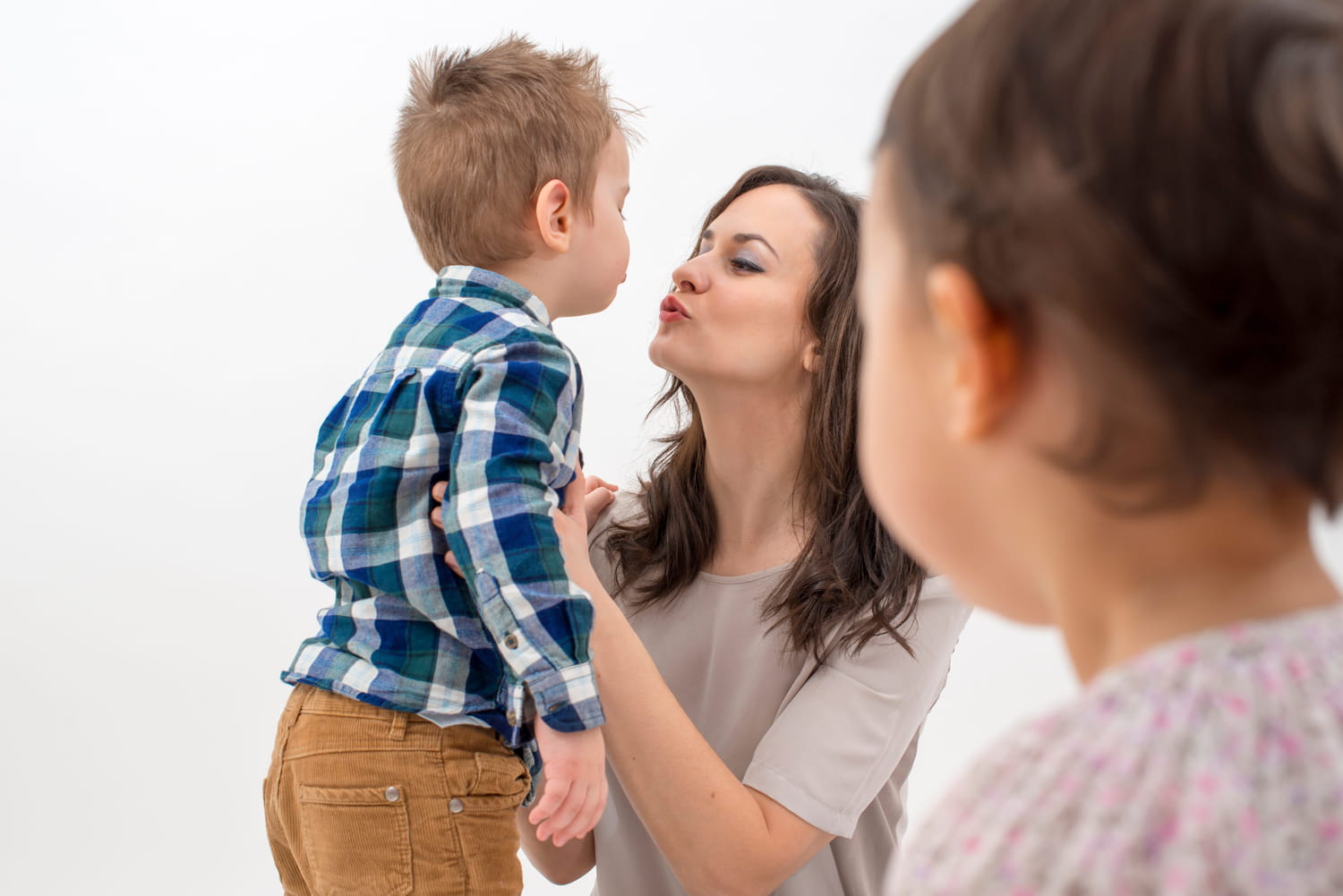
Many parents do not dare to admit it to themselves, yet having a preference for one of their children is a very common reality. According to a child psychiatrist, there is a very specific reason for this phenomenon.
When you become a parent, you automatically think you love each of your children in exactly the same way. In reality, things are often more nuanced. Some parents feel closer to a child at a given time, share more interests with them, or simply have a relationship that seems more fluid to them. This reality can give rise to guilt, even though it is far from exceptional. Child psychiatrist Michael Guetta, interviewed by the media Débunk, recalls that many parental feelings considered problematic actually relate to the normal functioning of a family.
Among the most stubborn preconceived ideas is that of immediate love at birth. In the collective imagination, the meeting between a parent and their baby would necessarily be accompanied by an instant attachment. However, this scenario is not universal. After a difficult birth, a complicated pregnancy or simply faced with the upheaval represented by the arrival of a child, some parents do not immediately feel this expected emotional boost. This does not mean that they will be less attached to their child in the months or years that follow. The bond is sometimes built gradually, over the course of care, daily exchanges and shared experiences.
The question of favorite child belongs to the same category of sensitive topics. What this preference ultimately reflects is not a lack of love for other children. According to the child psychiatrist, it above all reflects the personal affinities of the parent, their own history, their experiences and their way of relating to others. In other words, it speaks as much about the parent as about the child concerned. He may, for example, recognize himself more in one of his children or be more sensitive to their way of being. This does not mean that he loves others any less.
Many parents refuse to talk about it for fear of being judged. However, according to Michael Guetta, this preference is not exceptional. Children have different personalities, different needs and very varied ways of relating to their parents. So it makes sense that some interactions feel more natural than others. Conversely, a relationship can sometimes require more effort without calling into question the affection shown to the child.
Another feeling that is often overlooked can also be highlighted, that of jealousy that the relationship between one’s partner and the children can arouse. Again, many parents think this is an abnormal emotion. However, it appears regularly in families. Some also have the feeling of embodying more authority when the other parent benefits from a lighter or more complicit relationship. However, it does not necessarily reflect family dysfunction. Relationships between parents and children are constantly evolving and balances shift over time, stages of development and circumstances of family life.