

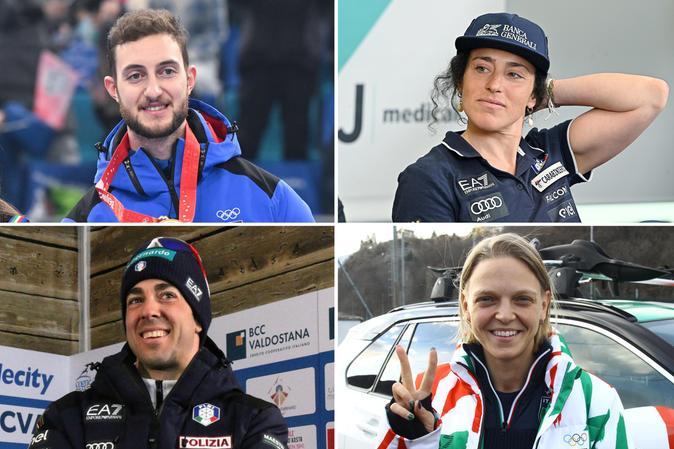


Federica Brignone, 35 years old, alpine skiing, Amos Mosaner, 30, curling; Arianna Fontana35, short track, Federico Pellegrino35, cross-country skiing. These are the four names chosen as standard bearers for Milano Cortina 2026. Two of them (Fontana and Pellegrino) parade in Milan in the inauguration ceremony at the San Siro stadium, the other two (Brignone and Mosaner) in the contemporary inauguration ceremony Curtain.
Four faces, four names, just perfect, not as singles (Sofia Goggia would have deserved as much), but as a basic criterion. Because they mix with perfect balance ice and snow, because they combine city and mountain, peaks and valley bottoms, disciplines in the spotlight and sports in the shadows, but above all because, for the sporting history they have, which our friend and colleague with very long Olympic experience, Gian Paolo Ormezzano, who passed away a year ago, would have defined as “thick”.
Very appropriate adjective: “thick” is more than “long”, and more than “rich”, it’s a combination of two things: it says about the personal experience, everyone has it, but also about the depth of the career behind them.
Federica Brignone

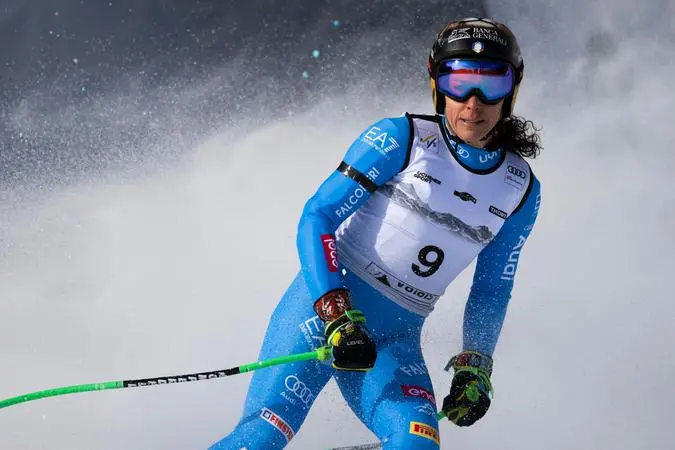
She won more than any other woman in the history of alpine skiing, in versatility and continuity, she competed on equal terms with Sofia Goggia (who had the Olympic gold that Brignone does not have, and who had already been chosen in Beijing, where, however, while recovering from an injury she had to give up the opening ceremony to favor the race, falling back on the closing), but being here, for Federica, has a symbolic value that goes beyond the counting of the medals: it speaks of the determination, of the fatigue of pain, of the traits of desperation that she has faced in the last 260 days, since she suffered, at the end of last season fresh from three Crystal Cups including the general one, a multiple and dramatic injury that risked leaving her tracks in pieces forever. The next two months will be of very intense work to find the best form, but it is what she did on the track or beyond the track in 2025 that has made her honor the flag she will carry even beyond what is required.
Arianna Fontana
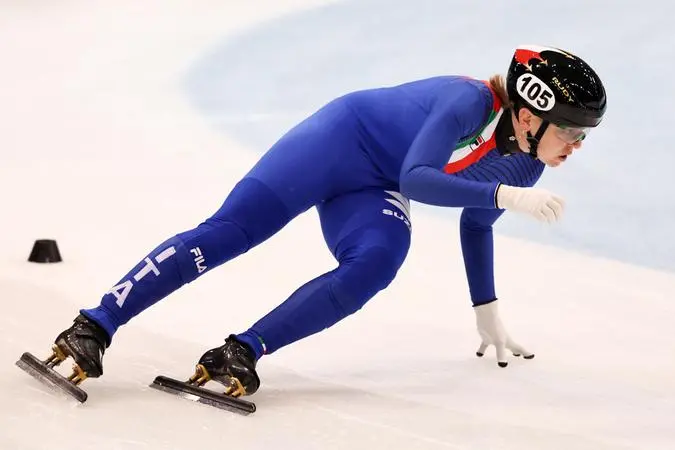
On the ice of the Palavela in Turin 2006, where he already won bronze in the relay, he was a mascot. He is still here, despite a sport that is a real melee, and in the midst of it he has placed so many medals (11 in the Olympic Games alone) to rival the parade on June 2nd, if necessary demonstrating to the world that to win a lot you need character, at the risk of being told that he has a difficult character. It will be discussed whether it is right to give the honor of the flag twice to the same person – Fontana had already brought it to PyeongChang 2018 – giving it to Goggia in his place would have been impossible, not only because it would have meant doubling the women’s alpine speed skiing in Cortina, tripling the snow and sacrificing the ice, but because San Siro had to be covered, on days that will see Goggia already busy training and testing in Cortina.
Amos Mosaner
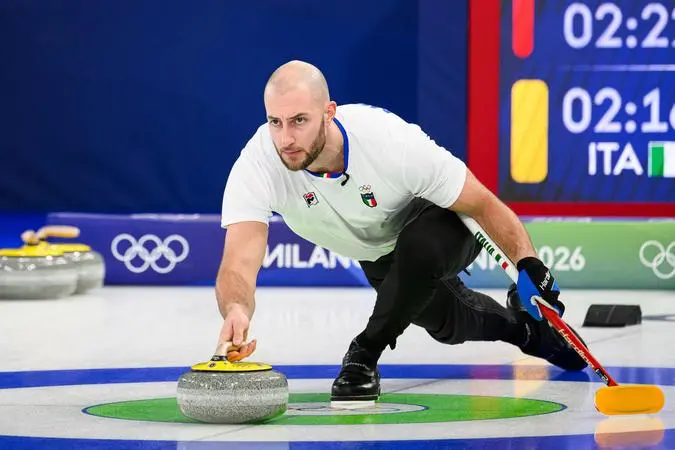
Despite having European and world medals under her belt, she was almost nobody to most when in Beijing 2022 she won gold in curling paired with the very young Stefania Constantini, but only because certain sports are only leap year for the general public. But to get there Mosaner worked in the shadow of a discipline that Italy discovered in Turin 2006, welcoming it with passion, and watching with fascination and curiosity a ballistics game on the ice of stoneknobs and broomsticks. A sport, which despite its appearance requires a lot of athletic skills and a very solid mind, but which sinks into the shadows to re-emerge every leap year coinciding with the Games. Mosaner not only helped us get to know this world, but was able to handle the pressure that comes with being in the spotlight only in the Olympic years. It is the difficulty that adds to the sometimes misunderstood difficulty of the history of this sport.
Federico Pellegrino

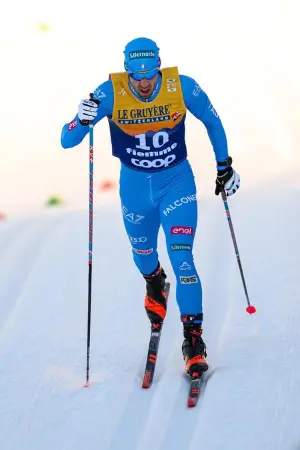
He has announced his retirement for 2026, and for a decade he has been a very solid certainty in world cross-country skiing, a discipline that suffers more than any other from the competition of the fiefdoms of the Great North. With a predilection for the sprint and free technique, Pellegrino has two Olympic silver medals in the sprint in both techniques (2018 and 2022), seven world medals and two World Cups, not to mention the rest and the interesting thing is that he has grown over time, giving his best in the seasons of maturity. This underlying depth, in the mix of balances that forces us to favor some aspects and sacrifice others, makes the choice of standard bearers perfect, not only because the flag is an important recognition for those who have given so much, but because only for those who have already given so much, for those who already have so many golds and laurels behind them, can the honor have the effect of an additional incentive without turning into an unsustainable burden. These four phenomena will be able to enjoy the ceremony and the honor received, having already demonstrated everything, knowing that what they give in addition, from the next day in the competition, will be their gift to us. Not a debt for them aggravated by a premature flag.
From Saturday everyone will go into the race with 100% energy and a “light” heart. or at least not burdened by the burden of having to honor the flag at all costs, simply because they already have, for how they got there.