



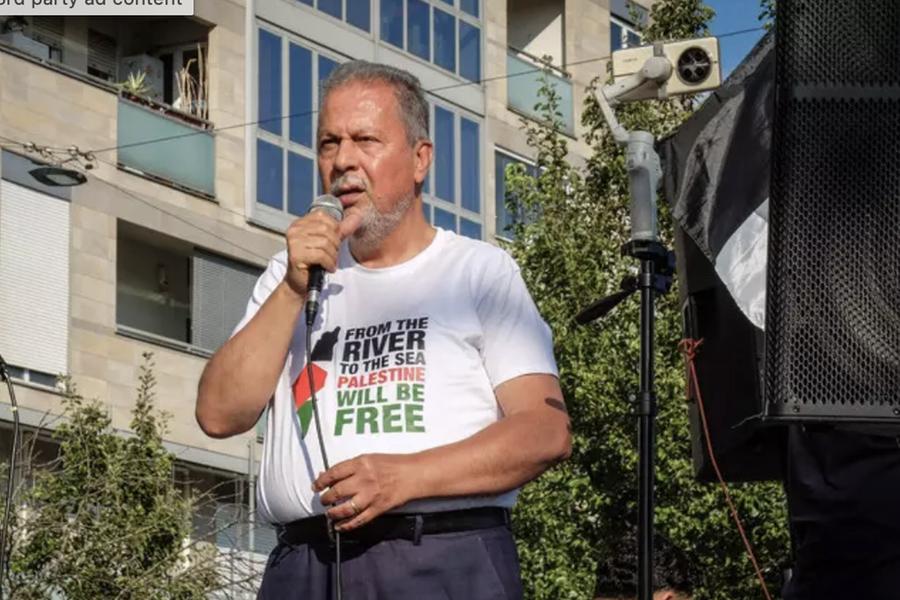
Mohammad Hannoun Mahmoud Ahmad is not a new name for those who follow the events of the Israeli-Palestinian conflict in Italy. This Palestinian architect of Jordanian citizenship, resident in Genoa since 1983, was arrested last December 27 as part of a vast anti-terrorism operation that landed nine people in prison, accused of having collected and sent around seven million euros to Hamas through apparently charitable associations.
To understand the story it is necessary to retrace the history of this man who for decades lived between two worlds: that of activism in favor of the Palestinian people and that of suspicions of connivance with terrorism.
From the nineties to today: a life under observation
Born in 1962, Mohammad Hannoun is Palestinian but also has Jordanian citizenship. He arrived in Italy in the early 1980s and settled in Genoa, where he obtained a degree in architecture, a profession which, however, he would never practice actively. At the end of the nineties, as president of the Islamic center of Genoa, he attempted to create a mosque in an old abandoned mechanical workshop, with funding from Saudi Arabia, but the project was never completed. In 1994 he founded the Charitable Association of Solidarity with the Palestinian People (Abspp)based in Genoa. The organization presents itself as a humanitarian organization dedicated to helping orphans, needy families and victims of the war in Palestine. But ever since then the Italian authorities have had doubts about the real destination of the funds raised.
The first investigations date back to the 1990s. According to the documents, since 1991 the Italian intelligence services had reported Hannoun as coordinator of a possible Hamas cell in the Genoese Islamic Center. In 2001, a search was carried out during which documents attributable to the Palestinian group were found.

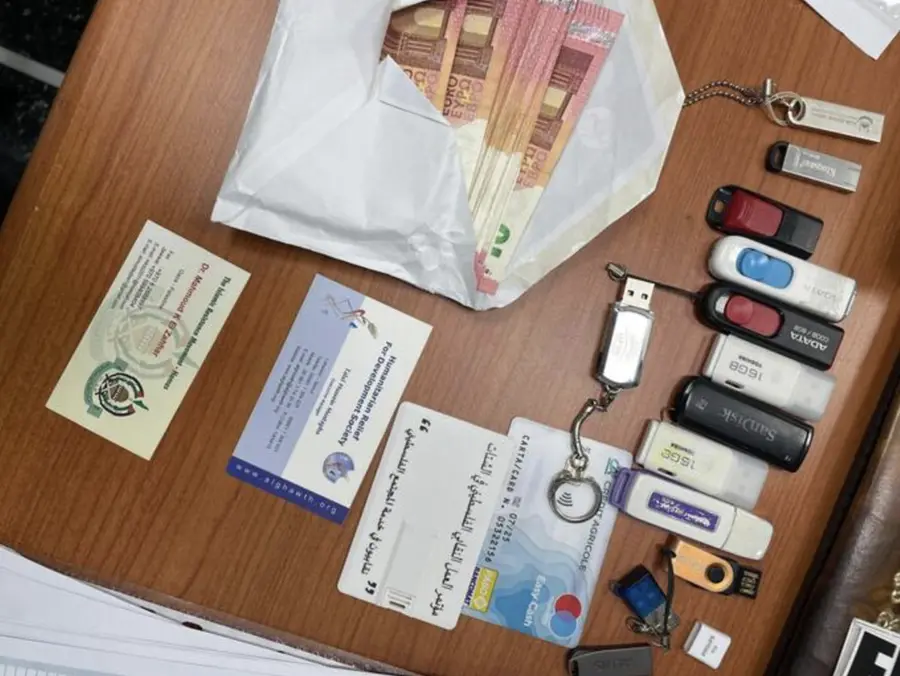
Between 2003 and 2010, a more in-depth investigation was carried out by the Genoa Prosecutor’s Office. The prosecutors believe they have gathered significant elements, but in 2010 the judge for preliminary investigations dismisses the proceedings, considering the prosecution’s evidence insufficient. An arrest request for Hannoun was signed in 2005 by the then public prosecutor Nicola Piacente (now Genoa’s chief prosecutor), but was rejected by the judge.
International sanctions
Despite archiving in Italy, Hannoun remains in the sights of international intelligence. Israel had banned the ABSPP since 2002, accusing the association of being a front for supporting Hamas. Over the years, several banking institutions begin to close the organization’s accounts. Between 2021 and 2023, banks such as UniCredit and Crédit Agricole, as well as Poste Italiane and PayPal, closed the association’s accounts following reports from the Israeli government. The international payment circuits Mastercard, Visa and American Express also block direct donations to the association.
The turning point came in October 2023, exactly one year after the Hamas attack on Israel on October 7. The US Treasury Department’s Office of Foreign Assets Control places Mohammad Hannoun and the ABSPP on the list of Specially Designated Nationals, freezing their assets. According to US authorities, Hannoun has been sending money to Hamas-controlled organizations since at least 2018 and paid at least four million dollars over a ten-year period. The ABSPP is described as a fictitious charity that raises funds for humanitarian purposes but in reality finances the military wing of Hamas.

Public activism and relations with politics
Despite international sanctions, Hannoun continues its activity in Italy. Becomes president of the Association of Palestinians in Italy and actively participates in demonstrations and initiatives in support of the Palestinian cause, especially after 7 October 2023. His presence at pro-Palestine demonstrations becomes increasingly visible and controversial. In 2022 Hannoun held a press conference in the Chamber to present a report entitled “Jerusalem 2021, Judaization sparks confrontation”a meeting organized among others by the leader of the Italian Left Nicola Fratoianni. The following year, again in Montecitorio, he presented another Abspp report. Some parliamentarians from different political forces, from the 5 Star Movement to the Democratic Party, have met him over the years to discuss the humanitarian situation in Palestine.
In November 2024, the Milan Police Headquarters issued a warning against him for incitement to hatred and violence, after some statements considered inappropriate during a demonstration. In October he received another one-year dismissal from Milan, for having justified the killings of alleged collaborators by Hamas.
The arrest and charges
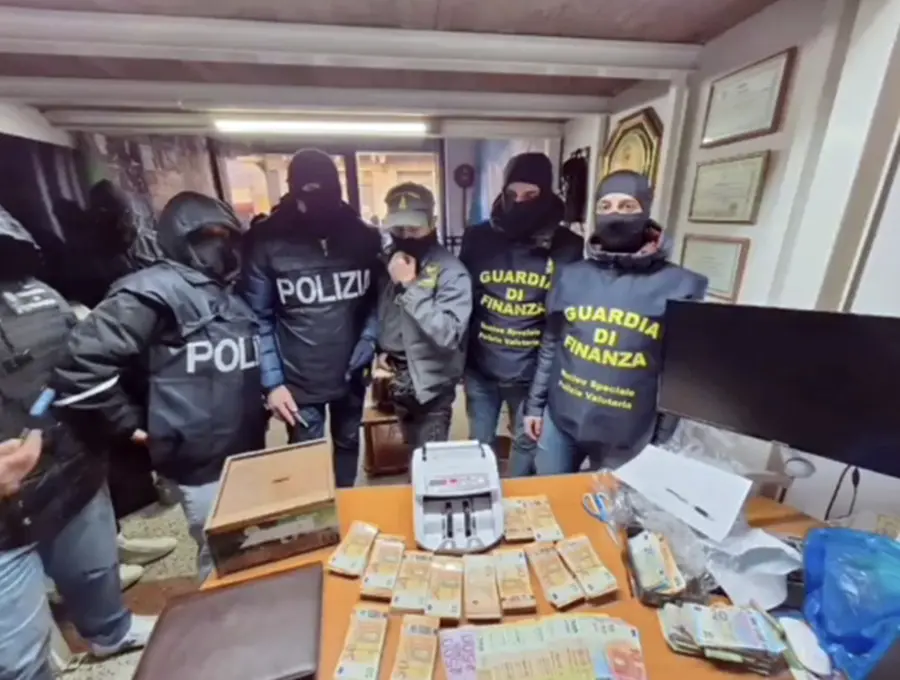
The operation that led toThe arrest of Hannoun and eight other people was coordinated by the District Anti-Mafia and Anti-Terrorism Directorate of Genoa, in collaboration with Digos and the Financial Police. According to the precautionary custody order signed by judge Silvia Carpanini, elements emerge that describe a well-organised international network. According to the investigative findings, Hannoun would have allocated a significant part, more than 71%, to the direct financing of Hamas or associations linked to it, for a total of over 7.2 million euros from 2001 to today.
The investigation documents contacts with prominent Hamas figures, including Ismail Haniyeh, political leader of the movement killed by Israel in July 2024. The acquaintance between the two is documented by photographs showing them together in official meetings, but also by wiretaps and public statements by Hannoun himself. In addition to the Abspp, the investigators have identified two other associations that would be part of the same network: the La Cupola d’Oro Charity Association, established in Milan in December 2023, and the La Palma Charity Association. According to documents declassified by US authorities, The Golden Dome was created by Hannoun to evade sanctions imposed by the Treasury Department.
Investigations also revealed that Hannoun was planning a move to Türkiye. The Prosecutor’s Office highlights that Hannoun had a Turkish passport, a bank account and two homes in Istanbul worth 1.3 million euros, and that in recent months he had planned his departure with the intention of being joined by his family. The arrest occurred on December 27the very day scheduled for his departure for Istanbul.
Hannoun’s defense
Mohammad Hannoun has always rejected the accusations of terrorist financing. He declared: «I have never financed Hamas, but, since you ask me, I say that Hamas represents a party that has been democratically voted by the Palestinian people, while I condemn those members of Hamas who commit acts of terrorism». He explained that the money sent to Palestine was used to help orphans or families and that everything was transparent, with detailed reporting. His lawyers point out that for charges identical to the current ones it was already dismissed in 2010 and that providing aid to Gaza inevitably means having to deal with the local administration, controlled by Hamas. They also argue that the investigation is based predominantly on information provided by Israeli authorities, whose assessments could be influenced by the context of the conflict.
A story that raises questions
The investigation into Mohammad Hannoun raises complex questions that go beyond a single court case. How is genuine humanitarian aid distinguished from support for terrorist organizations in contexts where territorial control is in the hands of armed groups? How do you balance the right to support a political cause with the need to combat terrorist financing? The Genoa prosecutor Nicola Piacente underlined that the investigations and the facts that emerged cannot in any way take away the importance of the crimes committed against the Palestinian population after 7 October by the Government of Israel, nor can such crimes justify the acts of terrorism by Hamas or constitute a mitigating factor.
The story of Mohammad Hannoun fits into a broader context of tension and suffering. There are currently 25 people under investigation in the investigation, including Hannoun’s family members, his wife and two children, who according to investigators would have been aware of the real destination of the funds raised.
Now it will be up to the Italian judiciary to verify the accusations and establish whether a network of support for terrorism was really hidden behind the apparently humanitarian activity. The guarantee interviews are scheduled to start from December 30th. Mohammad Hannoun is detained in the Marassi prison in Genoa, the only one among those arrested to be physically in Italy, while two alleged accomplices are at large, one in Türkiye and the other in Gaza.
The story of this man who for four decades lived between Genoa and the Palestinian cause reminds us how thin, and sometimes ambiguous, the boundary is between humanitarian solidarity and complicity with violence in one of the most tragic and unresolved conflicts of our time.