



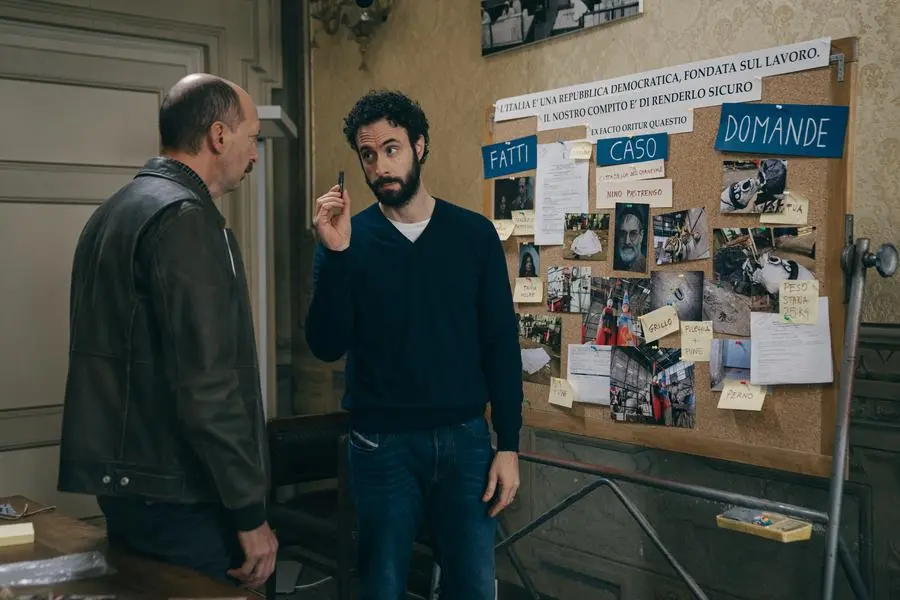
Luana D’Orazio was 22 years old and had a life ahead of her. It is no coincidence that the first episode of the series is dedicated to her and her mother The other inspectorfrom 2 December, on RaiUno, on the subject of accidents at work. Carina, the involuntary protagonist of the first case handled by Inspector Dodaro, played by Alessio Vassallo, is not Luana, but is freely inspired by her sad story.
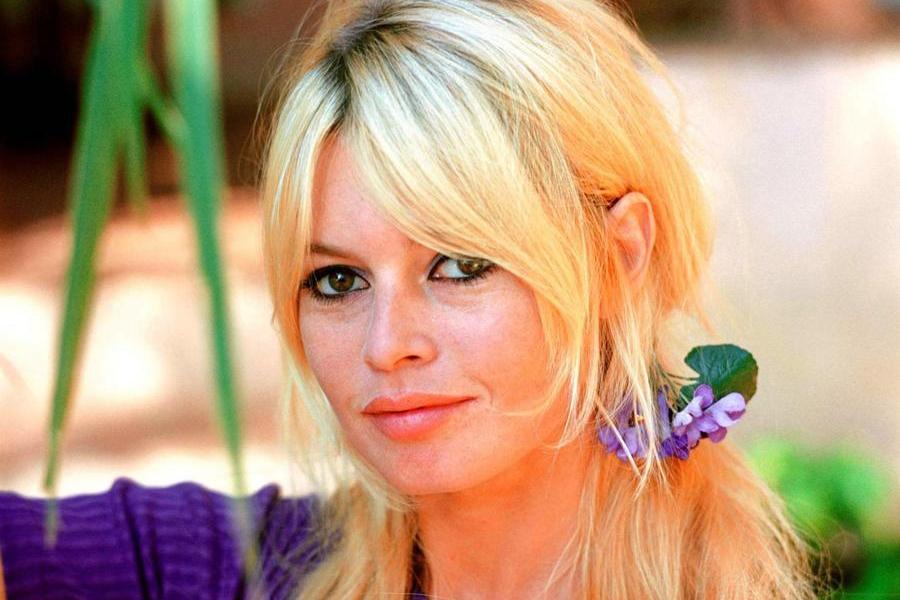
Luana was blonde and sunny, like Carina, she was working with an apprentice contract when she lost her life in the factory, on May 3, 2021, sucked into a warping machine, which had suffered tampering with the safety systems, in a small textile company in Montemurlo (Prato).

To Luana D’Orazio, who also had a passion for acting and had participated as an extra in the film If they are roses by Leonardo Pieraccioni (2018), that meager salary (around a thousand euros a month, or rather a little less), was not used to pay for dance courses like Carina did, but to give a future to her child, who was five years old at the time and who is now entrusted to his maternal grandparents.
According to what was reconstructed by the judge for the preliminary hearing, who decided on the case, Luana died from chest compression, sucked into the roller of the warping machine she was working on, hooked by clothes and dragged into the gears of the machinery that the company used “in a manner that does not comply with what was foreseen by the manufacturer”, with a system «provided with a strongly protruding bracket rather than one with a smooth external surface as envisaged and supplied by the manufacturer, without mitigating the risk that the workers’ clothes could get caught in it by means of guards or other means», while «the safety function of the shutter had been disabled so the operator could access the dangerous area, even in automatic mode, without any protection. The disabling had been done some time ago and was also present on another machine not involved in the fatal accident.”
According to what was reconstructed in the proceedings which were then concluded with the plea agreement of the two owners of the company, who were charged with manslaughter and the malicious removal of the accident prevention precautions, the failure to automatically block the machinery, in the event of an excessive approach, meant that the machine could work without stopping rather than automatically blocking when someone got too close. The seven seconds it took to intervene and stop everything were too long to save Luana’s life.
According to the judge, these working methods served, as reconstructed by the Public Prosecutor’s Consultant, to “maximize productivity to the detriment of worker safety”. An advantage that has been quantified at 8%for which: “the worker accessed the moving parts of the machine in a faster but extremely dangerous manner”.
Lines between which it seems like going back in time to the pages of Letter to Don Piero by Don Lorenzo Milani (Pastoral experiences1958), which talked about looms on which the shuttle was changed without stopping to go faster. Times in which the conquests of labor law were yet to come.
The first trial on the case of Luana D’Orazio ended on 27 October 2022 in a preliminary hearing with a plea agreement in which the two owners Luana Coppini and her husband Daniele Faggiconsidered to be the de facto co-owner, were respectively sentenced to two years’ imprisonment and one year and six months, plus a fine of 10,300 euros for the company. The Public Prosecutor’s Office made its favorable opinion conditional on the payment of compensation of approximately one million euros to Luana D’Orazio’s family. The acceptance of the plea bargaining proposal by the judge was influenced not only by the payment of compensation in a short time, but also by the admission of responsibility put in writing in the letter from the owner. And the fact that the ASL requirements were immediately followed to make the machinery safe.
This has not prevented public opinion and civil society from discussing the “disproportion” between the sanction and the cruelty of that death. caused by a liability more serious than simple negligence.
Although it is correct to say that the plea bargain, which provides for the reduction of a third of the sentence, has the advantage of being a rapid alternative rite that can allow those who are left without a livelihood following an accident at work to move forward: an aspect that the debate which tends to see in compensation as a “monetization” of life sometimes overlooks, but which can be very important for a family that loses its only source of income due to death at work.
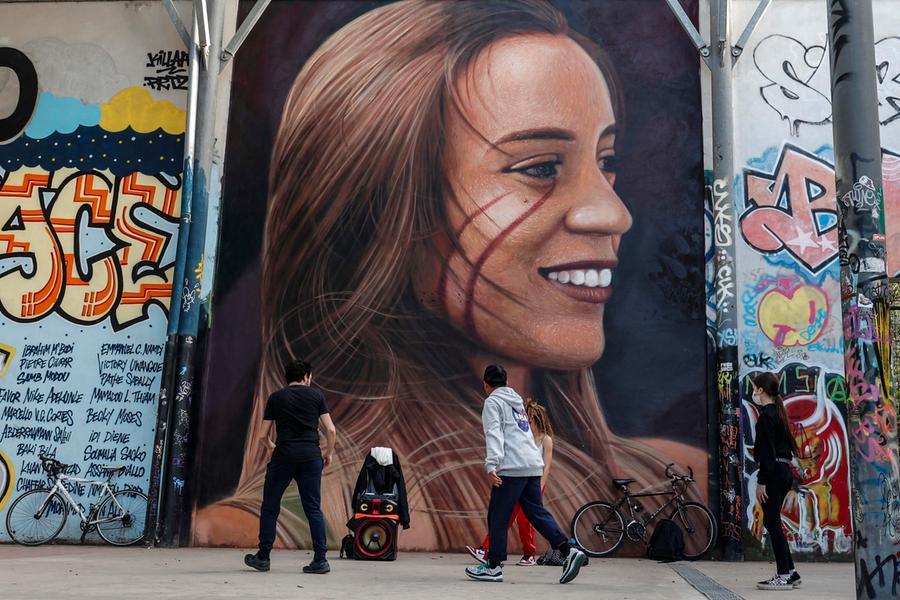
Luana, her young tormented life, her being a mother, have in the meantime become a symbol, a recognizable emblem of the scourge, regrettable in Italy, in spite of Article 1 of the Constitution which wants the Republic to be founded on work. A mural was dedicated to his beautiful face in Prenestino in Rome. Last May 1st, a street in the center of the textile district of Prato was dedicated to her

The name of Luana D’Orazio was mentioned on 2 June following her death by the President of the Republic Sergio Mattarella, on the occasion of Republic Day: «Still too many injustices. More inequalities. Conditions still unbearable for the collective conscience, such as tax evasion or deaths at work”, said the President, quoting the young woman from Prato: “The memory of Luana D’Orazio’s smile commits everyone to the duty to address the issue of worker safety with determination and rigor”.
On 18 November 2025, the first degree of the trial of the maintenance worker Mario Cusimano concluded, accused of manslaughter and malicious removal of accident precautions, who had chosen to be tried under the ordinary procedure: he was fully acquitted. The reasons are not yet available, but during the trial the doubt arose that the tampering could have been carried out by others, and therefore his personal responsibility could not have been proven.

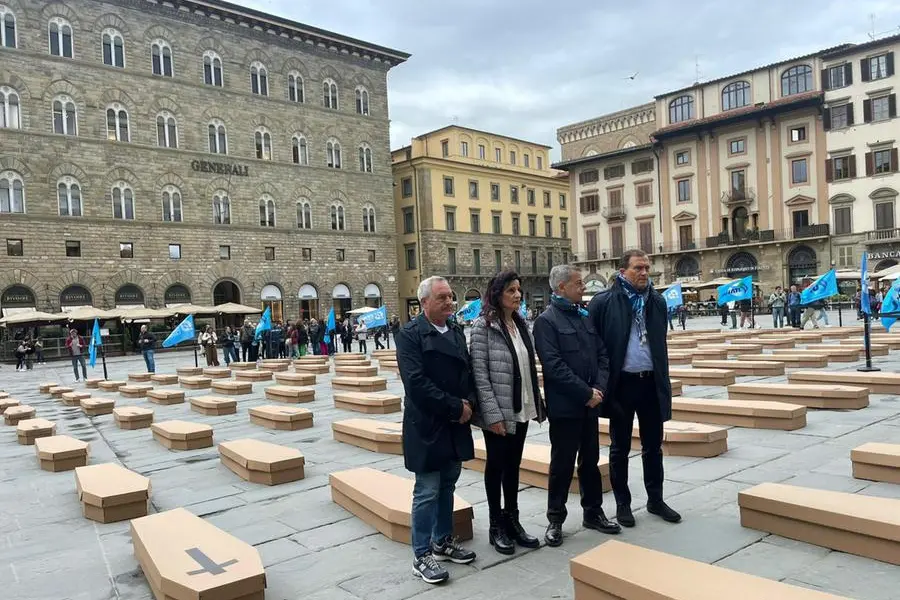
The topic of accidents at work continues to remain very current in Italy, as of 5 November 2025, there were 784 deaths at work, 8 more than in the same period of the previous year.