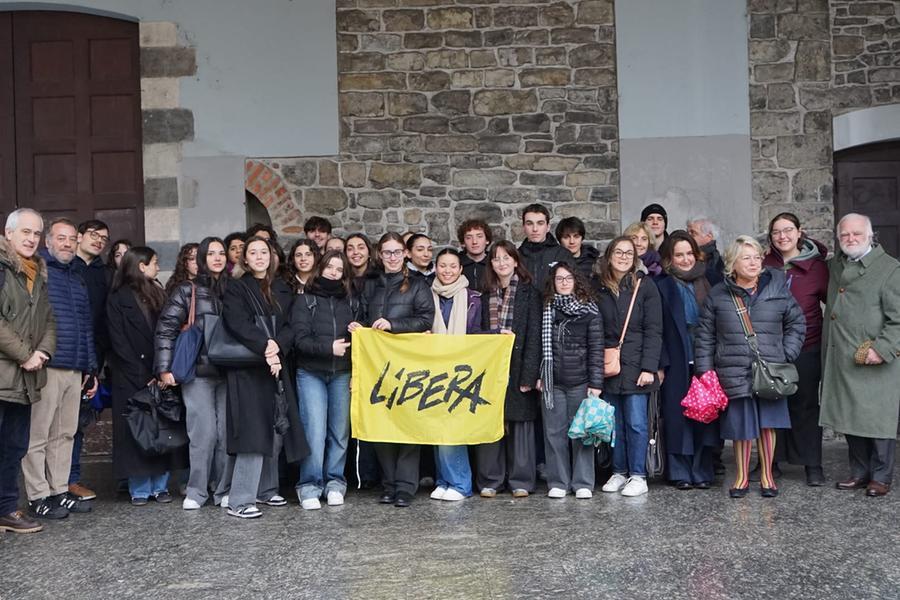


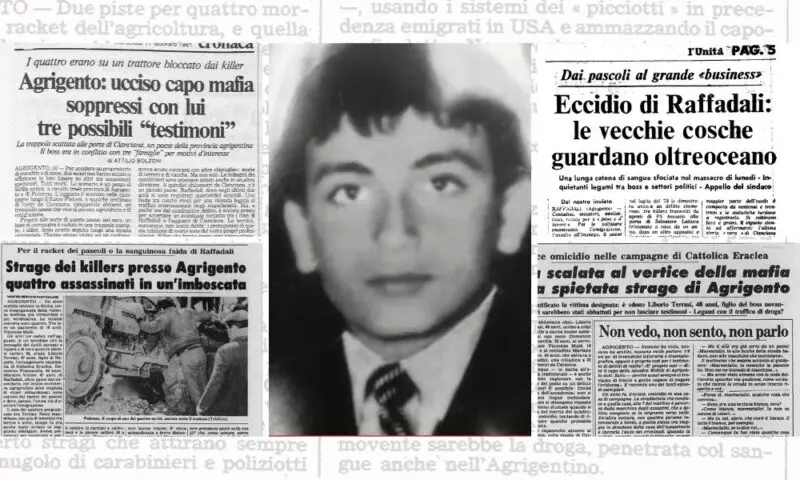
Until last year’s Vincenzo Mulè all that remained were clippings from old newspapers with a photo of him next to the tractor on which, in the Agrigento countryside, he was killed by Giovanni Brusca on 9 February 1981. He was just 15 years old. If this is no longer the case today, it is due to the passion and commitment of the third D students of the Dante Alighieri secondary school in Cerro Maggiore, in the province of Milan. Fifteen-year-olds like him, who, 1,500 kilometers away from his native Sicily, transformed themselves into true investigative reporters to reconstruct his story. The best way to honor the Day of Remembrance and Commitment in memory of the innocent victims of the mafia which will take place this year in Turin on 21 March.

We meet them in Rescaldina in the La Tela restaurant, an asset confiscated from the ‘Ndrangheta which has become the headquarters of the social cooperative which, together with Libera and local institutions, had the idea of creating a competition, RememberTela, open to middle and high schools in the area. The objective was to reconstruct the stories of at least some of the 117 minor victims of the mafia from 1945 to today: children and teenagers killed to punish family members involved in criminal events or, as in the case of Vincenzo, just because they had the misfortune of being in the wrong place at the wrong time.

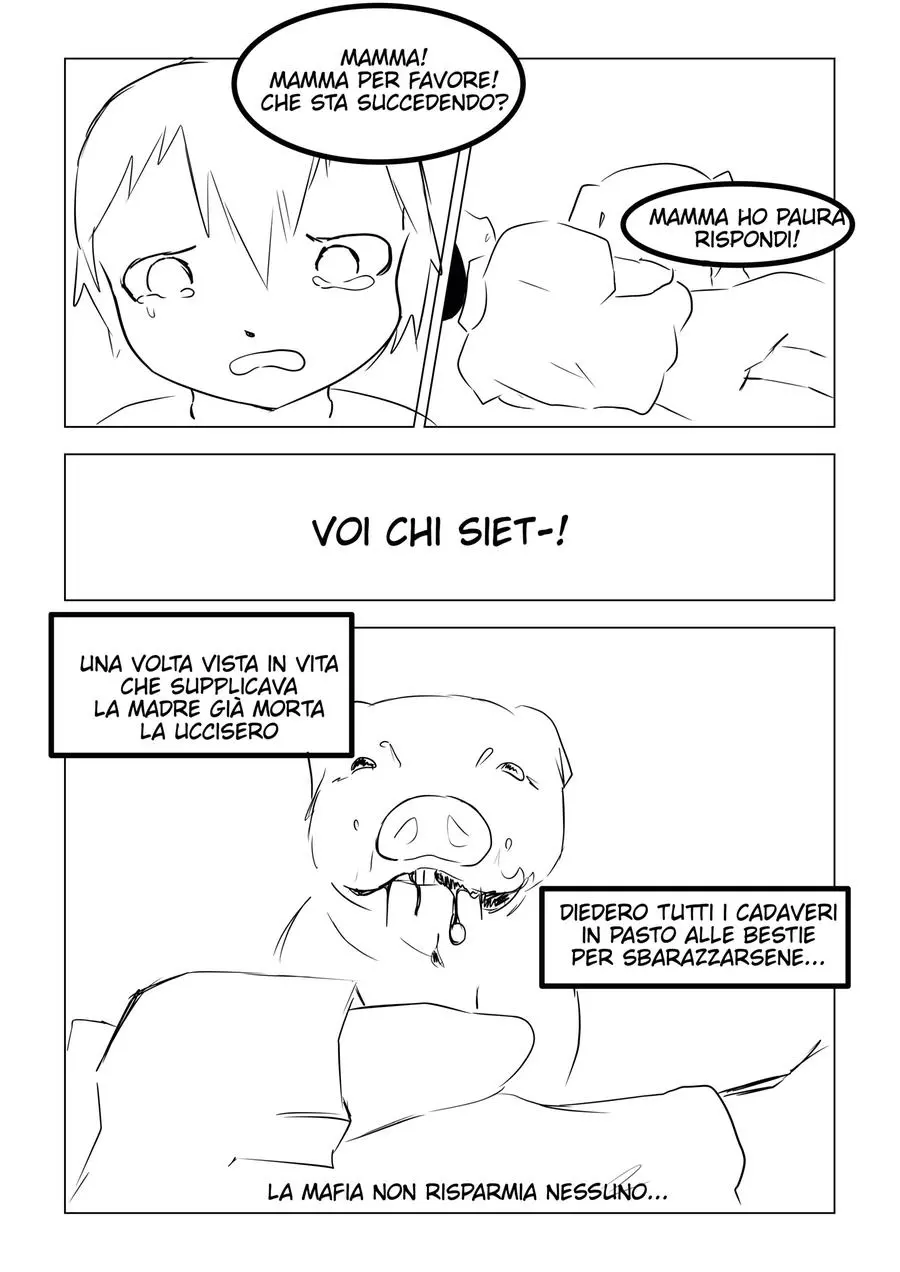
The comic about Caterina Ciavarrella, killed at the age of 5 in 1981 together with her parents and two brothers in San Nicandro Garganico (Foggia)
«We started research on the Internet, in particular on the Libera website which collects the names of all the victims of the mafia», recalls Leonardo Santoni. «Two things struck us: the first is that we only found Vincenzo’s name, the date of the attack and little else. The second was that he was our age but he died while he was working in the fields to help his family.”
Curiosity is the spark that ignites good journalists. And so it was for the third D students who, always supported by teachers Margherita Battilana, Barbara Tremigliozzi and Antonietta Giuva, began their research by discovering, first of all, that in the town where Vincenzo lived, Cattolica Eraclea, there is a real journalist, Domenico Olivieri, who for years has tried to keep his memory alive. They managed to track him down and it didn’t seem true to him that anyone was still interested in that old story. The kids also contacted Vincenzo’s school: the principal is still alive and sent them the report cards and classwork of her unfortunate student.
«He didn’t have very positive opinions», notes Erinela Marku, «because he dedicated so much time to working in the fields». Until a real scoop arrived, Vincenzo’s father is also still alive and for those of his son’s peers who were so tenacious, he decided to break the silence: «He sent us a very long audio message all in Sicilian dialect», recall the teachers, «with the help of some colleagues we deciphered it: it was very emotional». At this point the material for the investigation is ready: it needs to be organised.
The boys of the third D then invent a newspaper, La Gazzetta di Cerro Maggiore, in which they tell the story of Vincenzo. Here are some excerpts: «On the morning of the tragedy, Francesco, the older brother, was ill and Vincenzo replaced him in the fields…. suddenly in the distance he saw a tractor arriving: with the carefreeness of a boy, he decided to ask for a lift to cross the river”. The three men on the tractor let him get on, but shortly afterwards they are flanked by a car: «A hail of bullets hit everyone», continues the Gazzetta. The target was the boss Liborio Terrasi, but «Totò Riina, who was the instigator, ordered Giovanni Brusca, one of the hitmen, to kill him and all the people present».
After the news, the newspaper continues with an imaginary interview with today’s sixty-year-old Vincenzo. “Why hasn’t your story been told for a long time?” the kids ask. «Maybe it was more convenient to mind your own business. Or maybe the people of the city didn’t care about a country boy like me.” “Now that you are in eternity, how do you feel about your story?” «I feel a certain curiosity about what my life would have been like, how many children I would have had…». There is still one piece left for the “ready to print” of the Gazzetta: the visual part. Gonzalo Guaman thought of it and, with his pencil, imagined the last moments of Vincenzo’s life: «I drew a portrait of him in sequence, the moment in which he gets on the tractor, the moment in which the bullet appears inside his eyes and finally his crying eyes».
La Gazzetta di Cerro Maggiore wins the RememberTela competition and is included in a beautiful book which also collects the works of other students who participated, The mafia takes away innocent lives (Indialogue editions, afterword by Don Luigi Ciotti).

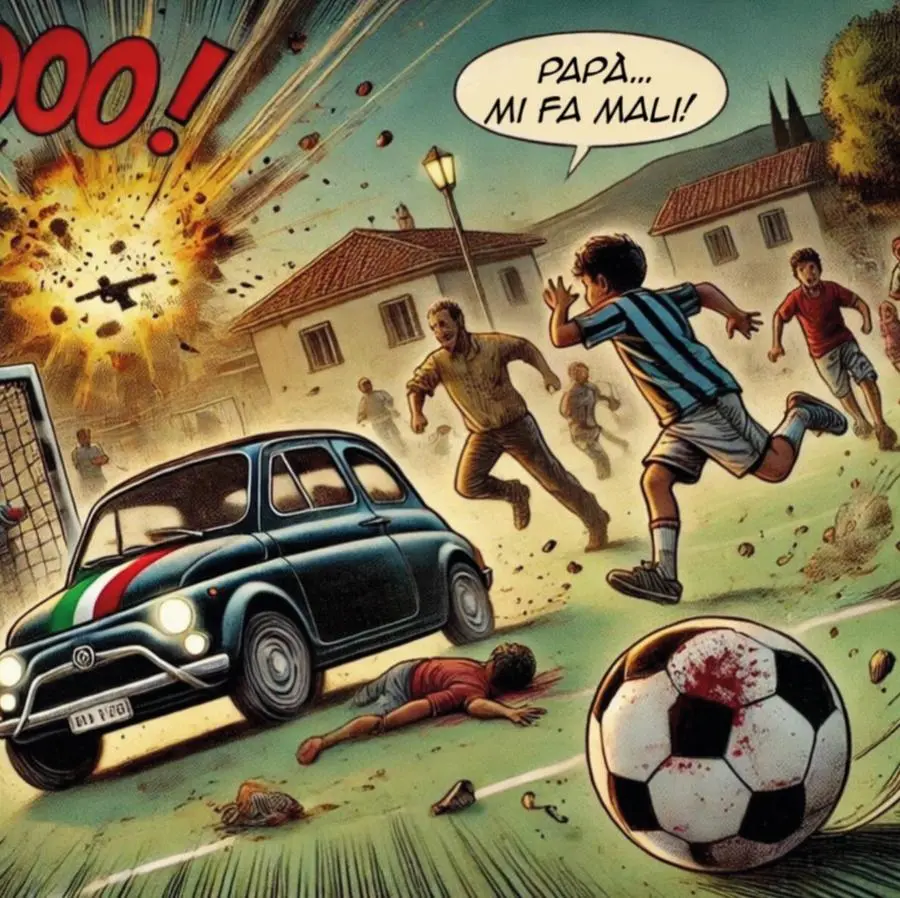
In the drawing, the last moments of the life of Domenico “Dodò” Gabriele, killed by a stray bullet while playing football in Crotone in 2009. He was 11 years old.
(school project drawings)
Last November the school received a phone call: it was the Quirinale secretariat. The President of the Republic Sergio Mattarella congratulated the students and their teachers. Finally, in Cattolica Eraclea, the auditorium of the middle school attended by Vincenzo Mulè was named after him. Professor Giuva shows us her cell phone. There is a photo of someone who has tattooed one of his student Gonzalo’s drawings on his arm: «It is by Vincenzo Mulè’s nephew. It’s called like him.”