



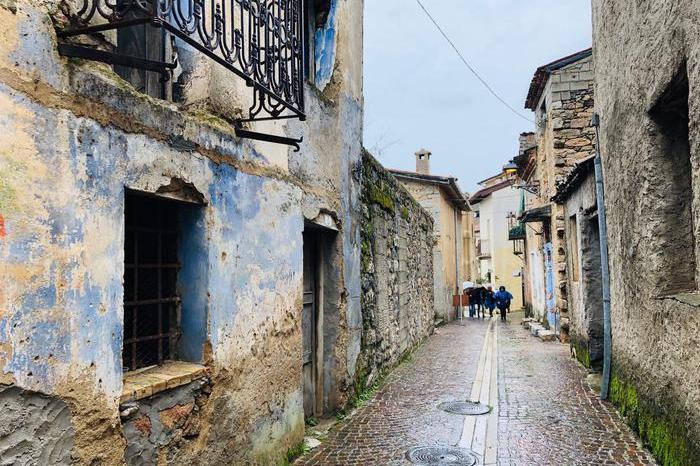
For years, Alta Sabina was considered a land “on the margins”: insufficient services, young people on the run, a demographic decline that seemed impossible to stop. A scenario that reflects a much broader national trend: according to Istat, by 2043 82% of Italian municipalities will record a reduction in inhabitants, with dramatic peaks in the South. In the last twenty years alone, almost 330 thousand young graduates have left the internal areas.
Yet, counter-current news arrives from this portion of upper Lazio: ten small municipalities have decided to unite, signing a pact that aims to transform depopulation from destiny into a collective challenge.
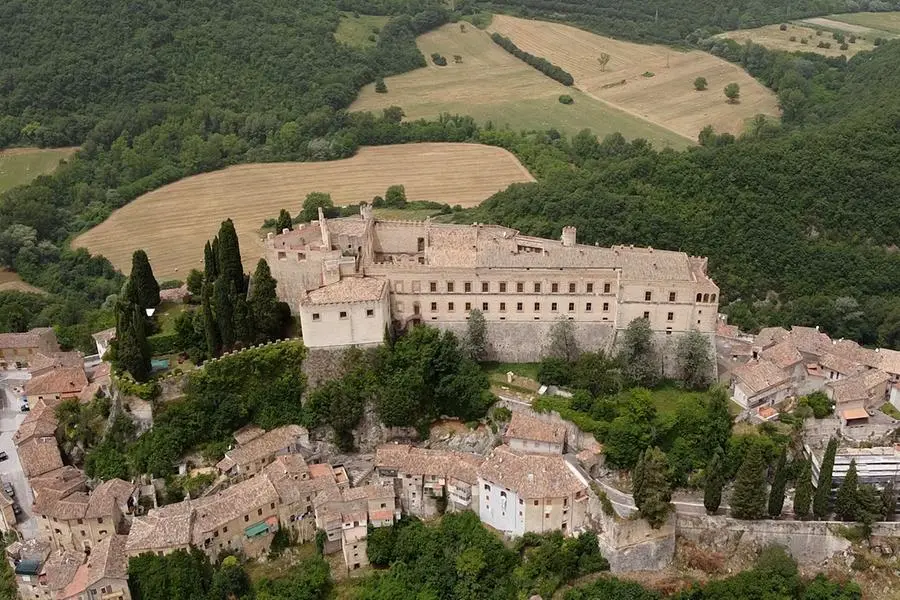
In Rome, in the WeGil space, the mayors of Rocca Sinibalda, Belmonte, Colle di Tora, Longone, Marcetelli, Torricella, Monteleone, Poggio Moiano, Poggio San Lorenzo and Varco Sabino – in total 7,500 inhabitants – signed theAtlas for the Future, the Energy, Climate and Society Contract 2026-2035. It is the first strategic document of this type in Italy: a shared roadmap that combines ecological transition, digital innovation, social inclusion and territorial development, with a clear and measurable objective: to increase the resident population by 5% by 2035, reversing a depopulation rate that is currently fourteen times higher than the national average.
A 12 million euro plan that was born within the Green Community of Alta Sabina – financed by the PNRR within the Green Communities of NextGenerationEU – and which proposes a replicable model for internal Italian and European areas.
The Contract starts from an often forgotten assumption: internal areas are worth much more than their demographic numbers. In Alta Sabina forests, waters, soils and landscapes generate almost 134 million euros in collective benefits every year: clean air and water, hydrogeological protection, CO₂ absorption, climate services. Protecting them would require just 1% of that value.
It is on this awareness that the strategy builds its vision: recognizing the role of mountain territories as essential ecological infrastructures and, at the same time, making them more attractive for those who live there or decide to return.
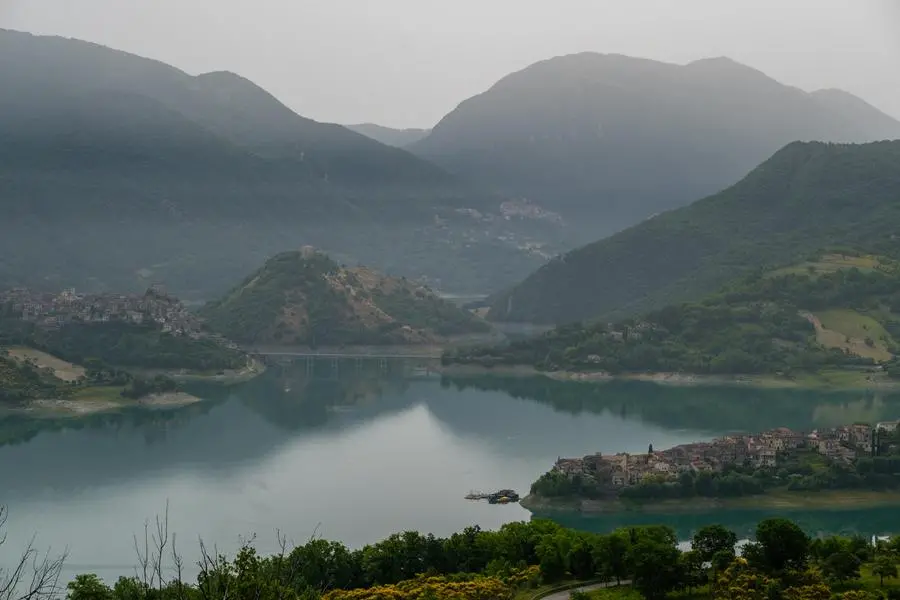
Five strategic axes, fifteen concrete projects
Energy and climate.
The Alta Sabina Energy Community includes a widespread network of photovoltaic systems on public buildings and unused land, as well as an innovative local biomass gasification plant (100 kW electric and 146 kW thermal) powered by a short supply chain. The objective is to guarantee energy autonomy, reduce costs and strengthen resilience in the event of emergencies. Added to this is an inter-municipal electric charging network with 22+22 kW columns.
Water and biodiversity.
The plan includes eight targeted interventions: new phytopurification systems, rainwater collection, protection of springs, sustainable management of basins. Valuation of ecosystem services quantifies climate and water benefits, paving the way for future payment schemes for ecosystem services.
Digital and social innovation.
A single civic platform will integrate environmental and community data: a tool that will enable smart contracts to exchange time and services through the Alta Sabina digital token. From a ride by car to taking care of a flowerbed, from supporting the elderly to sharing medicinal herbs: each gesture will generate credits to be reinvested in the community, creating a collaborative economy monitored and certified in blockchain.
Inclusion and participation.
The heart of the project is the Community Pact: workshops, participatory mapping and training programs. Eleven young tutors will accompany the over 65s in digital inclusion, while the Green Ambassadors, trained in dedicated workshops, will become points of reference for local leadership.
Agriculture and territory.
The lavender supply chain becomes a symbol of regeneration: cultivation on recovered marginal land, integration with biodiversity and a new local economy. The pilot project “Exoduses and returns” was born in Marceltelli, designed as a model of sustainable return to internal areas. A wooden community hub for agricultural, training and social activities will be built in Rocca Sinibalda.
The political vision: alliances between internal areas and cities
“Green Communities can create real alliances between municipalities, businesses, schools and the third sector,” says Marco Bussone, president of UNCEM. “We need a pact with cities, based on the recognition of ecosystem services. Rome and Rieti, for example, can stipulate agreements with mountain areas enhancing CO₂ absorption and water management. We need co-responsibility, not compensation.”
For Elena Battaglini, territorial sociologist and scientific director of the strategy, change arises from relationships: “Countering the demographic exodus does not require slogans or campaigns, but the building of trust and new shared rules. We have worked to create spaces of resonance and social reinforcement”.
The mayor of Rocca Sinibalda, Stefano Micheli, underlines the political dimension of the project: “It is one of the first territorial contracts of this kind in Italy. We chose to do it to give strength to the Green Community: ua systemic response to two intertwining emergencies, the climate one and the demographic one”.
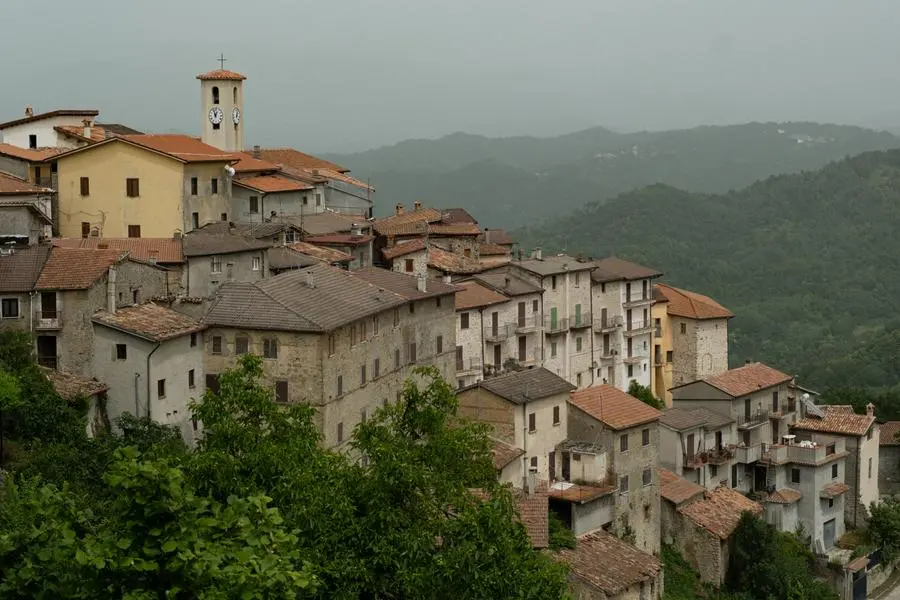
Each intervention is associated with specific indicators (Voluntary Local Review). A public dashboard will allow citizens, institutions and investors to follow the progress of the plan in real time, ensuring transparency and accountability.
A pilot model for Italy and Europe
The Atlas for the Future is not just a technical plan: it is a social and institutional experiment that combines technology, human capital and natural resources. It is an approach that could become a reference for other internal Italian and European areas, especially those most affected by population loss.
The signing of the Contract now opens a new phase: one in which the vision must be transformed into concrete change. A path that Alta Sabina chooses to undertake not alone, but as a community, convinced that even the most fragile territories can grow again when they decide to do it together.