





Berlin offered itself once again as the symbolic capital of European fractures and their possible recompositions. In the rooms where the delegations from the United States, Ukraine and the main European countries met, the air was that of great occasions: not a formal peace negotiation, but a crucial step, an attempt at rapprochement that could finally bring about a turning point in the war in Ukraine. This is where Donald Trump chose to place his strongest phrase: «We have never been so close to the end of the war». A statement that says a lot, perhaps too much, about the way diplomacy is described today even before it is carried out.
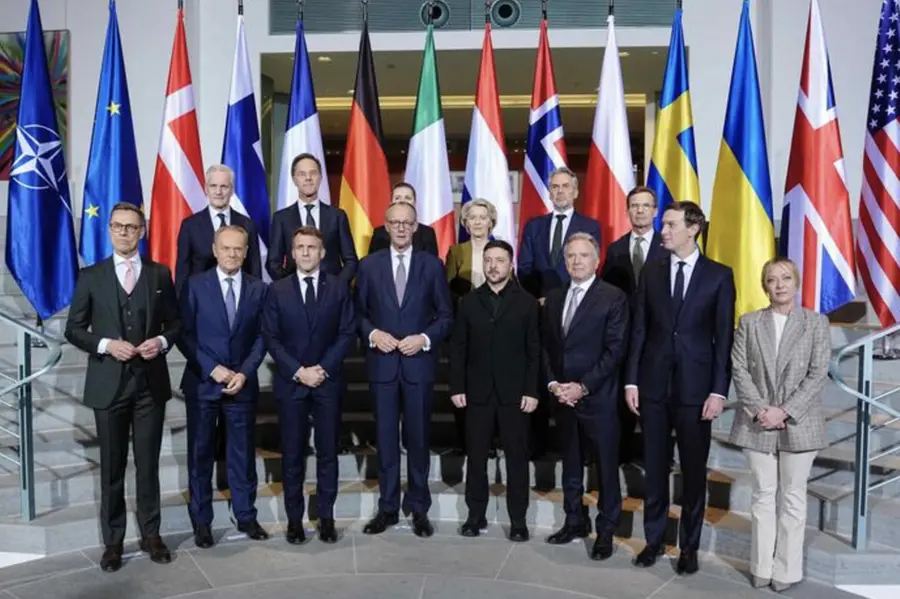
According to the converging reconstructions of the main international agencies and the European press, the Berlin talks have produced significant progress, especially in the field of security guarantees for Kiev. It is the point that, more than any other, has blocked every previous attempt at a ceasefire: how to prevent a truce from turning into the antechamber of a new Russian invasion? On this dossier, Washington would have put an unprecedented commitment on the table: a system of multilateral guarantees “a la NATO”, even without Ukraine’s formal entry into the Atlantic Alliance.
It is here that what has been called “the NATO knot” for months comes to an end. Kiev would have agreed to freeze, if not abandon, the prospect of membership, obtaining in exchange a protection mechanism that commits the United States and Europe to intervene in the event of new aggression. A compromise that has the flavor of realpolitik and which marks a paradigm shift compared to the initial narrative of the war, when entry into the Alliance was indicated as an indispensable objective.
But if the security guarantees seem to have found a shared framework, the territorial dossier remains the real minefield. The areas occupied by Russia, from Donbass to Crimea, are not the subject of a definitive agreement. Western delegations speak of “temporary management of the status quo”, while Kiev continues to reiterate that no peace can be based on the recognition of Russian annexations. It is a distance that Berlin has not bridged, but only circumscribed, postponing it to a later phase of the negotiation process.
Russia, absent from the table, remains the great stone guest. Without his direct involvement, the agreement remains an incomplete architecture, a draft peace that needs the endorsement of those who, on the ground, continue to dictate the timing of the war. Also for this reason the enthusiasm expressed by Trump appears, in the eyes of many European observers, premature if not functional to a precise communication strategy.
It is not the first time that the former American president – who has returned to playing a central role on the international scene – proclaims himself a global peacemaker. It happened in the Middle East, where announcements of a turning point and promises of stabilization coexisted with the continuation of fighting and civilian victims. It happened elsewhere, in forgotten or marginalized contexts, where the word “peace” was used as a rhetorical frame rather than as a concrete result. The risk, even in Berlin, is that diplomacy is compressed into a slogan, that the complexity of a conflict is reduced to a catchphrase.
In the meantime, while there is talk of a ceasefire and an end to hostilities, the war continues to produce deaths, refugees and destruction. The front lines remain unstable, the bombings have not stopped, and the Ukrainian economy lives suspended between survival and the promised reconstruction. Reconstruction itself is one of the most delicate chapters to emerge in Berlin: a massive, billion-dollar plan that calls into question governments, financial institutions and large private groups. A process that risks transforming the end of the war into a new economic competition, where strategic and financial interests could prevail over the social and democratic needs of the country.
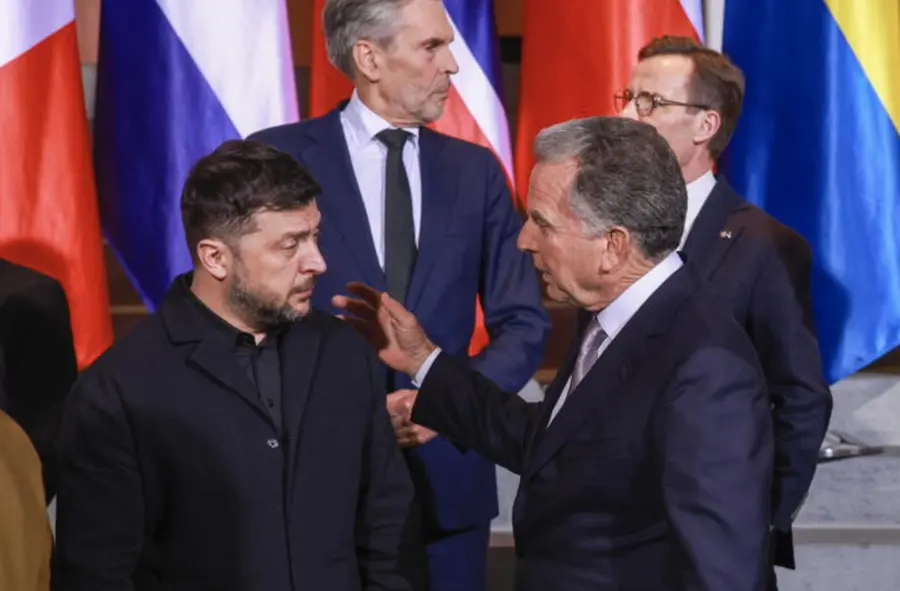
Europe, present with its leaders, reaffirmed unity and support for Kiev. But behind the official declarations there remain profound differences: on the relationship with Moscow, on the duration of the military commitment, on the political weight to be claimed with respect to Washington. Berlin once again shows a Europe involved, but not a protagonist, called to ratify balances defined elsewhere.
In the end, what emerges from the talks is not so much peace as a possible truce, a fragile balance that requires verification, long periods of time, and a political will that goes beyond announcements. The war in Ukraine, like all wars of our time, resists narrative shortcuts. And perhaps the lesson of Berlin lies precisely here: between diplomacy that advances in small steps and politics that proclaims goals, the distance remains wide.
Saying that the end is near can serve to reassure tired public opinions, to strengthen leadership in search of consensus, to give immediate meaning to complex negotiations. But peace, real peace, rarely coincides with the moment in which it is announced. Rather, it begins when words stop running before facts.