


To communicate, dogs use gestures, facial expressions and precise postures. According to a veterinarian, one of these behaviors would reveal that they feel fully integrated into the family.
When you live with a dog, you quickly learn to decode their reactions. A sideways glance, an ear that perks up, a tail that wags. Everything has meaning. We even end up understanding what he wants without him having to bark. But, behind these small signals, there are sometimes deeper messages.
First of all, if his tail goes in all directions, that’s already a good sign. This natural pendulum is a real emotional compass. But be careful not to interpret everything as proof of joy. A wiggle that is too low, too stiff, or too fast can also signal fear or tension. Canine language is rich and sometimes misleading. Licking is also part of the emotional repertoire. In the wild, dogs lick their fellow dogs to strengthen bonds, show respect or check on their condition. If your dog licks your face or hands, it’s a way for him to get news. To be there. Some even go so far as to lick their feet. Not very glamorous, but totally sincere. It is a behavior inherited from the pack instinct. And then there’s that smile. Not the same as ours of course. But a grin, curled lips, relaxed muzzle, accompanied by a flexible posture and a tail in windshield wiper mode. It’s a way of saying: “I’m happy, shall we play?” Not all dogs do it, but those who express it show infectious enthusiasm.
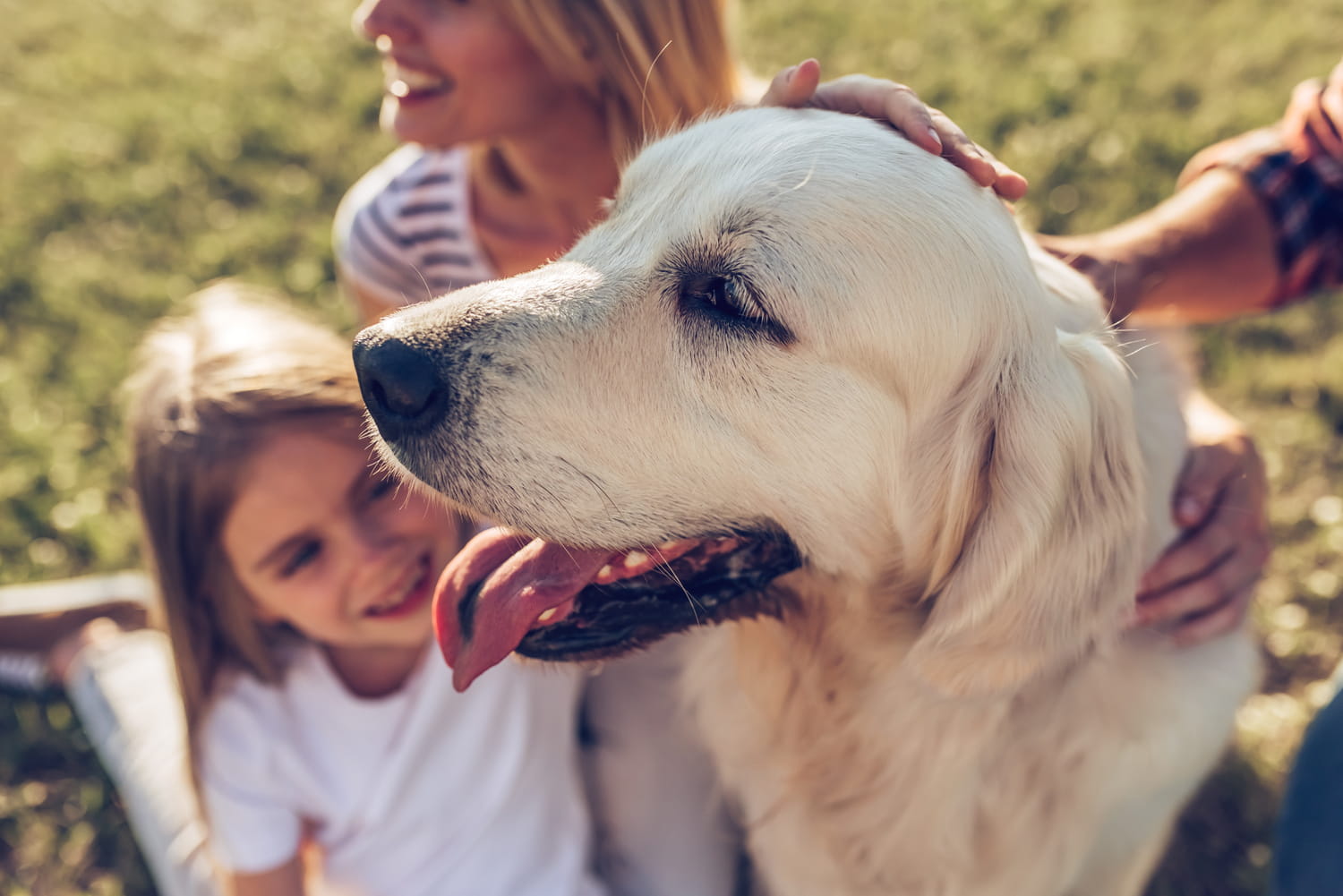
Veterinarian Julian Norton often observes another phenomenon. “People sometimes ask why dogs nudge and rub against you.”he explains. “Part of the reason is that dogs really feel like they are part of the family and the tribe, and they are trying to get attention.” For him, this type of behavior goes well beyond simple contact. This is their own way of saying: “I’m here, look at me, I’m part of your life.” He adds: “It’s quite endearing. I think it’s a bit like when dogs come and lick your face or your hands or that sort of thing. They just want to be part of the family and have attention.”
The dog thus seeks to create a bond. He wants to interact, participate, exist within the family circle. He understands that he has a place. So the next time your dog comes to cuddle up to you, know that it’s not just a cuddle moment. It is a true declaration of love. You adopted him, but now he adopts you back: you are officially part of the pack! The dog is therefore not only man’s “best friend”, he is also a member of the family in his own right.