






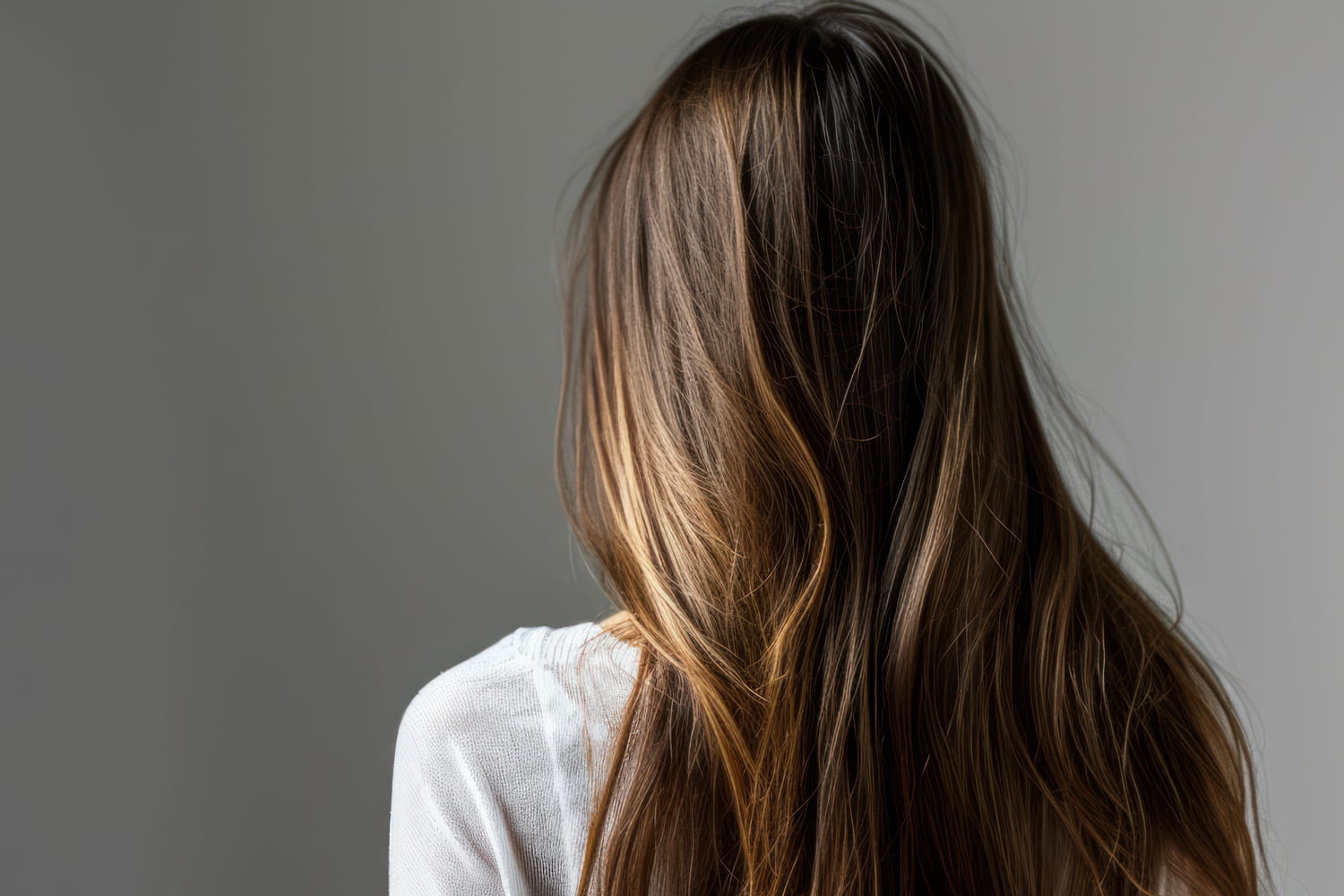
The method couldn’t be simpler and requires a single accessory, already present in your bathroom.
Winter seriously complicates life for hair, between humidity, temperature variations and static electricity. A professional hairdresser, however, identifies a precise gesture that really limits frizz. And this gesture makes all the difference.
Besides, why does hair react so quickly to the slightest change in air? Cos Sakkas, elected British Hairdresser of the Year three years in a row, indicates that the hair fiber dehydrates more easily in winter, and that the external environment accentuates this fragility. Result: cuticles lift, moisture seeps in and frizz appears. Advice is circulated but professionals observe the most frequent errors on a daily basis. Based on these observations, certain actions clearly stand out for their effectiveness.
Basic maintenance takes center stage. Too frequent shampooing, combined with aggressive formulas, deprives the hair of its natural protection. This is enough to create a favorable environment for drying out and therefore frizz. Experts favor spaced washes and non-sulphated products, capable of preserving hydration and suppleness of the lengths. They also insist on the water temperature: lukewarm rather than hot, to avoid excessively opening the cuticles. Improper washing, repeated several times a week, quickly disrupts the balance of the hair and increases its sensitivity to ambient humidity.
Drying plays an equally decisive role. Vigorous rubbing with a towel, a common reflex, helps to increase the texture of the fiber and therefore frizz. Hairdressers recommend a more measured approach, gently squeezing out excess water rather than rubbing. They also point out that the direction of the hairdryer influences the result: the tip facing downwards helps smooth the cuticles, while too much heat has the opposite effect. Once the hair is dry, continuing to dry does not serve to “fix” the hairstyle; this only adds dehydration and unwanted volume, especially on curly hair.
Among these various recommendations, one action stands out as particularly decisive for reducing frizz in winter, according to Cos Sakkas. This involves detangling your dry hair with a wide-toothed comb and avoiding brushing it when it is dry. This gesture limits breakage, preserves the alignment of the cuticles and significantly reduces the formation of frizz on a daily basis. Brushing dry hair is too aggressive.
So the next time you need to detangle your hair, remember to have the right tools and accessories. You will enjoy a smooth, frizz-free hairstyle this winter.