





Saks Global Faces a Financing Reckoning as Bankruptcy Options Narrow
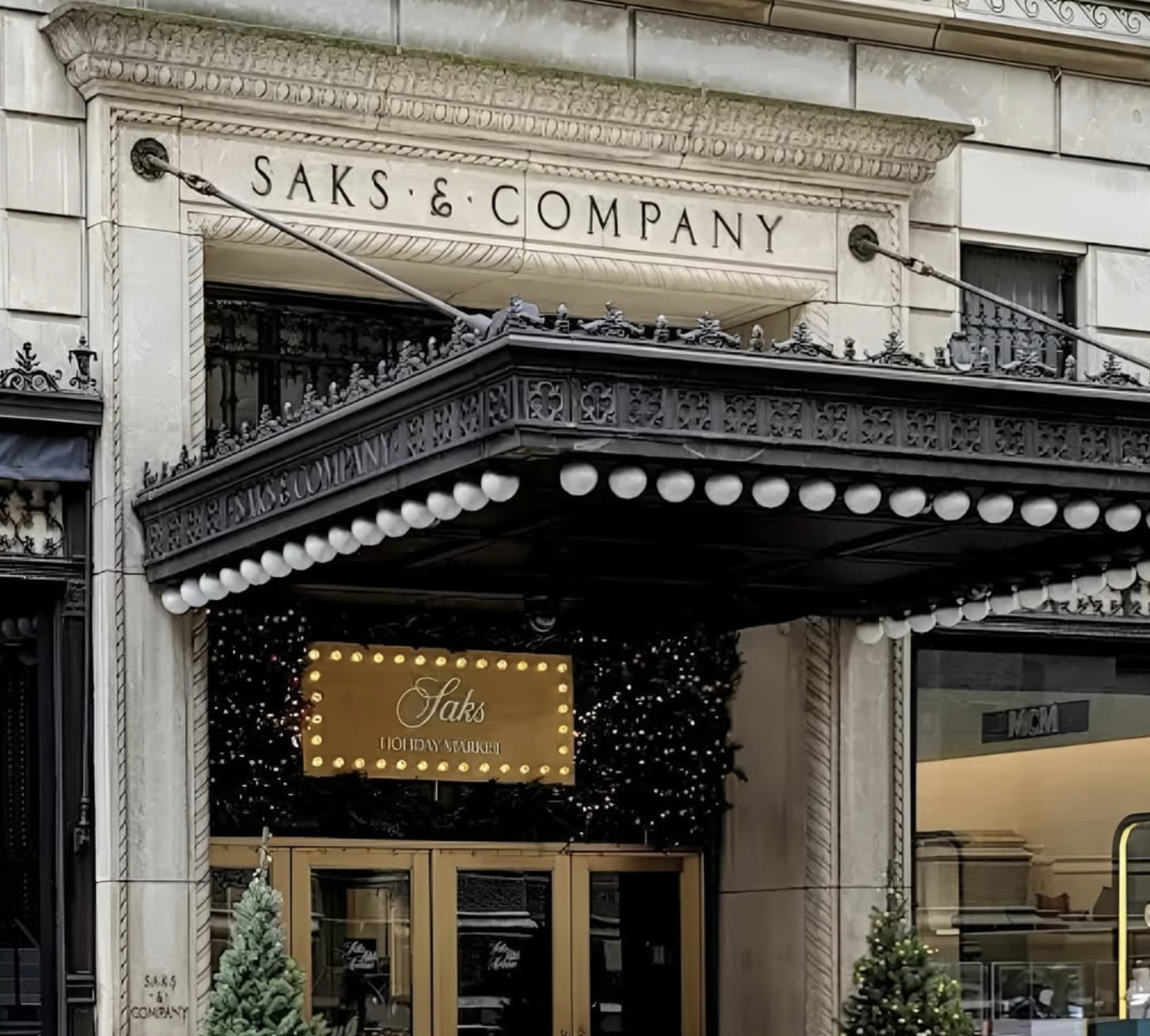
Saks Global is confronting a defining financial stress point that will determine whether the company survives as a reorganized luxury retailer or fractures under creditor pressure. The immediate exposure centers on its difficulty securing debtor-in-possession financing, a prerequisite for maintaining operations if the company enters Chapter 11. Employees, vendors, landlords, bondholders, and luxury brand partners are all directly affected by the outcome.
The business consequence is strong. Without sufficient financing, Saks Global risks a disorderly process that would disrupt payroll, inventory flows, and supplier confidence across its flagship banners, including Saks Fifth Avenue, Neiman Marcus, Bergdorf Goodman, and Saks Off 5th. The inability to line up capital also weakens negotiating leverage with creditors, increasing the probability that liquidation values begin to dominate restructuring discussions.
Creditors, not management, now effectively control the timeline. Institutional lenders and bondholder groups must decide whether the enterprise can generate enough stabilized cash flow to justify senior rescue capital. Their hesitation signals broader concern that the luxury department store model, even at scale, may no longer support the debt burden created by consolidation.
Why Bankruptcy Financing Has Become the Central Risk
Debtor-in-possession financing is designed to protect lenders while giving distressed companies oxygen to reorganize. In Saks Global’s case, the struggle to secure it reflects skepticism that the business can sustain vendor relationships and customer demand long enough to exit bankruptcy intact. DIP lenders typically demand visibility into inventory quality, brand support, and landlord cooperation, all areas under strain.
The funding gap matters because it affects continuity. Without DIP capital, vendors may halt shipments, luxury brands may redirect inventory to direct-to-consumer channels, and landlords may move to reclaim prime retail space. Each of these reactions compounds the operating risk, reducing enterprise value before restructuring terms are finalized.
This tension explains why bankruptcy is no longer a protective shield by default. For retailers with fragile supplier trust and high fixed costs, Chapter 11 can accelerate decline rather than pause it, especially when financing terms tighten.
Structural Pressure from the Neiman Marcus Combination
Saks Global’s predicament is inseparable from the debt structure created by its acquisition of Neiman Marcus. The deal was intended to consolidate luxury retail power, extract scale efficiencies, and strengthen bargaining power with global fashion houses. Instead, it left the combined company carrying leverage that assumed a steadier luxury demand environment than what materialized.
Luxury spending has become more polarized. High-net-worth consumers continue to buy selectively, while aspiring customers have pulled back. Department stores sit in the middle of that squeeze, facing rising operating costs and diminishing foot traffic. These pressures reduce the predictability of cash flows that lenders rely on when underwriting bankruptcy financing.
The consequence is a valuation mismatch. Creditors assessing DIP loans must weigh brand equity against near-term liquidity burn. When confidence in recovery weakens, lenders either demand punitive terms or step away entirely.
How Financing Expectations Have Shifted
| Old way | New way |
|---|---|
| Bankruptcy financing assumed as a formality for large retailers | Financing is contingent on proof of rapid operational stabilization |
| Brand value justified lender participation | Lenders prioritize cash generation over brand prestige |
| Asset sales supplemented DIP loans | Asset sales now signal distress and reduce collateral comfort |
| Vendor loyalty assumed during Chapter 11 | Vendors require cash terms or exit relationships |
This shift reflects a broader recalibration in retail credit markets. Lenders no longer treat scale as protection. Instead, they scrutinize execution risk, inventory aging, and brand commitment. For Saks Global, that means every delayed financing commitment amplifies doubts about survivability.
Vendor Confidence and Inventory Risk
One of the most immediate second-order consequences of financing uncertainty is vendor behavior. Luxury brands protect their own margins and reputations. When payment timelines become uncertain, they reduce exposure. That often means shipping less inventory, shortening delivery windows, or exiting wholesale relationships altogether.
For Saks Global, reduced inventory variety undermines customer experience, which then weakens sales, reinforcing lender concerns. This feedback loop is especially dangerous in bankruptcy scenarios, where maintaining full assortments is essential to preserving enterprise value.
The question many stakeholders are asking is whether the company can reassure vendors quickly enough. The answer depends almost entirely on securing financing that signals operational continuity rather than managed decline.
Leadership, Governance, and Creditor Control
Leadership changes at Saks Global have added another layer of complexity. While board-level involvement can assure creditors that hard decisions will be made, it also signals that the company has moved from growth mode into survival governance. DIP lenders pay close attention to governance structures, approval rights, and oversight mechanisms.
From a creditor perspective, stronger control reduces risk. From an operational perspective, it can slow decision-making and limit strategic flexibility. This tradeoff shapes negotiations over financing terms, including milestones, reporting requirements, and asset disposition triggers.
Governance scrutiny is also relevant to equity holders. As creditor influence grows, the probability that existing equity retains value diminishes, particularly if liquidation scenarios begin to anchor negotiations.
Why Securing DIP Financing Still Matters
One common question is whether securing DIP financing would actually save the business. The answer is conditional. DIP funding does not guarantee survival, but it creates a controlled environment where value can be preserved, stores can operate, and restructuring options remain open.
Without it, outcomes become binary. Either creditors agree to an expedited sale process, or the business winds down. Both paths typically destroy more value than a funded reorganization, especially for complex retail ecosystems with real estate, brand relationships, and seasonal inventory cycles.
For Saks Global, DIP financing represents time. Time to renegotiate leases, stabilize vendor terms, and determine which banners or assets can support a sustainable capital structure.
Broader Market and Competitive Exposure
Saks Global’s situation is being closely watched across the retail and credit markets. Other department stores, mall owners, and leveraged retail operators face similar structural pressures. A failed financing effort here would harden lender attitudes towards the entire sector.
Competition also plays a role. Luxury brands increasingly favor direct distribution and controlled wholesale partnerships. A weakened department store partner accelerates that shift, reducing the strategic relevance of multi-brand retailers in the luxury ecosystem.
This dynamic raises a deeper question investors are asking: whether luxury department stores can exist as cash-generating platforms without heavy leverage. Saks Global’s outcome may shape that answer.
What Happens If Financing Fails
If Saks Global cannot secure adequate DIP financing, the process would likely pivot toward asset-centric outcomes. Flagship real estate, intellectual property, and individual banners could be separated to maximize creditor recoveries. While this may preserve value for lenders, it would dismantle the integrated retail model the company built through consolidation.
Employees face increased uncertainty in this scenario, as workforce decisions often follow asset sales. Vendors would prioritize claims recovery over long-term partnerships. Landlords would reassess tenant mixes in prime locations.
The reputational impact would extend beyond Saks Global, reinforcing perceptions that large-scale department store consolidations carry asymmetric downside risk.
Authority Close: What Stakeholders Should Watch
For boards and executives, the priority is credibility. Financing discussions must be anchored in realistic operating assumptions, not brand nostalgia. Clear communication with vendors and landlords is essential to prevent value erosion before outcomes are decided.
For investors and creditors, the focus should remain on downside protection and execution discipline. Rescue capital without operational traction risks throwing senior money into structural decline. Patience must be weighed against the accelerating costs of delay.
Saks Global now sits at a narrow intersection of time, trust, and capital. The resolution of its financing challenge will determine not only its own fate, but also how credit markets price risk across the luxury retail sector.
People Also Ask
Why is Saks Global struggling to secure bankruptcy financing?
Because lenders doubt near-term cash stability, vendor support, and recovery value under current operating conditions.
What is debtor-in-possession financing and why does it matter?
It allows a company to operate during bankruptcy, preserving value and preventing rapid liquidation.
Can Saks Global survive without DIP financing?
Survival becomes unlikely, as operations would face immediate disruption and asset sales would dominate outcomes.
How does vendor confidence affect restructuring?
Vendor pullback reduces inventory quality, weakens sales, and accelerates value loss.
What does this mean for luxury department stores?
It highlights structural challenges in supporting leverage amid changing consumer and brand dynamics.