




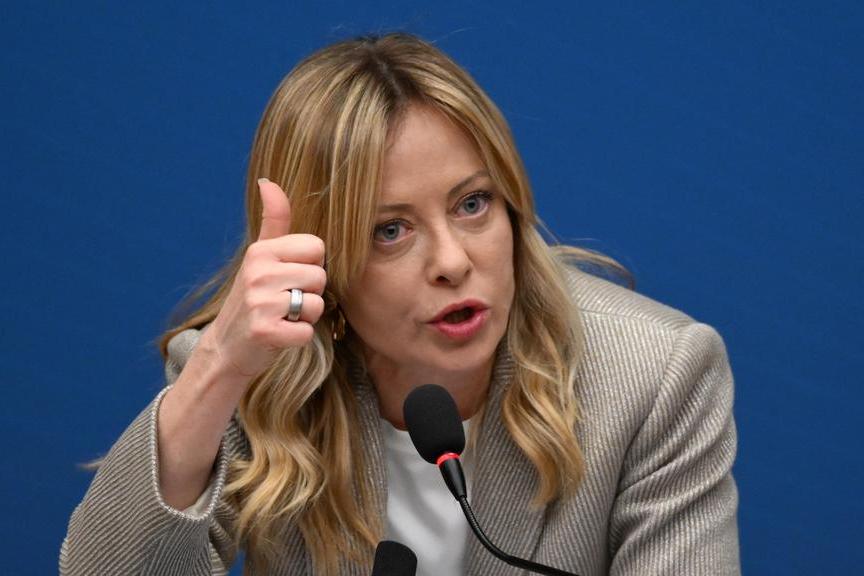
It’s easy to say safety, it has been the workhorse of the government in office since the election campaign, but there is a lot of confusion between saying and doing, and after three years and three months of legislature, the topic recurs among the 40 questions drawn at the end-of-year press conference by Prime Minister Giorgia Meloni.
It is the Prime Minister herself who puts it on the agenda with growth among the “focuses for 2026”. But he must admit that on the issue of safety “the results are not sufficient for me”, therefore “this is the year in which we change pace and do even more”. «There are many», he says, of the initiatives we have launched, «30 thousand hired among the law enforcement forces», «the unblocking of investments that have been stopped for a long time» on the topic, «the security decree much contested by the oppositions who now claim security», «the fight against the mafia with 120 fugitives captured», «the work done on Caivano». Among the measures “we are studying” there is also the one on “baby gangs”, added Meloni according to which “some of these measures are starting to show results: in the first 10 months of 2025 crimes fell by 3.5%”. Except then attributing the difficulties to “years of laxity that are not easy to erase” and therefore to those who came first and to the magistrates the responsibility for frustrating the work of Parliament, Government and Police forces: “If we want to guarantee safety for our citizens we must all work in the same direction. The government, the police forces, must do it, and the judiciary which is fundamental in this plan should do it. An appeal to everyone working in the same direction to guarantee the safety of citizens can make the difference” explains the Prime Minister who lists a series of recent judicial cases.
“I can give dozens of these examples,” he says. “When this happens, not only is the work of Parliament in vain, but above all that of the police.” To then talk about a “list” (which he will not dare to discuss, on the subject of separation of powers) drawn up on what he considers the responsibilities of magistrates in terms of security.
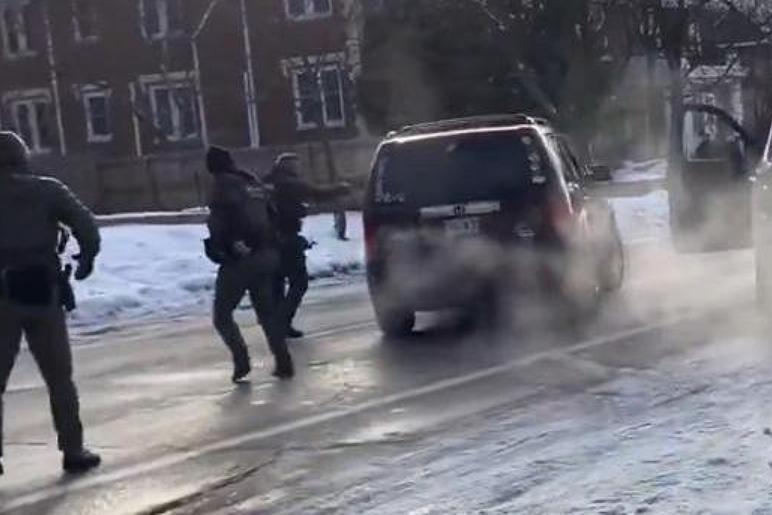
Meloni denies any delegitimization of the judiciary, but taking into account the fact that, as Lord Lord Bingham said, the countries in which all court decisions meet with the government’s favor are not places where one would want to live, (while Minneapolis shows the risks of too narrow an axis between governments and the police).what seems to emerge from the press conference is that the certainly hot and heartfelt topic of security continues to be responded to, in terms of promises and new laws (which do not always give good proof of applicability), with a key that is always and only repressive (the Security Decree, the Caivano Decree, vindicated, and the promise of intervention on baby gangs go in that direction), while news and society every day give us factors of insecurity and criminal phenomena that refer to social marginalization, to disorganized lives, to people who do not seem to find a place in the world, often on the brink of a difficult migration or of ever new forms of poverty, destined to worsen in the technological revolution.
And in the meantime, alarming news cases in recent days are trying to show that the same expulsions, which in certain rhetoric seem to be the solution to every evil, are not so easy to implement in practice.: they are faced with a lack of resources, with bilateral agreements that do not exist, with uncertain identities and nationalities.
What, however, seems to be missing from the semantic horizon of security, judging from the press conference, is a long-term vision of the country system: while we continually promise to confine and remove those who deviate, it is not clear what we intend to do to prevent the marginalization of those who grow up feeling invisible, or different, excluded from opportunities, from feeling like they belong, from a world that runs too fast. We often discover later that children who we later find with a knife in their pocket or adults who have ended up in disarray have experienced similar feelings. Sometimes, not always, they are second and third generations of migrants who don’t know exactly who they belong to.
It is not an easy challenge, we are a country of recent migration, others have faced similar difficulties before us, and there are no simple solutions: every model – including the opposing ones of French assimilationism and English multiculturalism – has shown critical issues, but it seems naive to think that a problem that exists and which is civil and social before being criminal, will magically find an answer by itself, leaving it without a project, without an idea of coexistence and a future, which also aims to try to keep a society together, between center and suburbs, before it gets to the knives.