





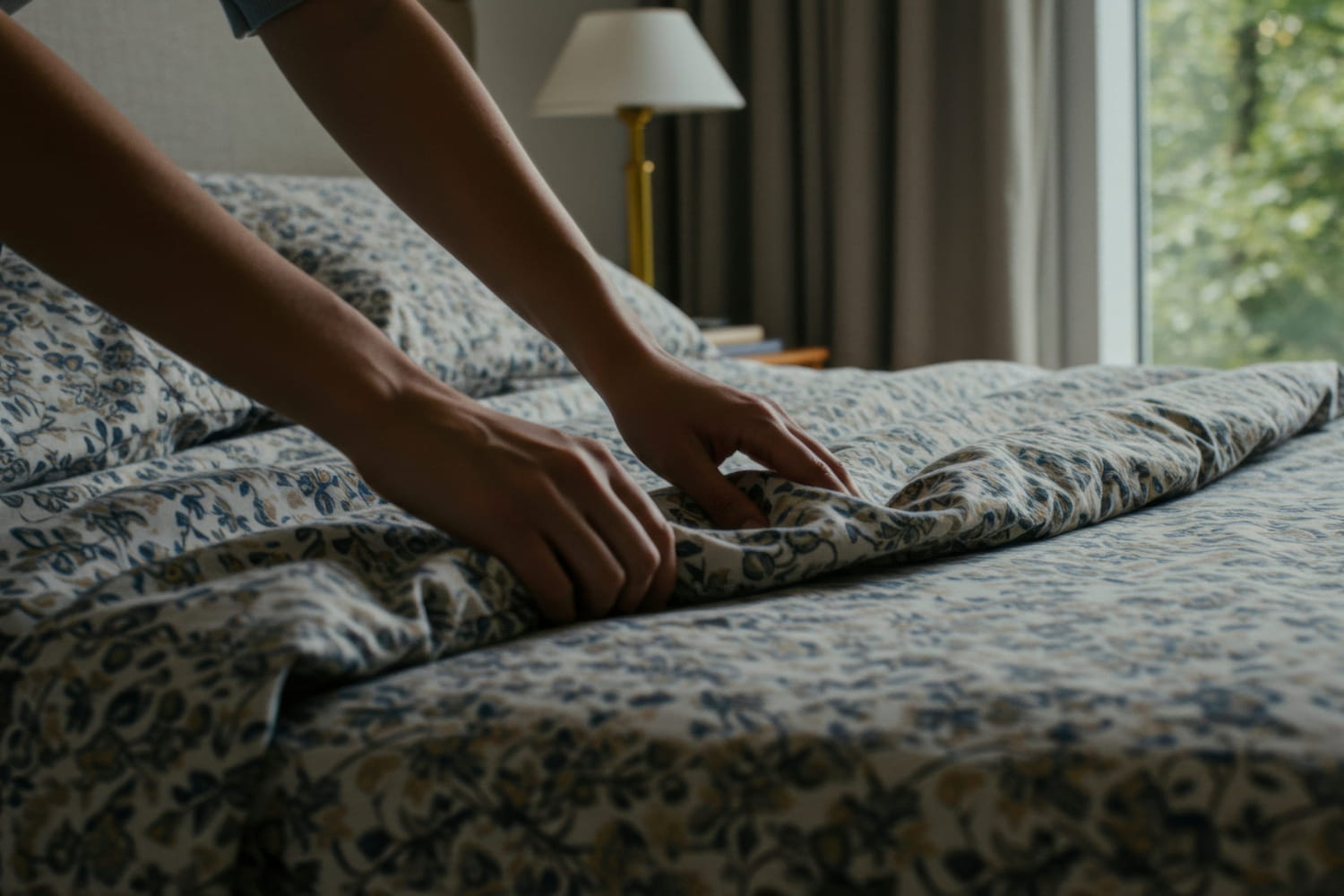
This is not a fault for psychologists. Not making your bed in the morning actually hides major psychological benefits.
As soon as you get out of bed, the first reflex instilled from childhood is to pull the sheets and tuck in the duvet or blanket. Making your bed is a legacy of the Victorian era when appearance mattered more than actual hygiene. Today, this tradition seems to be running out of steam. Between our hectic lifestyles and a quest for more authentic well-being, many people abandon this morning reflex. What if this development was, in reality, good news on a psychological level?
Far from being a mark of negligence, this detachment from a squarely made bed would hide major psychological advantages. Science is indeed beginning to rehabilitate those who were once called “lazy”. Psychology researcher Kathleen Vohs, from the University of Minnesota, has conducted pioneering work on the influence of our environment on our psychology. His study, published in Psychological Science, demonstrates that while a perfectly tidy setting encourages conventional choices and caution, “disorder” – like a bed left disheveled – stimulates certain areas of our brain.
“Being in a messy room has bred something that businesses, industries, and societies need in greater quantities: creativity. A messy environment with an unmade bed, for example, seems to encourage a break with tradition and strict adherence to household routines, which can lead to innovative ideas.“, she explains in her study. By leaving your bed unmade, you unconsciously practice a form of “constructive chaos” and letting go, closely linked to creativity. This instinct to prioritize frees the mind from decision-making fatigue in the morning: rather than wasting your energy on a purely aesthetic task, you preserve it to favor efficiency (saving time in the morning) and the generation of new and creative ideas.
Conversely, those who make their beds in the morning may have a perfectionist side, with a need for immediate visual order to calm their anxiety. For these profiles, tidying up acts as a reassuring anchor, a way of regaining control over their environment before facing the unpredictable of the day. There is no “right” or “wrong” method, just two different ways of functioning psychologically.
Beyond psychology, science provides a final argument in favor of unmade beds. According to a study from Kingston University, not making your bed immediately is simply better for your health. An enclosed bed traps heat and nighttime sweat, creating an ideal environment for the 1.5 million dust mites that call it home. By leaving your sheets out in the air, you allow moisture to evaporate and the fibers to breathe, which dehydrates and eliminates these natural allergens. Finally, whether to boost your creativity or clean up your bedroom, you now have an excellent scientific reason to leave your bed messy for a few more hours.