





Chat GPT Santé is designed to be a health and wellness assistant but it does not replace the advice of a doctor. Analyzes, prescriptions, advice: here is what this tool can do for you.
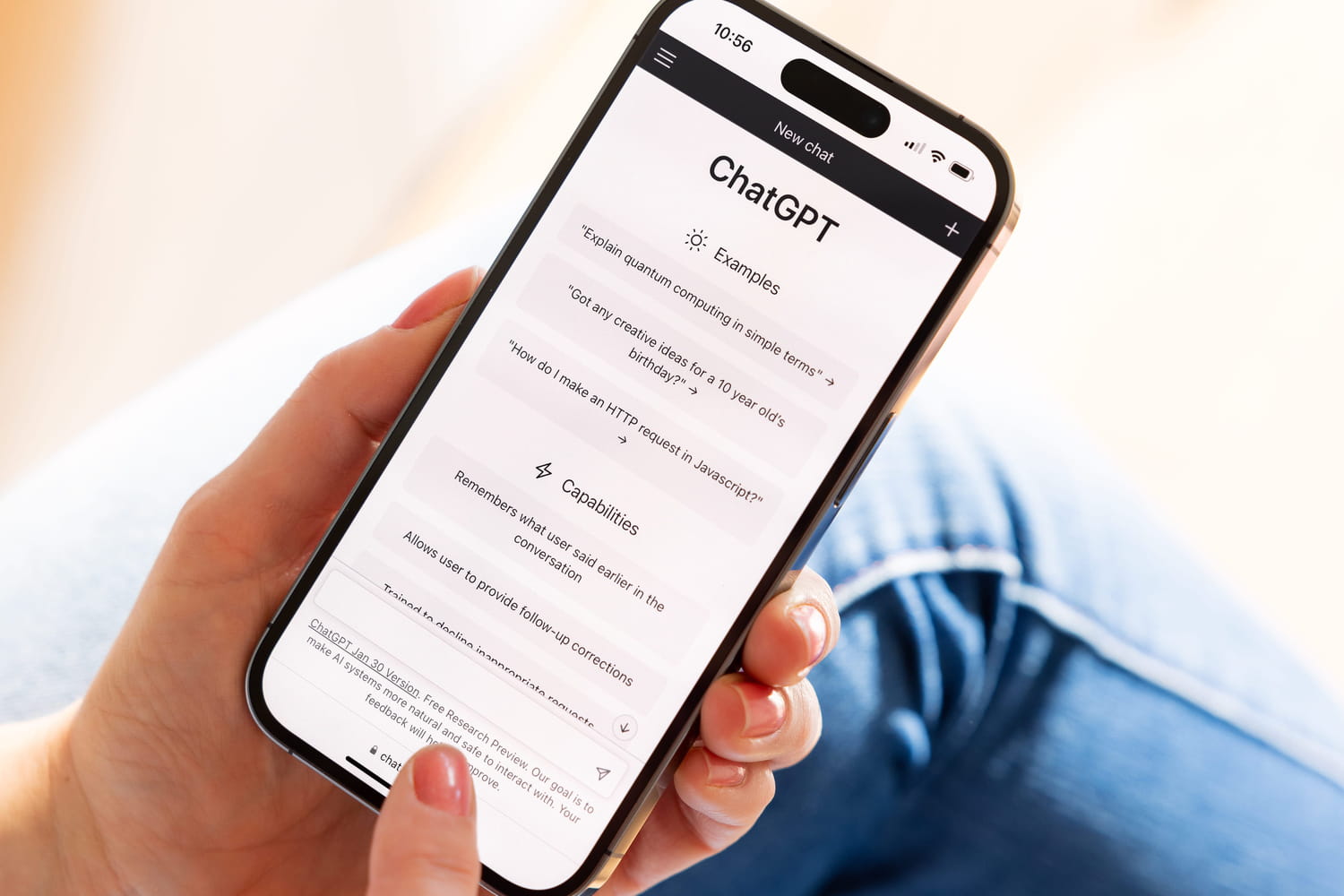
We know ChatGPT, the artificial intelligence tool developed by OpenAI. Now here is ChatGPT Health, also called ChatGPT Health. Used for health issues since its launch at the end of 2022, its official and secure version has been deployed since January 7, 2026.
It’s what ?
ChatGPT Health is a specific interface developed by OpenAI designed to be a health and well-being assistant, always based on artificial intelligence. It allows you to analyze documents (health test reports, medical prescriptions) and connect to personal health data (like Apple Health) to provide more precise and contextualized answers about your form or your treatments. Concretely, ChatGPT Health presents itself as a separate tab within ChatGPT.
Is it available in France?
Although ChatGPT Health was officially launched on January 7, 2026, it is not yet available in France or the rest of the European Economic Area (EEA), Switzerland or the United Kingdom. Access is only limited to the United States. This delay is explained by two major regulatory obstacles: Europe has the strictest rules in the world regarding data protection and artificial intelligence. OpenAI must ensure that its “Health” interface fully complies with the new framework of the European AI Act. In France, any company that stores personal health data must use HDS certified servers. For the moment, OpenAI servers do not meet this French legal requirement. Experts predict a possible arrival during 2026, once agreements on data hosting and confidentiality guarantees have been validated by regulatory authorities (such as the CNIL in France).
The French can still use classic ChatGPT to ask general health questions, but they do not benefit from:
- Secure and isolated data space.
- From direct connection to health applications (Apple Health, etc.).
- The guarantee that their data will not be used to train AI.
Is it free?
Access to the basic advice offered in ChatGPT remains free, but the complete and secure “Chat GPT Santé” experience is a paid premium option. Please note: in France, even when paying, the Health tab is not yet activated.
What questions to ask him?
Once ChatGPT Santé is available in France, experts recommend using AI to prepare a consultation or understand an analysis, rather than to decide. Examples:
- Understanding: “Can you explain to me simply what this term means in my analysis results?”
- Preparation: “I’m going to see my cardiologist about palpitations, what important questions should I ask?”
- Organization: “Help me plan my medication according to this prescription so I don’t forget anything.”
- Prevention: “What are the lifestyle tips to reduce cholesterol?”
What prompt should you do?
To get a reliable answer, you need to give context without being too personal. Here is an effective prompt template: “Act as a medical information assistant. I will give you the results of a blood test (without my name). Explain to me the definition of each value and tell me if they are within the average norm, while reminding me of the questions to ask my attending physician.” Remember to systematically confirm the information obtained with a healthcare professional before changing a treatment.
Can we trust it? Does it replace a doctor?
The answer is a categorical “no”: it does not replace a doctor. Although studies (like that of JAMA Network in 2024) show that AI can sometimes outperform doctors on complex theoretical diagnoses, it remains subject to “hallucinations” (factual errors). The AI generates the most likely answer, not necessarily the most correct. You must therefore keep your critical mind and always seek the advice of a “real” doctor in case of doubt. Obviously, the AI cannot auscultate you, palpate or perceive subtle clinical signs. She also cannot prescribe additional examinations (x-rays, blood tests), which remains the essential link in the chain of care. OpenAI specifies in its conditions of use that the tool is not intended for medical diagnosis or treatment. It is a support tool, not a decision.
Is the data secure?
This is the major point of version 2026: “ChatGPT Santé” conversations are isolated from the rest of your exchanges. Additionally, OpenAI undertakes not to use health data to train its artificial intelligence models. However, zero risk does not exist: no database, no matter how secure, is safe from hacking or technical failure. The less identifiable information you give (name, date of birth, address, social security number, facial photo), the less exposed you are in the event of a data breach.
By not giving your name or social security number, you are transforming sensitive medical data into “statistical” or “theoretical” data. The AI can answer you just as well if you say “a 45-year-old man” rather than “Jean Dupont, born on…”. For photos (rashes, etc.), choose tight close-ups without distinctive signs (tattoos, jewelry, background of your home).