





From Stefania Garassini
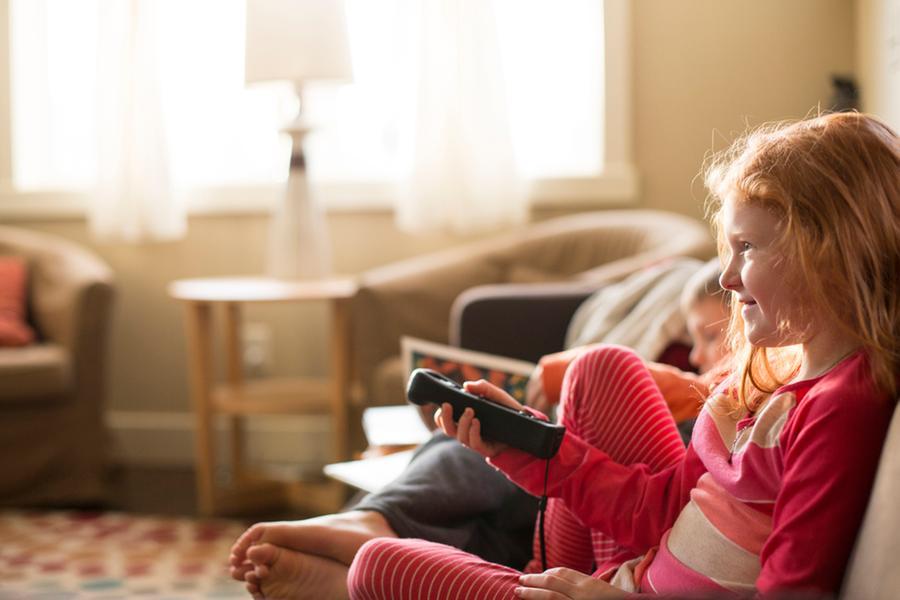
The panorama of TV series is continually enriched, with always new services and new productions. It thus becomes increasingly difficult to choose what to see and the difficulty increases if the choice does not only concern us, but involves our children, perhaps of different ages, and therefore requires a more careful evaluation. Better to immediately accept the idea that organizing your children’s free time, identifying suitable content for them, implies a serious commitment: you need to inform yourself, evaluate the titles and watch them, at least in part. The first step is the (serious) verification of the age indicated for viewing.
Very often in Italy the limit is lower than elsewhere: when she came out Squid Gamea series with a very high rate of violence, the ban in our country was for children under 14 (now raised to 16), but where it was produced, South Korea, it was prohibited for children under 18 and the age limit was higher in other states too. The first tip is a database check of www.imdb.com where, in the “parental guide” section available for each title, the age classifications in different countries are indicated. If a series we propose for those over 12 years old in other states is instead prohibited under 14 or 18, let’s evaluate better, make some more reflections and compare ourselves with those who are already watching it (other parents, teachers, educators).
The acclaimed one Stranger Thingsamong the best Netflix series, is prohibited in our country for children under 16, but in some states this ban is extended to 18s. This should strengthen us in the belief that 16 years is a reasonable threshold to avoid exposing a child to horror scenes too earlywhich can cause anxiety and fear. If, as often happens, our son/daughter absolutely wants to see the series even if he or she is 14 years old, because “everyone watches it”, we can consider watching it together, anticipating the time a little, but it must be clear that this is an exception. It won’t be easy and it will only work if we really put ourselves out there accompanying our children in the vision and if we are really interested in what they like.

And this is precisely the second piece of advice: let’s try to carve out time to watch at least some TV series together as a family. This is not even an easy result to obtain: it will take a certain willingness to negotiate to decide together what to see. But it will be worth it. The shared vision becomes the basis for a family dialogue and it can be an educational activity, not just entertainment.
The third piece of advice is to propose alternatives, based on our children’s tastes, and not passively accept the fact that a certain series, which we believe is not suitable for them, absolutely must be seen. An age in which the problem arises with particular urgency is pre-adolescence, from 10 to 13 years old, when children’s content is no longer likedbut there is not yet enough maturity to move on to those for adults. Yet it is normal that at this stage we watch series reserved for those aged 14 or 16.
To find alternatives you can take a look at the “children” section of Netflix, or scroll through the Raiplay catalogue. Some recommended titles for this age: Gio effectfor those who are passionate about volleyball, Clanthe story of a 15-year-old boy from the Scampia neighborhood of Naples, who chooses judo to escape a life as a petty criminal in the mafia, Geek girlwhich takes place in the world of fashion. A useful tool for evaluating and making your own choices is the website www.orientaserie.it, an Aiart project in collaboration with the master’s degree in International Screenwriting and Production at the Catholic University of Milan, which offers reviews of TV series analyzed with an educational approach.