






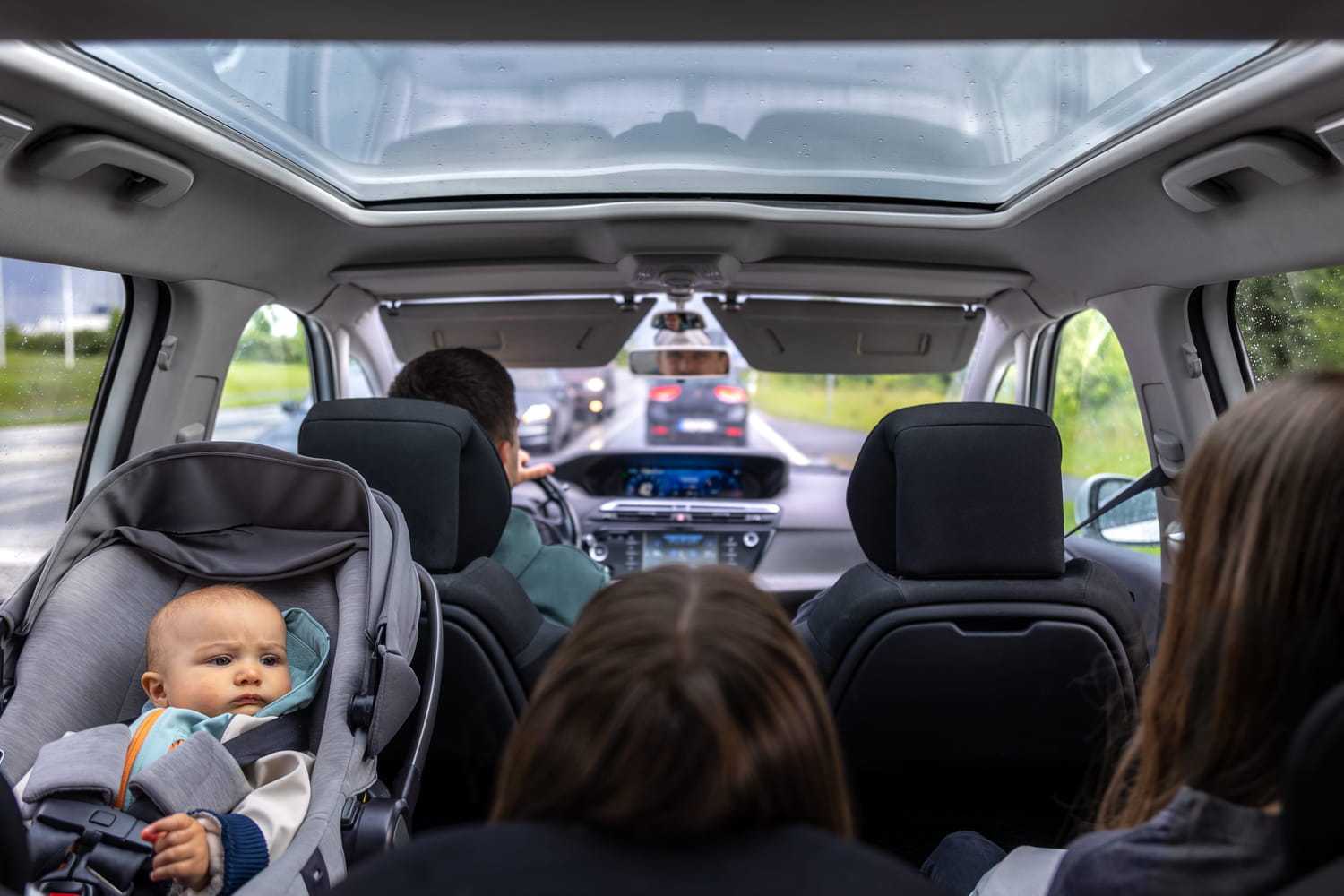
It is wrongly believed that it is the most dangerous seat in a car, and yet. A study proves that this place is actually the safest of all in the event of an impact.
Seat belts, head restraints, child car seats, airbags, shock absorbers… In our modern cars, everything (or almost) is designed to protect users and minimize the risk of injury in the event of an impact on the road. However, we know that driving remains full of dangers and our vehicles are not foolproof either. Moreover, in the same car, not all passengers are equal when it comes to accidents. Some places are safer than others, and they are not necessarily the ones we imagine.
It’s a stubborn belief: who has never heard that the middle seat in the back of the car is the most dangerous? “You risk going through the windshield“, our parents unanimously told us when we were little. Yet, none of them ever checked the statistics to prove it. While this may be true when you forget to wear your seat belt, it is completely the opposite if you follow the rules.
Counterintuitively, the middle seat in the rear bench is actually the safest of all. A study conducted by researchers at Buffalo State University, published in the Journal of Safety Research, shows that the occupant of this seat has a greater chance of surviving an accident. Already, the rear seats offer 29.1% more protection than the front seats. Yes, in the event of a frontal impact, the people seated in these seats are further away from the impact. And the central seat has a 25% greater probability of survival than the other rear seats, because in the event of a side impact, you are further away from the doors. Even adjusting the stats to eliminate “confounding factors”such as the fact that middle passengers are often lighter children than adults for example, the middle seat retains a structural advantage of 13%. “Correctly wearing a seat belt, combined with this seating position, offers the best protection to occupants, whatever their age”notes the study. Thus, calculating the cumulative advantage of being in the rear and that of being in the center, the chances of survival are 46% higher than for passengers seated in the front.
Of course, this statement is not valid if it is a vehicle where the central rear seat is a folding seat, or if the belt does not attach at three points: it must cover both the shoulder and the waist of the passenger, in order to ensure maximum safety. However, this seat remains the safest in most vehicles, including minivan-type family cars for example, which have three rows of seats. The middle one still remains the safest compared to those at the bottom: whether during a frontal, side or even rear impact, it is the furthest from all the deformation zones.