





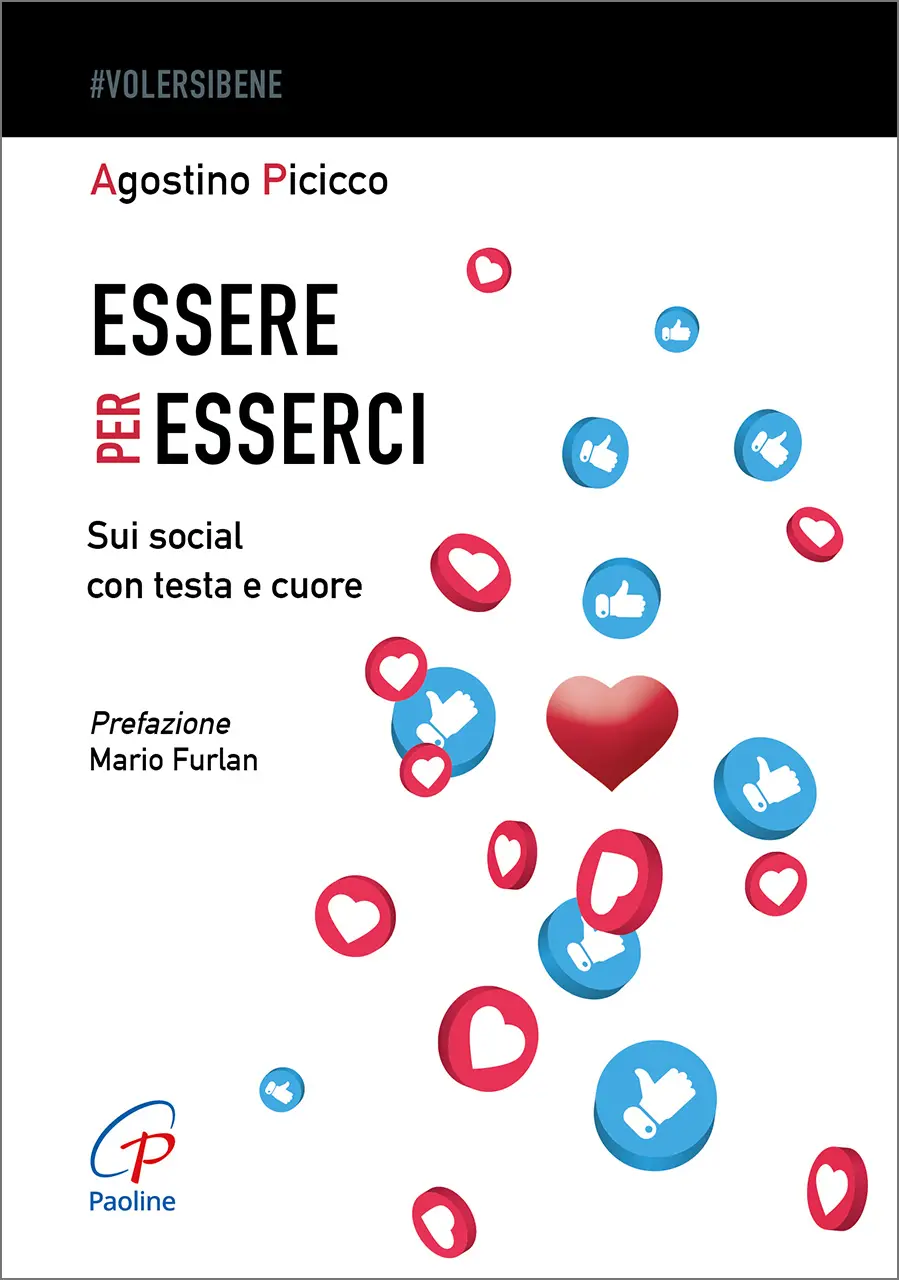
In an era dominated by likes, notifications and constant digital exposure, it becomes increasingly urgent to question the meaning of being and relating online. In his latest book Being to be there (Edizioni Paoline), the writer and journalist Agostino Picicco proposes a profound reflection on the value of being beyond appearance, inviting us to put the person, authentic relationships and ethical responsibility back at the center of digital life. From awareness in the use of social media to the construction of a new digital humanism, passing through the theme of modesty and the challenges posed by Artificial Intelligence, the Author guides us on a path that intertwines spirituality, technology and contemporary culture.
Picicco, your book is a powerful cultural reversal. In a time when it seems we only exist if we are visible, what does it mean to put being, and not consent, back at the center of the digital experience?
«For me, it means recovering a truth that is often forgotten: being comes before appearing. We live in a context in which visibility has become a criterion for evaluating existence and consensus a form of personal legitimation. Putting being back at the center means escaping this misleading logic and remembering that the value of a person does not coincide with their exposure nor with the number of reactions they arouse. Coming to the digital experience, the reference goes to the more conscious use of words and images, also reevaluating the meaning of silence. In practice it is not a question of being proud of “how much I am seen”, but of putting oneself in the perspective of “what I generate in myself and in others”. It is a way of being, precisely, that gives meaning back to communication and removes it from futility and superficiality.”
You talk about social media as a possible antidote to loneliness, but also as a place of new fragilities. What is the decisive step that transforms a simple connection into a caring relationship?
«The passage is the recognition of the other as a “person” and not as a “public”. The connection is fast, technical, reversible; the relationship, however, involves attention, listening and responsibility. Social media become an antidote to loneliness when they stop being a space for consumption in an individualistic or selfish spirit and are transformed into meeting places. Taking care of others means accepting slower times, responses less corresponding to our demands, a presence that not only seeks visibility and consensus but proximity. This is how technology can foster and support bonds, and not amplify loneliness.”
In the book he proposes the idea of a new digital humanism. What concrete choices, personal and collective, can make social media tools of humanization and not of relational impoverishment?
«A new digital humanism arises from daily choices, not from abstract proclamations. On a personal level it means educating yourself in a sober and conscious use of social media by selecting contents, taking care of the language, above all by not fueling conflicts with the typical method of “keyboard lions”. On a collective level it involves promoting digital environments that encourage dialogue, the quality of positive communication while respecting different points of view. It is a vision that recognizes technology as a powerful tool, but not an end. By placing the person at the center – with their being, their dignity, their relationships, their sensitivity – digital can become a space that humanizes rather than impoverishes.”
Is modesty still a virtue in the age of overexposure and continuous self-narration? Where does the border between authentic sharing and loss of the sense of limit lie today?
«I don’t think it’s an outdated virtue. In the era of permanent self-narrative, it protects intimacy and restores value to silence. Sharing does not mean exposing everything, but choosing what can really generate meaning, relationship, comparison and positivity. The boundary is lost when identity becomes a product and life a continuous narration of banalities to attract likes. Authentic sharing instead arises from a desire to communicate useful content, not to accumulate ephemeral moments of visibility. In this sense, modesty is a way of being that becomes a model of relationship with others.”
In the last part of the book he addresses the theme of Artificial Intelligence, with the risk of a paradoxically “antisocial” future. What attitude should we cultivate: enthusiasm, critical prudence or responsibility?
«More than choosing between enthusiasm or prudence, we need to cultivate a shared ethical responsibility. Artificial Intelligence opens up extraordinary possibilities, but also raises profound questions about the meaning of relationships, work and communication. The risk of an “antisocial” future emerges when we delegate decisions that require human discernment to machines. Technology must remain a tool at the service of the person, not a criterion that replaces him. The real challenge is not to make machines more intelligent, but to preserve and enhance the humanity of those who use them, the ability to create bonds and care for others.”