





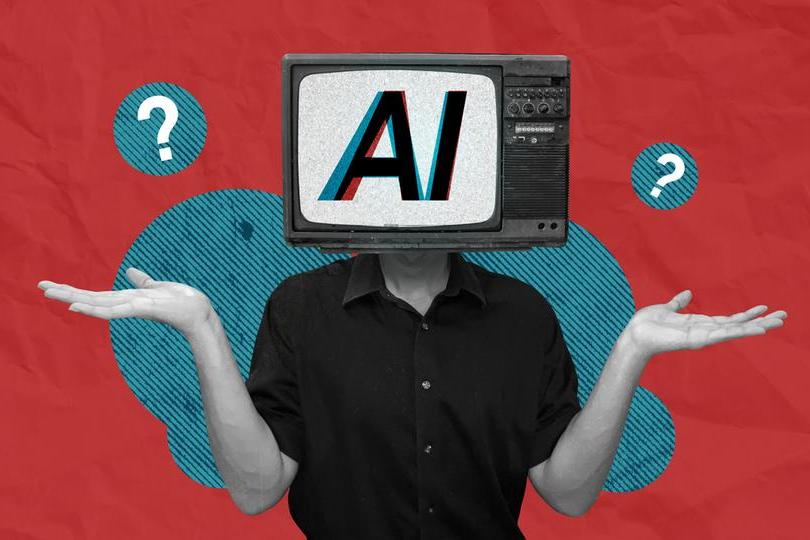
Guarding human voices and faces. This is the title of Pope Leo XIV’s message for World Communications Day. The voice and the face have always represented our way of communicating: from the tone of voice or facial expression we can understand many more things than what we say through words. They are two such important aspects of our humanity that the Pope does not hesitate to say that “face and voice are sacred” because they are “an indelible reflection of God’s love”. Yet, voice and face today are often used to represent something non-human. There are artificial intelligence applications capable of reproducing not only someone’s face, but also their voice, applications capable of moving their lips to make dialogue seem real, to make someone who has never said something say. All this shows the truth of the challenge of our time: it is not a “technological but an anthropological” challenge.
For those who are interested in and reflect on artificial intelligences, this statement by Pope Leo is a fundamental presupposition: it is not just a question of understanding what an artificial intelligence can technically do but above all of understanding how man stands in this time and how our identity is impacted by the presence of these systems.
In this reflection on man, the three pillars that the Pope proposes are fundamental. The message rightly talks about cooperation between all parties involved in defining the governance of artificial intelligence in order to drive innovation. There is, however, another equally important form of cooperation: the one with the technological artifact. Today the power of these systems makes them capable of carrying out activities that man has always performed and of replacing man in many tasks that have always belonged to him. We must be very careful about this replacement or delegating many tasks to artificial intelligence.
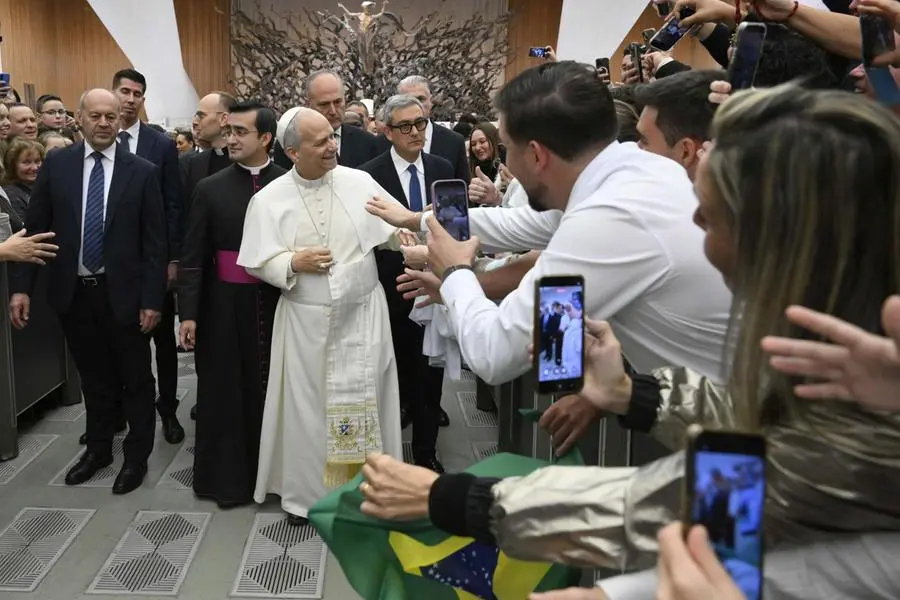
The Pope greets some faithful in a general audience
(HANDLE)
In fact, if functionally they can achieve even better results than ours, what happens to our critical thinking or our creativity? It is essential to discover that we can cooperate with these systems which are no longer simple tools in our hands, but real agents.
Cooperation makes us aware of their and our potential and also makes us capable of discovering their risks. Thus emerges the urgency of digital education that allows us to inhabit the digital world in a “human” way, safeguarding our ability to critically reflect on reality and govern this transformation we are experiencing. Education and understanding also generate our responsibility “in the face of the future we are building”.
Pope Leo’s message therefore represents a new step in the theological reflection on artificial intelligences. These systems are precious opportunities for growth in our humanity if understood well but they can also become paths of dehumanization if we fall into technocratic and posthuman drifts which take the possibilities that these systems offer to the extreme. We must never forget that human beings are always more than what they can do and that protecting humanity also means recovering that identity that the digital world seems, only apparently, to have stolen from us.
Human voices and faces then become even more precious for growing in the relationship and to cherish one of the most precious gifts we have received: our humanity.