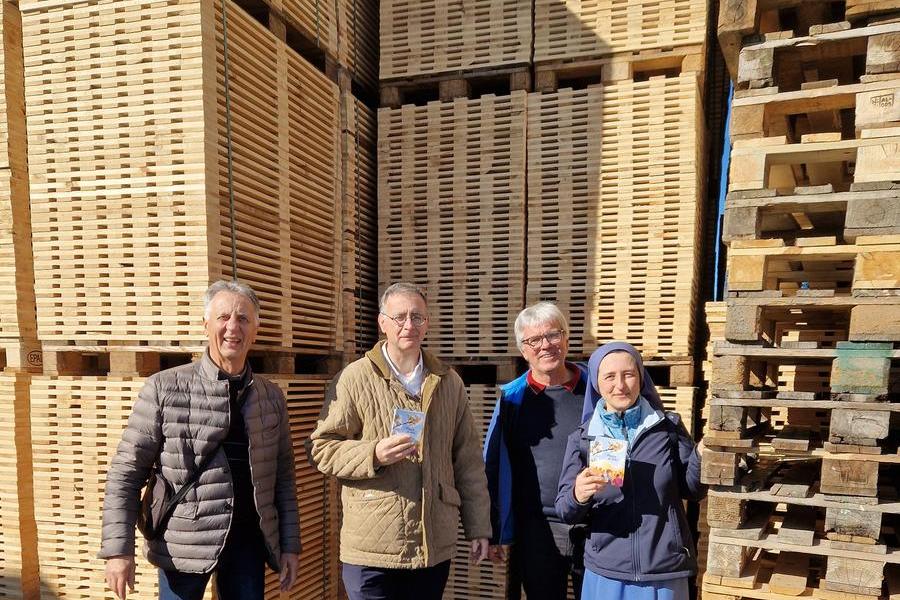





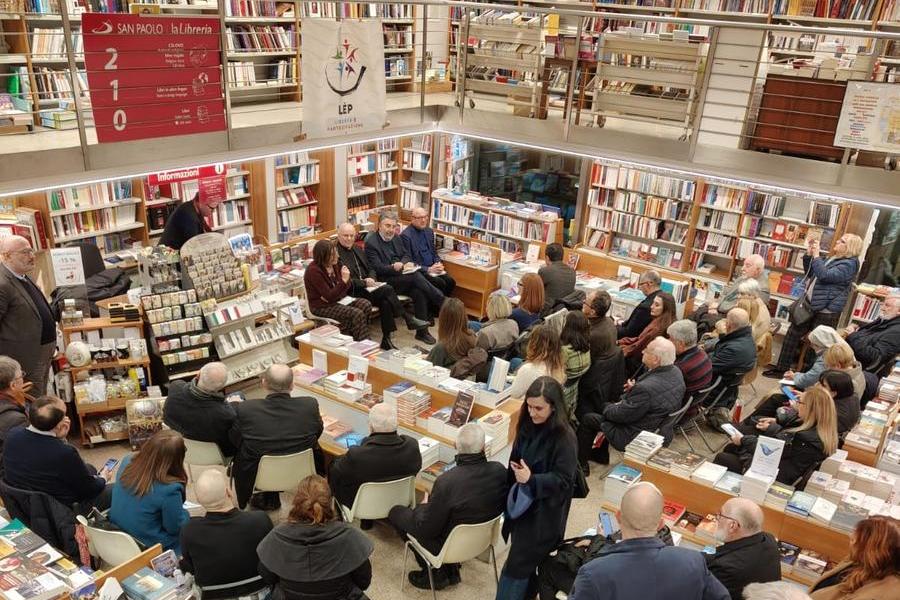
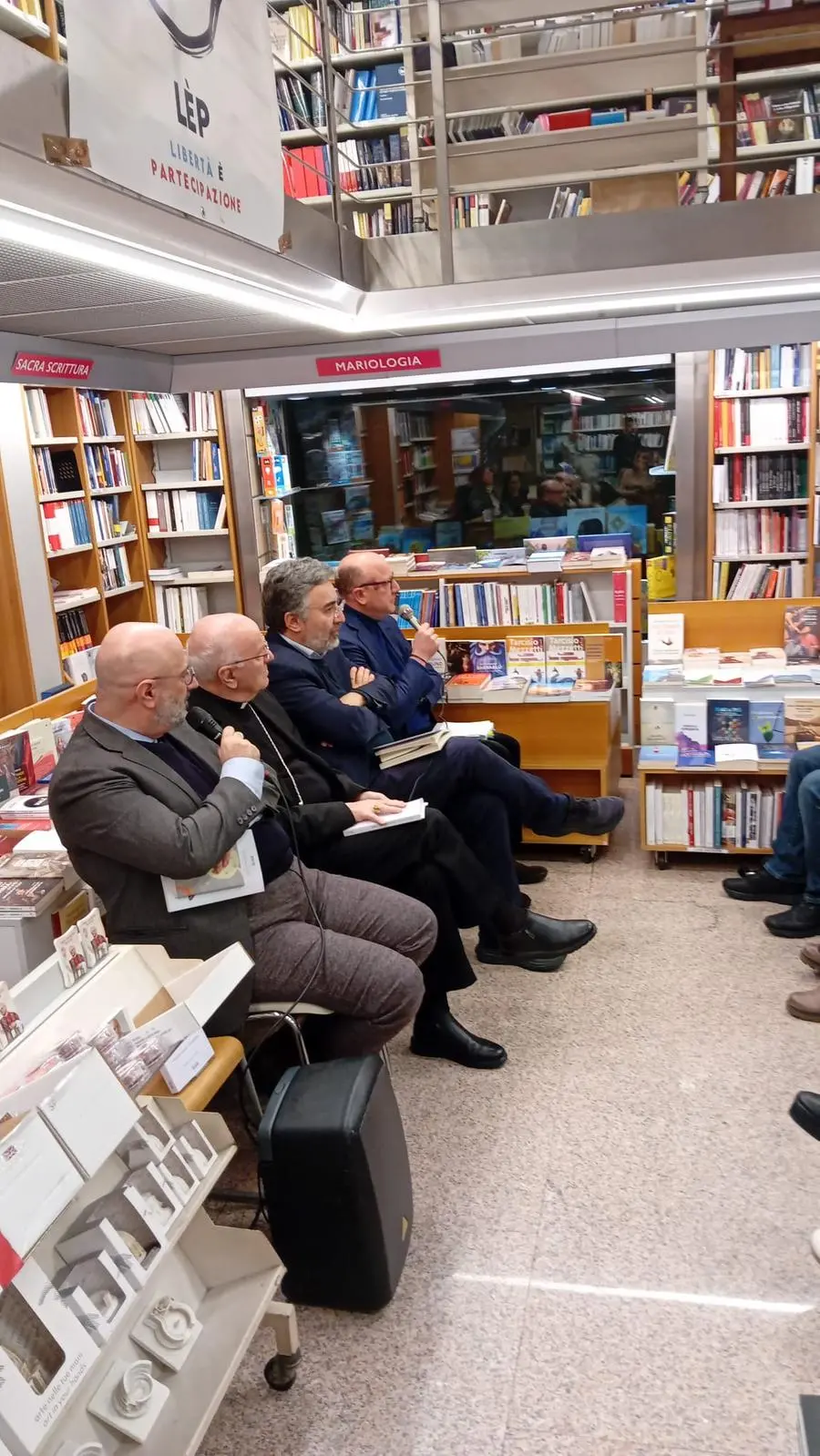
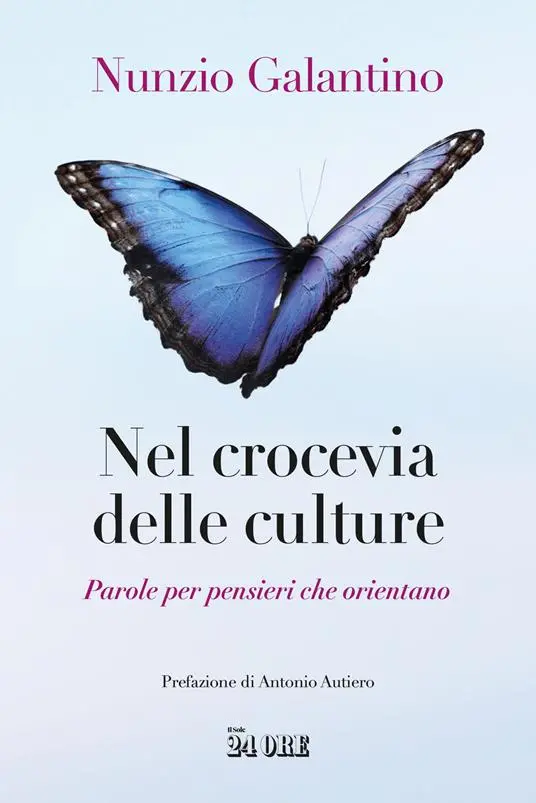
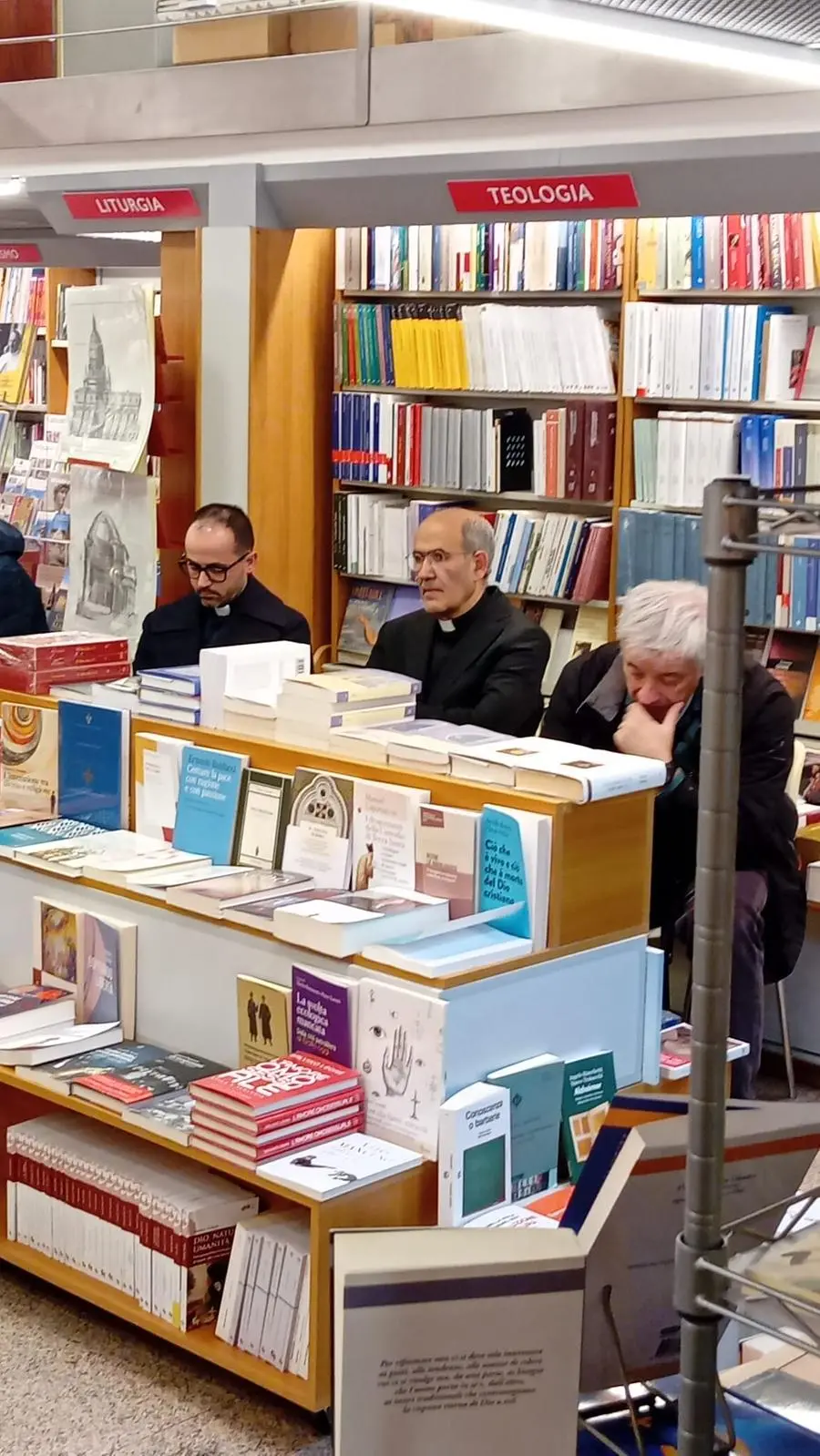
A packed library on a rainy winter evening is not to be taken for granted. To talk about culture and politics. To discuss the power of words, to open up to dialogue. At the presentation of the book by Monsignor Nunzio Galantino – At the crossroads of cultures. Words for orienting thoughts – as part of the initiatives of School of Civic Action “Lèp, Freedom is Participation“Many of them arrive. They remain standing and some outside San Paolo bookshop in via della Conciliazione, in Rome, thirsty for listening and knowledge. The text, which collects the over 300 words that Monsignor Galantino explained in his weekly column on Il Sole 24 Ore, offers the opportunity to talk about their transformative power. The journalist Marco Damilano, Vincenzo Boccia, president of the Italian and Vatican Legion of Honor and former president of Confindustria, the author of the book himself, solicited by the questions of the journalist – and animator of the Lèp – do so Luigi Ferraiuolo.
We talk about justice, memory, vocation, failure and truth, to propose the use of an authentic language as an antidote to banality and social addiction.
We talk about the concept of “degradation” remembering that the particle “de-” indicates a movement from top to bottom, a shift in level that manifests itself in multiple contexts — environmental, moral, social, economic, monetary, cultural, political and physical. The example of Niscemiwhere degradation is a physical landslide that does not stop, shows the material face of the emergency. Behind this, systemic causes emerge: laws not applied, funding not disbursed, consequences of responsibility that Damilano defines it as “unbearable and sometimes indecent”. But degradation is also a look and a word: increasingly present in transversal political languages and programmes, it is often equated with poverty and addressed, he points out Monsignor Galantino, «with “anti-degradation operations” that treat some people like waste to be cleared away». The quality of debate itself deteriorates and, with it, the quality of democracy.
Antidotes reflect participants, are rooted in community experience and civic responsibility. It is about fueling dialogue as a thread that allows comparison between different positions, avoiding the polarization and radicalization that make communication impossible.
And, again, among the words, we talk about “exile”, understood as a journey: the pilgrimage, walking together towards the unknown, reverses the movement of degradation. In this perspective, the echo of Van Gogh resonates in Monsignor Galantino’s text: «Every pilgrimage is a journey from earth to heaven.” opposed to a decline in civil and democratic quality.
The words, in the text published by Sole 24 Ore, are presented as orientation tools in a time saturated with confusing languages. The book invites us to pause on their depth, to retrace their meaning and path, and to find places that regulate listening and reflection. Librariesfor example, celebrated as “masterpieces” on a par with places of worship: beauty, silence, meditation, reading and thought. In an era dominated by words that seem to have value only as an economic exchange, these spaces take on a crucial role.
And again the book links the word to the eyes and to silence, accompanying the reader on paths that invite humanity, brotherhood and the recovery of values, helping to escape loneliness and impotence. Giving proportion to events, remembering and daring, making mistakes and starting again. Because even failures can become elements of growth if processed with responsibility. Boccia recalls that in the United States failure is considered a positive evaluation criterion: failure means having tried, risked, attempted. On the contrary, a culture that does not allow errors inhibits risk and, therefore, innovation and the courage to dare; the outcome is obvious. On the contrary, explains Monsignor Galantino, the intent of the column, which has become a text, is precisely to question the obvious. The former president of APSA recalls that today «words are reduced to clichés, to empty rhetoric, politically (and ecclesially) correct, which do not touch the heart or the emotion. A language is making its way that is making us accustomed to putting up with the unbearable.” There are people «who emit sounds instead of speaking, while authentic words are born from silence, their true womb. Without silence, “bad words” and “bad politics” are produced.” And so, concludes Galantino, we must not settle, “not get used to it, because replicants do not make history, replicants only make noise”. Instead, going to the root of words, as the author does, also means “inhabiting them and making them thoughts that guide your life”.