



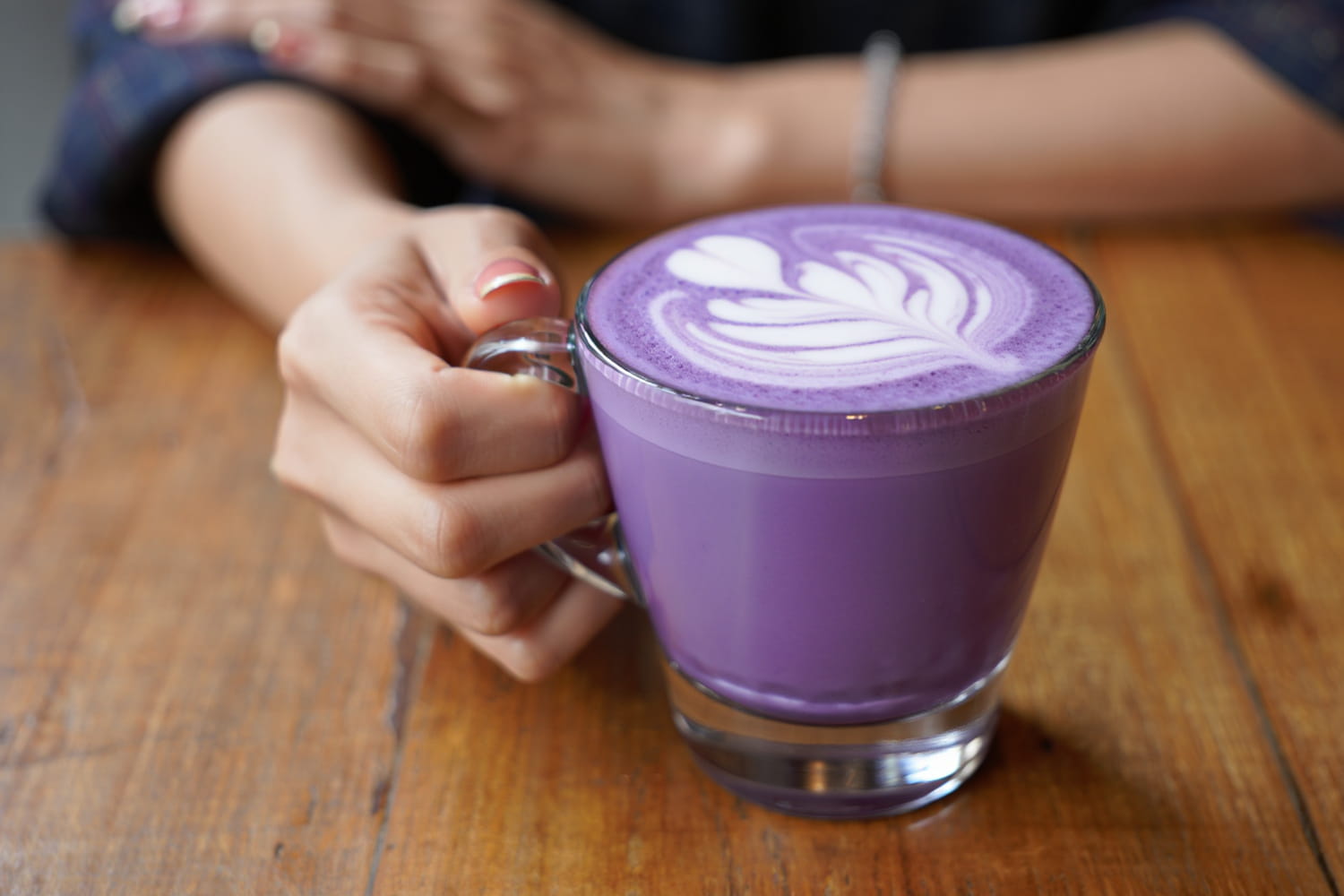
With its intense purple color, the ube latte is invading cafes and social networks. This drink intrigues as much as it seduces. Energy, digestion, antioxidants: what we really know about its nutritional benefits.
The ube latte is spreading in France and its nutritional density is remarkable. Rich in anthocyanins, antioxidants known for their role in cellular protection, this purple drink is attracting growing interest in nutrition research. Long consumed in Asia, ube is now establishing itself as an interesting nutritional alternative to matcha or chai, in particular thanks to its absence of caffeine, its more stable glycemic profile and its contribution to the proper functioning of the digestive and immune systems.
What is ube latte?
Ube latte is a drink made from ube, a winged yam native to the Philippines. This tuber, similar to the purple sweet potato, is distinguished by its intense purple flesh, naturally rich in phytochemical compounds. Traditionally used in the Asian diet, ube is today transformed into a dehydrated powder or puree, then mixed with milk (vegetable or animal) to obtain a nutritious hot drink, without caffeine or theine, making it suitable for people sensitive to stimulants or for consumption at the end of the day
What are its health benefits?
The purple color of ube is not just aesthetic: it indicates a high content of anthocyanins, antioxidants studied for their protective effects on the body. According to a study published in the Journal of Agricultural and Food Chemistrythese compounds help reduce inflammation and may protect against cardiovascular disease and certain cancers. “The anthocyanins that give ube its color are powerful cellular shields. They not only help combat oxidative stress, but also play a key role in supporting the immune system and skin health.“, indicates Dr Raj Dasgupta, doctor and nutritionist on VeryWell Health. Furthermore, ube covers a significant part of the recommended daily intake of vitamin C, essential for energy. It is also interesting for intestinal health: ube contains starch which acts as a prebiotic. It feeds the good bacteria in the intestine, thus improving digestion. Although it is a starchy food, its glycemic index is lower than that of classic potatoes, which allows for a more stable energy release and avoids blood sugar spikes.
Is it a high-calorie drink?
Nutritionally, the ube latte remains a relatively low-calorie drink when prepared simply: 80 to 120 calories with unsweetened vegetable milk; 130 to 150 calories with semi-skimmed cow’s milk, no added sugar. On the other hand, industrial versions or those served in coffee shops often contain sweetened condensed milk or syrups, which can increase the energy intake beyond 300 calories and reduce the nutritional value of the drink.
What does ube latte taste like?
This drink naturally develops notes of vanilla, pistachio and hazelnut.
How to prepare it?
For a large cup, mix 1 teaspoon of ube powder (or 2 spoons of ube puree if using the fresh tuber) with a little hot water to create a smooth paste. Froth 200 ml of milk (coconut or oat milk goes wonderfully with ube). Pour the hot milk over the purple paste and mix to obtain a smooth drink.
Where to buy ube powder?
Fresh ube is rare in Europe, so powder is the simplest option and can be found in Asian grocery stores, organic/wellness stores or online platforms with a “superfoods” section. It is crucial to purchase 100% pure ube powder and not already sweetened and flavored drink mixes which often contain very little real ube. Check the ingredients list carefully. Choose a 100% ube powder without artificial colors (type E129 or E133) to maintain the benefits.