






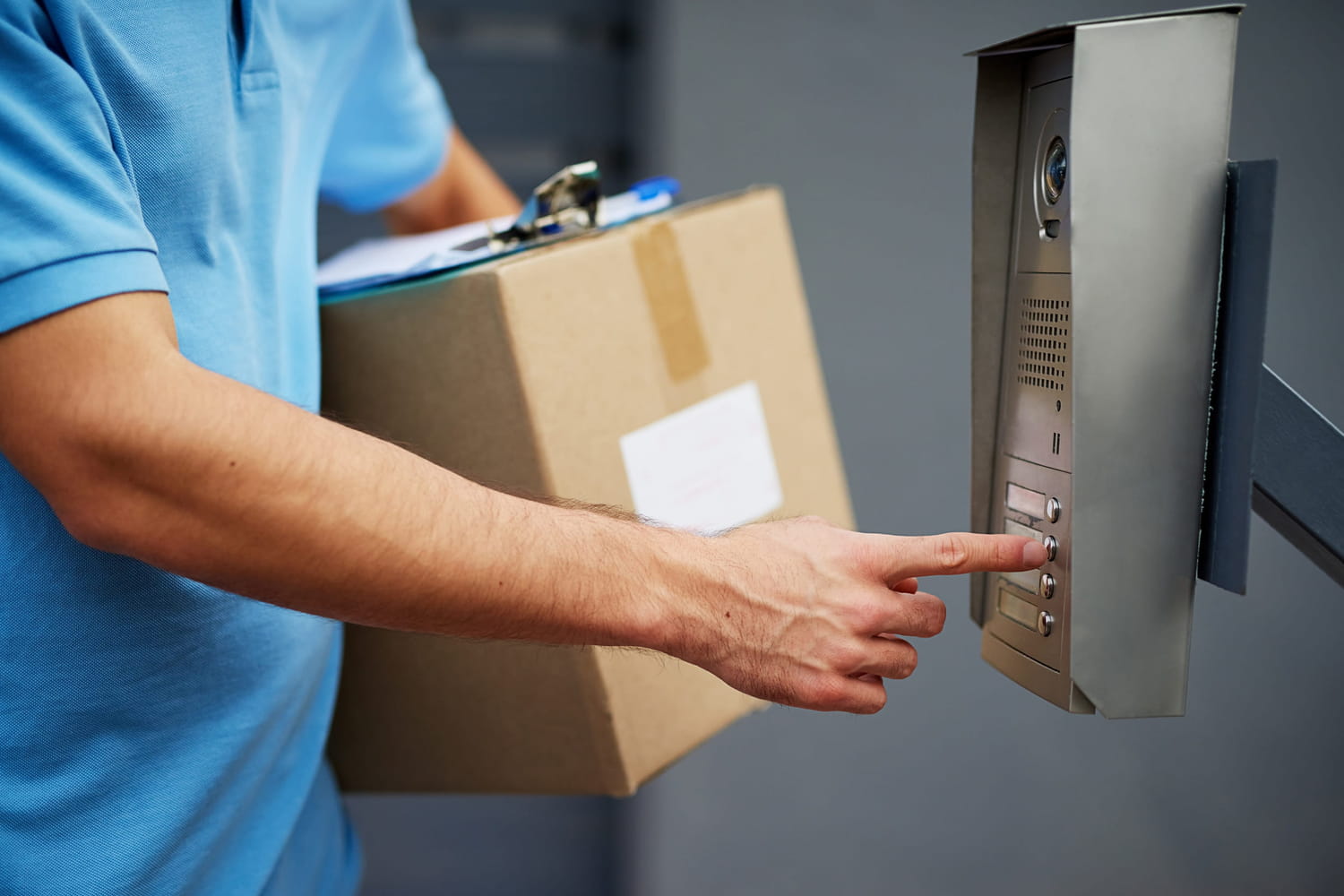
If a delivery person rings your doorbell and asks you to come down and collect your package, offer to put it in the mailbox instead. Here’s why…
The scene always begins the same way, in a familiar and reassuring setting. An intercom rings, a voice introduces itself as a delivery agent, mentions a package to be delivered by hand and insists on the rapid nature of the exchange. Nothing unusual in appearance. Home deliveries now punctuate daily life and the idea of going down for a few moments to collect a package does not seem to pose any particular risk. And yet…
It is precisely this routine that makes the situation deceptive. The reception time is short, the maneuver seems simple, and the absence lasts only a few minutes. The door closes, sometimes without being locked, sometimes thinking that will be enough. In the mind of the recipient, it is not a question of abandoning the accommodation but of a logistical parenthesis, of a return trip without consequences, dictated by the confidence placed in the classic distribution circuit. And even when you take the time to double-lock your door, that doesn’t always stop crooks from taking action.
Because what the victim does not know is that this delivery is not one. Behind the intercom, the fake delivery people use postal service codes, sometimes claim to be La Poste, master professional vocabulary and know how to create a feeling of urgency. While the person goes down to collect their supposed package, the apartment becomes a target. In a few moments, the thieves take action, taking advantage of this time to break into the home, search and leave with the jewelry, money and valuables. The person posing as a La Poste agent has a very specific role: to save time, to make the victim talk once the package has been delivered in person. One of his accomplices is in fact already positioned in the common areas or the stairs, ready to take action.
In the Lot department, the police have already identified two similar cases and are sounding the alarm to warn other residents. Investigators describe a well-established scam, based on deception, building trust and exploiting a banal gesture linked to the delivery of packages. Faced with these fraudulent practices, vigilance becomes essential. It is recommended not to go down to collect a package yourself when the delivery person has the opportunity to bring the package up or drop it off in the mailbox. Systematically locking your door, even for a very brief absence, remains an essential reflex, without guaranteeing absolute protection. If in doubt, it is better to refuse the exchange, favor relay points and report any suspicious attempts. Prevention remains today the best defense against these scams which exploit the most ordinary habits.