



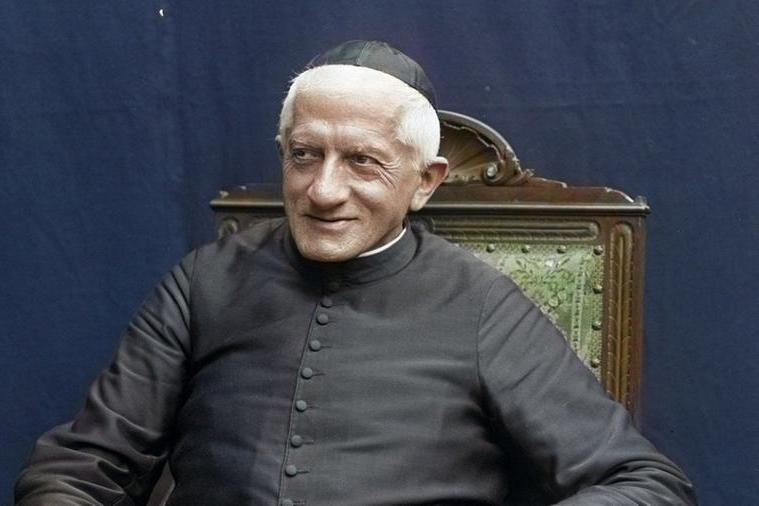
One hundred years after the death of Saint Joseph Allamano, which took place on 18 February 1926, his figure returns to question the Church of today with the gentle strength of a man capable of looking “beyond”: beyond the borders of his own diocese, beyond the resistance of his time, beyond every temptation of propaganda.
Beatified by Saint John Paul II in 1990 and canonized by Pope Francis in 2024, the founder of the Consolata Missionaries lives on in the pages of Beyond. Life and mission of Saint Giuseppe Allamano (Effatà), the new biography signed by the journalist and writer Alberto Chiaraformer editor-in-chief of Christian family where he spent almost his entire career. A portrait which, between Turin roots and universal impetus, restores all the relevance and depth of a deeply contemplative and at the same time boldly missionary charism.
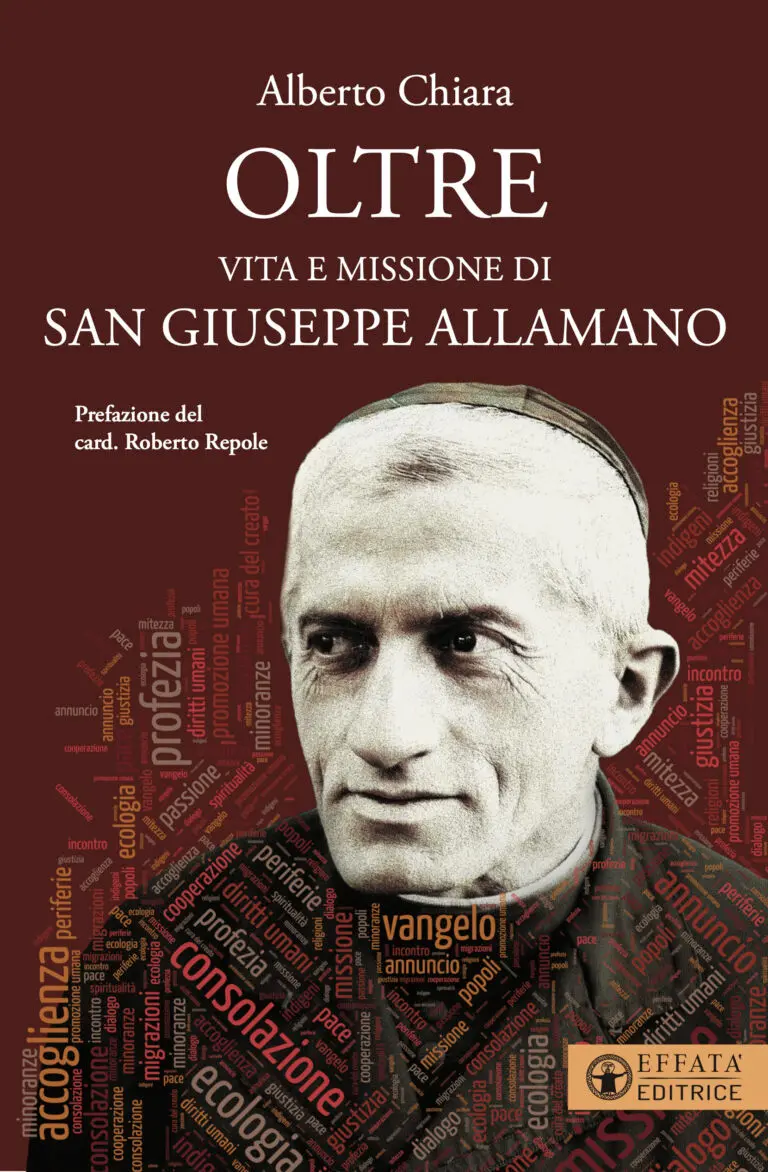
Chiara, Allamano has been defined as a man capable of looking “beyond”. Beyond what limits? And in what sense can his missionary vision speak today to a Church that sometimes seems closed in on itself?
«Father Ugo Pozzoli, a Consolata Missionary who signs the presentation of the volume, explains it well. Saint Giuseppe Allamano goes beyond his diocese – he remained a priest of the church of Turin throughout his life which he served faithfully until the day of his death; beyond the Consolata Sanctuary – of which he was rector for 46 years in a row, from 1880 to 1926; beyond the narrow ideas of some who hindered his projects, beyond the serious illness that was leading him to his premature death in January 1900, beyond the logical difficulties of the initial moments of an institute that sent the missionaries he trained so far away. Giuseppe Allamano surpasses the laws of space and time in faith.”
In the book a concrete founder emerges, attentive to people more than strategies. What is the least known and most surprising aspect of your personality?
«Perhaps the episode that struck me most about him and which is not always adequately highlighted is the support given to quality journalism. Not only in Italy, where he founded a newspaper, The real Italywhich has nothing to do with the House of Savoy, but instead aims to tell the often hard and miserable life of ordinary people. For example, it encourages the French magazine to move from monthly to daily La Croixwhose founder, Father Vincent de Paul Bailly (1832-1912), stopped in Turin at the Consolata Sanctuary in 1883 and returned to France applying the advice also given to him by Allamano: La Croix it is an appreciated and reliable newspaper still on newsstands today.”
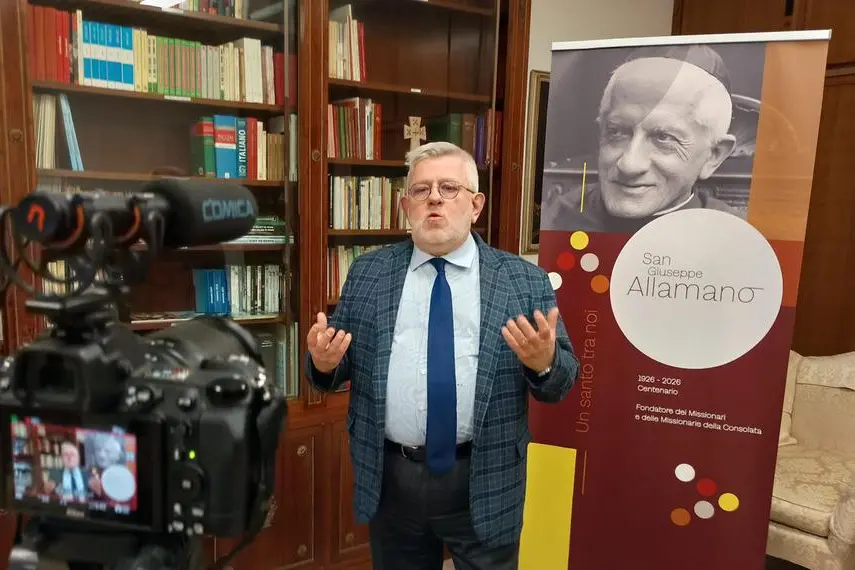
Alberto Chiara during the presentation of the book
The mission, for Allamano, was not propaganda but testimony. In an era marked by a crisis of ecclesial credibility, can this approach represent a key to relaunching?
«Giuseppe Allamano anticipates by decades what the Second Vatican Council will affirm in particular in the decree Ad Gentes of 7 December 1965 in which it establishes that the Church is by its nature missionary. It is not an optional activity, but the very essence of communities of believers, called to weld the Gospel, life and cultures together.”
What are the characteristic features of its action?
«He embraced the world without ever leaving Italy. A “glocal” ante litteram because he is capable of intertwining the local dimension, his Piedmont, with a global attention nourished by faith, prayer, study, charity and respect. He was able to bear witness to God in an era as interesting as it was troubled, marked by the Unification of Italy, atheistic positivism, the workers’ question, the First World War, totalitarianisms of every color starting from the advent of fascism. And he was able to make the message of salvation credible in a church crossed by hopes and upheavals: Vatican Council I, Social Doctrine, widespread rigor, but also mercy lived to the full without ifs or buts. He voluntarily became a traveling companion of the protagonists of the profound socio-economic changes of the time, from tram drivers to seamstresses, from workers to journalists”.
What distinguishes Allamano’s charisma compared to other great protagonists of the missionary season between the nineteenth and twentieth centuries?
«On 29 January 1901 the then archbishop of Turin, Cardinal Agostino Richelmy, signed the decree that created the Consolata mission institute. On 8 May 1902 Giuseppe Allamano accompanies the first four missionaries destined for Africa to the Porta Nuova railway station. From the beginning, like others and more than others, Giuseppe Allamano cultivated the antibodies destined to stem the colonial spirit of the era capable of polluting the admirable missionary impetus of many churches. Already the first expedition to Kenya is characterized by an original missionary method based on four pillars: learning the local language; respect for the culture of the locals; need to create a family environment; commitment to the overall development of the country. We’re talking about the beginning of the twentieth century: what is taken for granted for us today was not at all obvious then.”
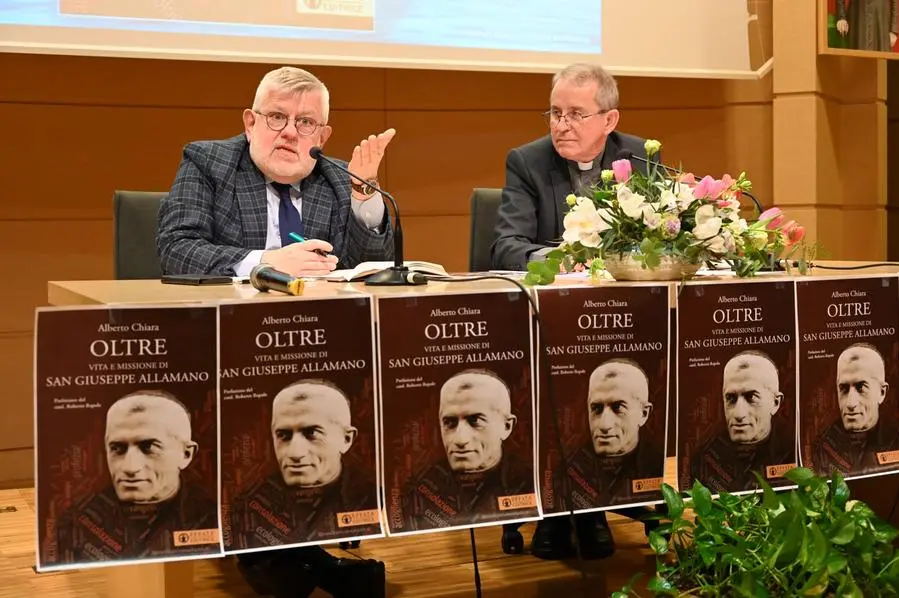
A moment of a presentation with the author
Piedmont in the second half of the nineteenth century and the first years of the twentieth century was a land of widespread holiness. What role did this context have in the formation of Allamano’s commitment?
«There is a very interesting and significant network: Saint Giuseppe Cafasso (1811-1860), a great priest, expert trainer, attentive to the least fortunate such as chimney sweeps, prison chaplain always at the side of those condemned to death up to the foot of the gallows, was his maternal uncle. Saint John Bosco (1815-1888) was the first to welcome her into the newly founded Salesian seminary (the founder of the Consolata missionaries then finished his studies in the diocesan seminary, ed). Giuseppe Allamano can easily be included in the ranks of the Turin and Piedmontese social saints of that time which includes Giuseppe Benedetto Cottolengo (1786-1842; who took care of the sick, abandoned disabled people, marginalized people, the marquises Carlo Tancredi Falletti (1782-1838) and Giulia Colbert of Barolo (1786-1864) attentive to prisoners, single mothers, less well-off children in difficulty, Don Francesco Faà di Bruno (1825-1888); Don Lorenzo Prinotti (1834-1899), apostle of the deaf and dumb), Don Leonardo Murialdo (1828-1900), workers, Paolo Pio Perazzo (1846-1911), railway workers), Don Luigi Orione (1872-1940) orphans, poor, exploited), Don Giacomo Alberione (1884-1971), apostle of communication who gave life to newspapers, radio, cinema and founded the Pauline Family which publishes, among other things Christian family».
His book comes at a time when the word “mission” seems to have changed its meaning. What can the Italian Church today learn from Allamano’s experience?
«I believe one of St. Joseph’s maxims always remains valid: “First saints, then missionaries”. You cannot understand Giuseppe Allamano if you do not start from the twilight of the Sanctuary of the Consolata, from the time that this priest spent in personal and community prayer, in the confessional, engaged in spiritual direction and listening to the people who passed through the Sanctuary: nobles, aristocrats, middle-lower bourgeois, proletarians of all kinds. Today, like yesterday, the mission is sterile, indeed, it risks becoming propaganda or worse neocolonialism, if it is not nourished by prayerful silence, by the Word of God, by the sacraments”.
If you had to indicate just one phrase, a gesture or a choice that summarizes the heart of your message, which one would you choose and why?
«There is actually an expression that best summarizes the nature and legacy of Saint Giuseppe Allamano: “Doing good well, without making any noise”. It postulates an intense relationship with God, provides a clear plan, requires professionalism at every level, evokes the necessary evangelical humility that makes us say, in the end, “we are useless servants””.