





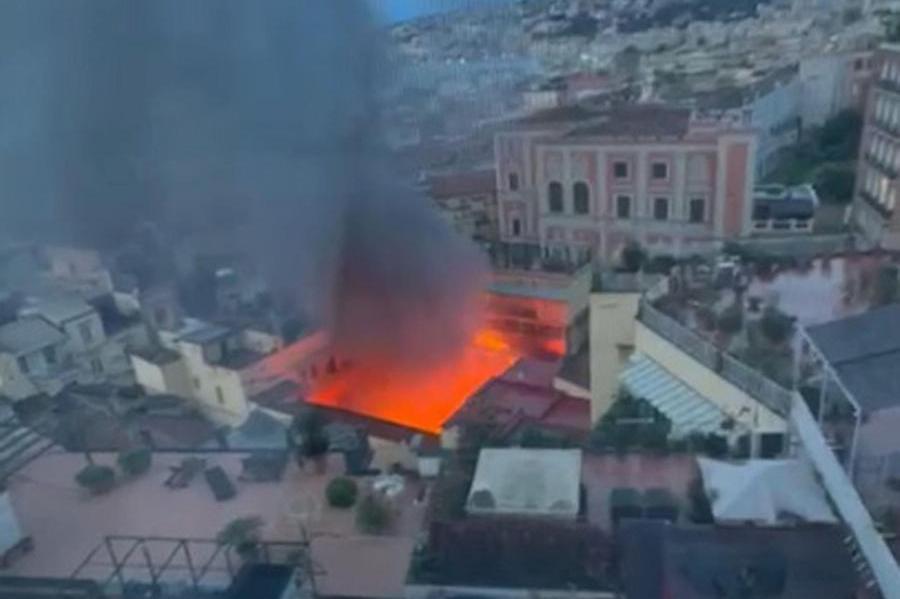
On Tuesday morning Naples woke up under a blanket of smoke and pain: a fire that broke out in the Chiaia area devastated the Sannazaro Theatre, historic jewel of the Neapolitan cultural scene, and forced 60 people to leave their homes. The dome of the theatre, entirely made of wood, collapsed and the flames consumed the audience and the stageleaving only the load-bearing structures. On site, among firefighters and incredulous residents, also the manager Lara Sansone, in tears in front of what until a few hours ago was a place of life and art.
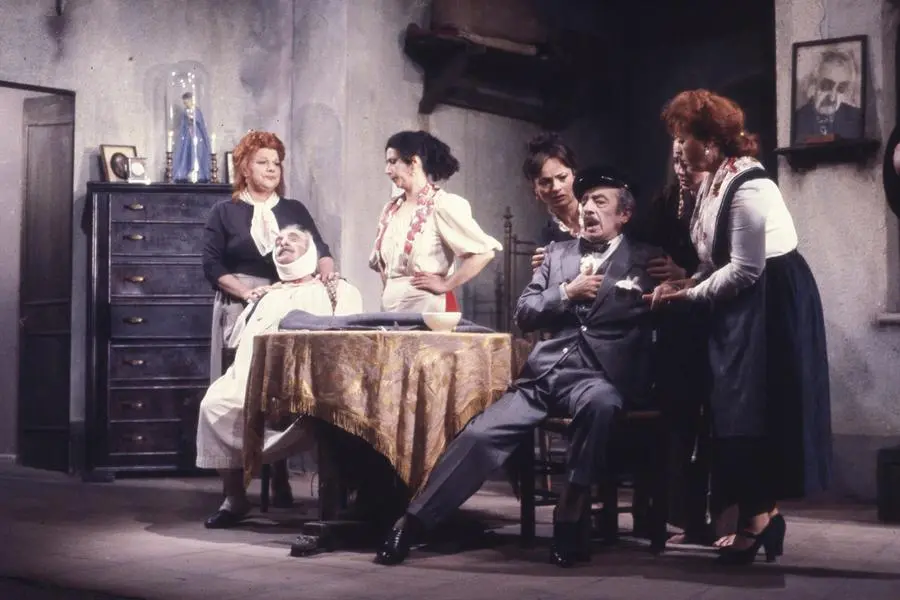
Luisa Conte with Nino Taranto and Carlo Taranto in one of the famous comedies performed between the 70s and 80s on the stage of the Sannazaro theater in Naples destroyed by fire
(HANDLE)
But the Sannazzaro is not just a theatre: it is a living history of Naples and of the whole of Italy. Inaugurated in 1847, in a period of great cultural ferment for the post-unification city, it was one of the first Italian theaters to experiment with electricity for lighting, symbol of innovation and artistic courage.
The theater takes its name from the humanist poet Jacopo Sannazaro and it has been from the beginning an elegant space dedicated to brilliant prose and theatre. Born as a private room intended for a bourgeois audience, it stood out for its programming attentive to contemporary dramaturgy and Neapolitan tradition. During the twentieth century the Sannazaro became a point of reference for Neapolitan theatre, hosting leading companies and performers such as Eduardo De Filippo, Titina De Filippo, Peppino De Filippo and Nino Taranto. But it has also seen generations of spectators and artists grow: by actresses such as Luisa Conte, whose family has inextricably linked their name to the structure.
The theater has gone through periods of economic difficulty and temporary closures, but has always managed to be reborn thanks to the commitment of artists and entrepreneurs linked to the Neapolitan tradition. Even today it represents an important cultural hub for the city, with a program that alternates classics of the Neapolitan tradition, new productions and quality shows, keeping alive the identity spirit of the city theatre.
The fire, beyond the news, represents a deep wound for Naples and for all of Italy: not only for the material loss, but for the symbol that Sannazzaro embodied.
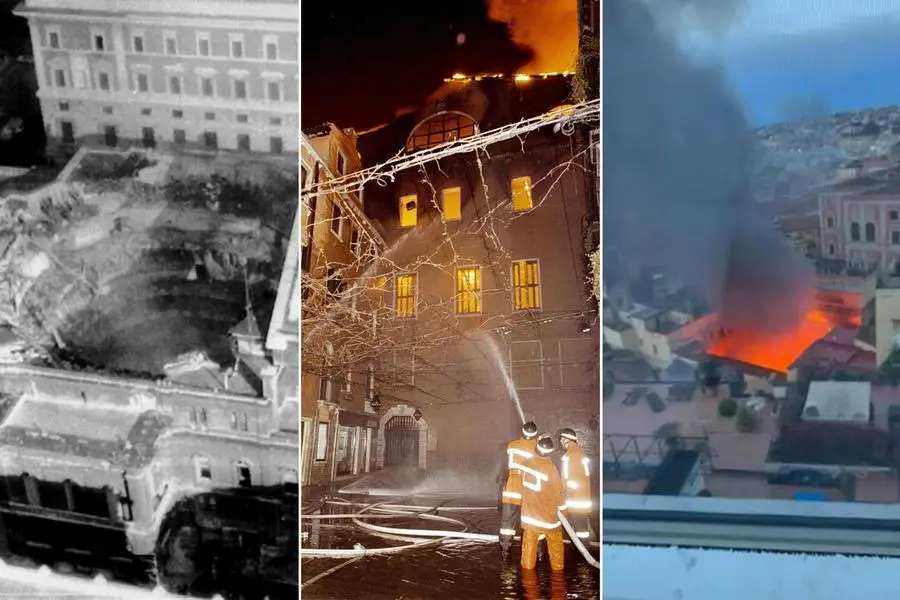
The fires involving Italian theaters: from left, the Petruzzelli in Bari (27 October 1991), the Fenice in Venice (29 January 1996) and the Sannazaro Theater in Naples on 17 February
(HANDLE)
Already in the hours following the fire, artists and institutions launched appeals for solidarity. The mayor Gaetano Manfredi and the Minister of Culture Alessandro Giuli have promised maximum commitment to the reconstruction, while writers and actors like Maurizio de Giovanni and Gianfranco Gallo they expressed closeness to those who work at Sannazzaro and to the entire Neapolitan community.