






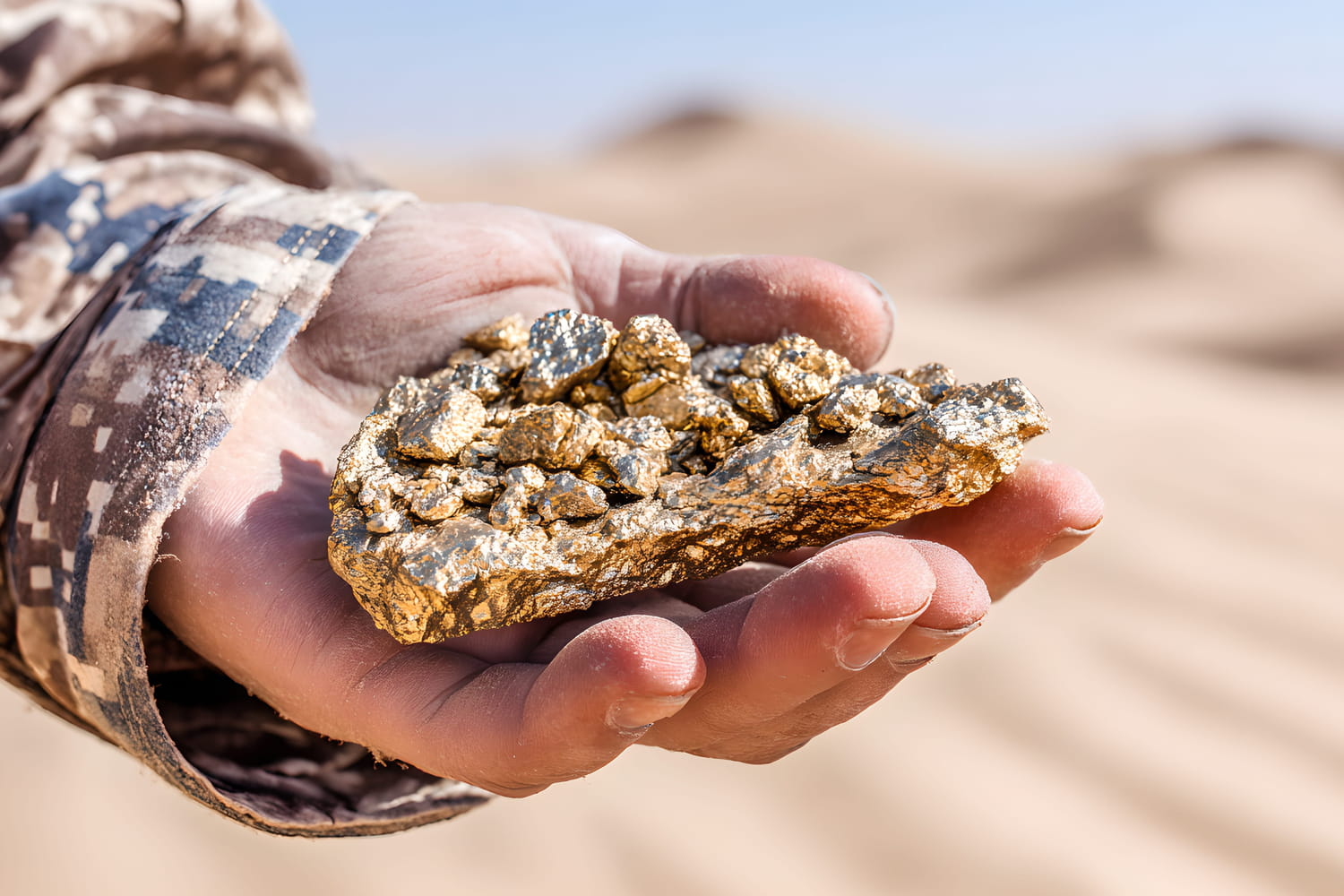
In one study, geologists discovered a leak from the Earth’s core to the upper layers of the planet. This fascinating geological process brings precious metals up to the earth’s crust. Picture.
In its geological depths, the Earth still reserves surprising mechanisms. While geologists thought the Earth’s core was hermetically sealed beneath our feet, geochemical measurements suggest it is “leaking” and leaking deposits of gold. Specialists speak of an active geochemical leak. Why this leak? It is because of the extreme heat and colossal pressure that reign at the center of the planet, under the earth’s crust, that part of its matter escapes outwards, like a pressure cooker under pressure.
To fully understand, we must recall the internal structure of our planet. The core of the Earth is a sphere of molten metal (for its outer part) composed mainly of iron and nickel. “It is in the core that 99.9% of our planet’s precious metals are hidden. Concretely, “siderophile” elements (which love iron), such as gold, platinum and tungsten, escape through “mantle plumes” which are kinds of columns of hot rock which rise from the core towards the earth’s crust“, explain Professor Matthias Willboldresearcher at the University of Göttingen (Germany) in a study published in the journal Nature. This geological process is not a sudden explosion, but a kind of slow geological “seep” which eventually causes deposits. These precious metals such as gold escape and migrate through the mantle to end up accumulating in the crust, where humans can reach them.
This leak of material could explain the identification of phenomenal gold deposits, such as the one recently identified in Wangu in China, with the discovery of more than 1,000 tonnes of ancient gold located at a depth of 3,000 meters. It would be the largest gold deposit in the world, surpassing the current reserves of the largest known mines. Its value is estimated at around 80 billion dollars (the equivalent of 67 billion euros). This gold is described as ancient because it comes directly from the formation of the Earth or from the bombardments of meteorites that penetrated the mantle billions of years ago.
If the “escape” from the core is a continuous process over millions of years, its human exploitation follows a tighter timetable. In 2026, geologists must carry out analyzes to confirm the deep origin of this gold. From 2027 and until 2030, ultra-deep mining technologies will be developed in order to be able to reach gold at a depth of 3 km. Large-scale gold mining will take place between 2030 and 2035 and will then be available on the market for jewelers and gold buyers.
Gold is obviously not only used for jewelry, it is an essential component of electronic technologies and smartphones. It is used in printed circuits and processors for its perfect conductivity and absence of corrosion. We also use it in certain cancer treatments and rapid diagnostic tests. Facilitated access to this giant deposit could therefore provide a major boost to biomedical research and technological innovation.