




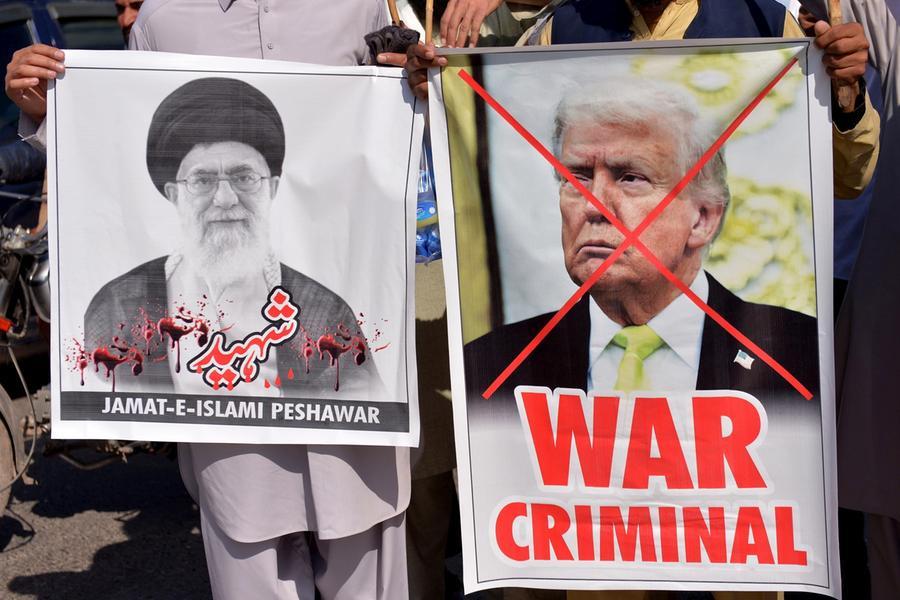
What is the situation opening up in Iran after the death of Ayatollah Khamenei? And what are the prospects in the Middle East after the American attack? We asked Luigi Toninelli he is a junior Research Fellow for the Middle East and North Africa of ISPI (Institute for International Political Studies).
Toninelli, what scenario is opening up now in Iran?
«First of all, a clear distinction must be made between what the ongoing battle will be for the succession to Khamenei’s leadership, therefore for the election of the new Leader, and what the effective control of the State is. If we talk about the latter, the trend is that of an ever-increasing role for the military and therefore for the Pasdaran. Therefore, many fear that post-Khamenei Iran is a country along the lines of what we have already known in Egypt or Pakistan, where the military tends to have a pervasiveness and widespread control within the political and economic life of the country, but they are not the ones who show themselves to the public in person. So there is a more representative figure, but they are behind it.”
And the question of leadership succession.
«One thing will not exclude the other, in the sense that if on the one hand the military seems destined to have more and more power, the figure that remains public could happen through the election of a new leadership.
So in this case the appointment of a new leader would be functional, perhaps not so strong, not so capable of extricating himself from the various Iranian centers of power, it would be functional to act only as a representative figure, not to completely change the institutional structure of the country, therefore maintaining the rhetoric of the Islamic Republic, but at the same time letting the military, and the Pasdaran in particular, manage political life”.
Who could replace Khamenei?
«There are several names circulating. One of these is that of Mojtaba Khamenei, the son of the Supreme Leader, who needs to understand whether he is dead or not. It is very controversial because dynastic succession is something that had been fought by the Iranian revolution itself: when Khamenei railed against the Pahlavi monarchy, he was also railing against this idea of dynastic succession. So repeating this type of approach would be to disavow oneself – not that the Islamic Republic hasn’t already done so – but it would be seen as something very out of tune. Having said that, Mojtaba, if he were still alive, because we don’t know at the moment, he has many connections, he is very well inserted within the Iranian power system. Another name that has been circulating in the last few hours, especially after his appointment within this provisional council that is managing the country, is Alireza Arafi, a character who has always had important positions within the Islamic Republic and has always been appointed by Ali Khamenei within these positions. So many seem to argue that he could be a good choice, because it has always been Ali Khamenei who appointed him to key positions. However, there are doubts about him too, because it seems that he could have died last time. Here we must always distinguish between reality and propaganda.”
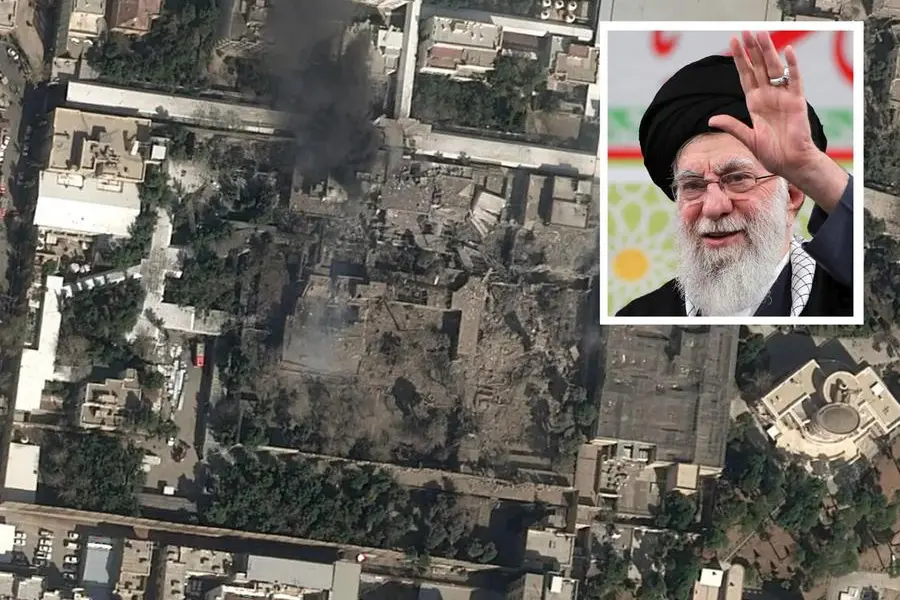
There is also talk of Hassan Khomeini, Ali’s brother and nephew of the founder of the Islamic Republic, Ruhollah.
«It’s a figure that doesn’t seem so likely to me at the moment, but it’s a name that’s been circulating. He tends to be a moderate in terms of domestic politics, so he could make concessions to the population, apply some sort of internal easing, but he is very radical in foreign policy, and this would not translate into an opening towards the United States and Israel. Surely, if it were not for a plane crash in 2024, he would soon take the place of Khamenei former President of the Republic, Ebrahim Raisi, who died in a helicopter crash in 2024.”
Who is ruling Iran now?
«Aside from the fact that there is this triumvirate, the one who is governing the interior of the country is Ali Larijani, who is the Secretary of the Supreme National Security Council. He is a central figure because he seems to be increasingly destined – obviously if he is not eliminated – to be the glue of the new Iranian centers of power. He is very well placed, he has been rescued, he has come back into vogue over the last year and therefore he is a figure to pay attention to in the post-Ali Khamenei era, but also on the occasion of the new institutional structure that the Islamic Republic could take on between now and the next few years”.
What is the impact of this war on the Middle East?
«Everything to see. The crisis seems to be getting out of hand. We have seen how even extremely weak groups such as Hezbollah have decided to take part in the conflict in what can almost be defined as political-military suicide on the part of the group. The bombings continue in the Gulf. The negotiation attempt which was half-heartedly encouraged or feared by Donald Trump on the one hand and by Iranian Foreign Minister Abbas Araghchi on the other was however immediately disavowed by Ali Larijani. At the moment there seems to be no prospect of a closure to this period of war. Iran wants to make the leaders of the United States and Israel in particular pay dearly. We don’t know exactly where we will go. What we see is that the number of victims is also increasing in Israel and there are not so encouraging statements also from European countries, which say they are ready to allow the use of their bases to operate towards Iran. So the situation is very critical and at the moment there doesn’t seem to be any possibility for diplomacy.”
What is Trump’s medium or long-term goal after this attack?
«He wants regime change in Iran. But the central point of his declaration of war was when he told the Iranian population that he will give them a hand, adding however that the task of giving the Iranian power system the final push falls to them. This is a clever and even cynical approach, because in some way it seems to say: we will not put soldiers on the territory, we will not put the so-called boots on the ground, we will carry out our bombings, but then it is up to you to change the regime, if you want to change it. So if this type of military campaign were to fail, the blame would likely be placed on the Iranian people. This is a way, in some way, of excluding oneself in the event that a change of regime is not achieved, already having someone to blame and on the other hand probably continuing without, at the moment, having a higher objective than that of killing as many leaders as possible and weakening the Islamic Republic as much as possible, probably to bring it back to the negotiating table”.
A table that Iranian leaders refuse for now.
“Exactly. The Islamic Republic currently does not want to return to the negotiating table, also because the people killed were probably the people who, in certain respects, were holding back an escalation. At the moment, as these caps are no longer available, those who are gaining a foothold within Iran are even more radical figures.”
And the nuclear threat repeatedly raised by Iran?
«It is a huge political and military issue. Ali Khamenei, at the beginning of the 2000s, had issued a fatwa with which he somehow condemned the use of the nuclear bomb in the military field. Beyond the declarations in which they claimed to be in possession of nuclear power, this has always been a crucial point, because Iran has never equipped itself with a bomb also because this legal opinion existed which was in some way binding. The fatwa dies with Ali Khamenei and many inside Iran today favor acquiring a bomb. So killing the Ayatollah may have been counterproductive in this sense too.”