




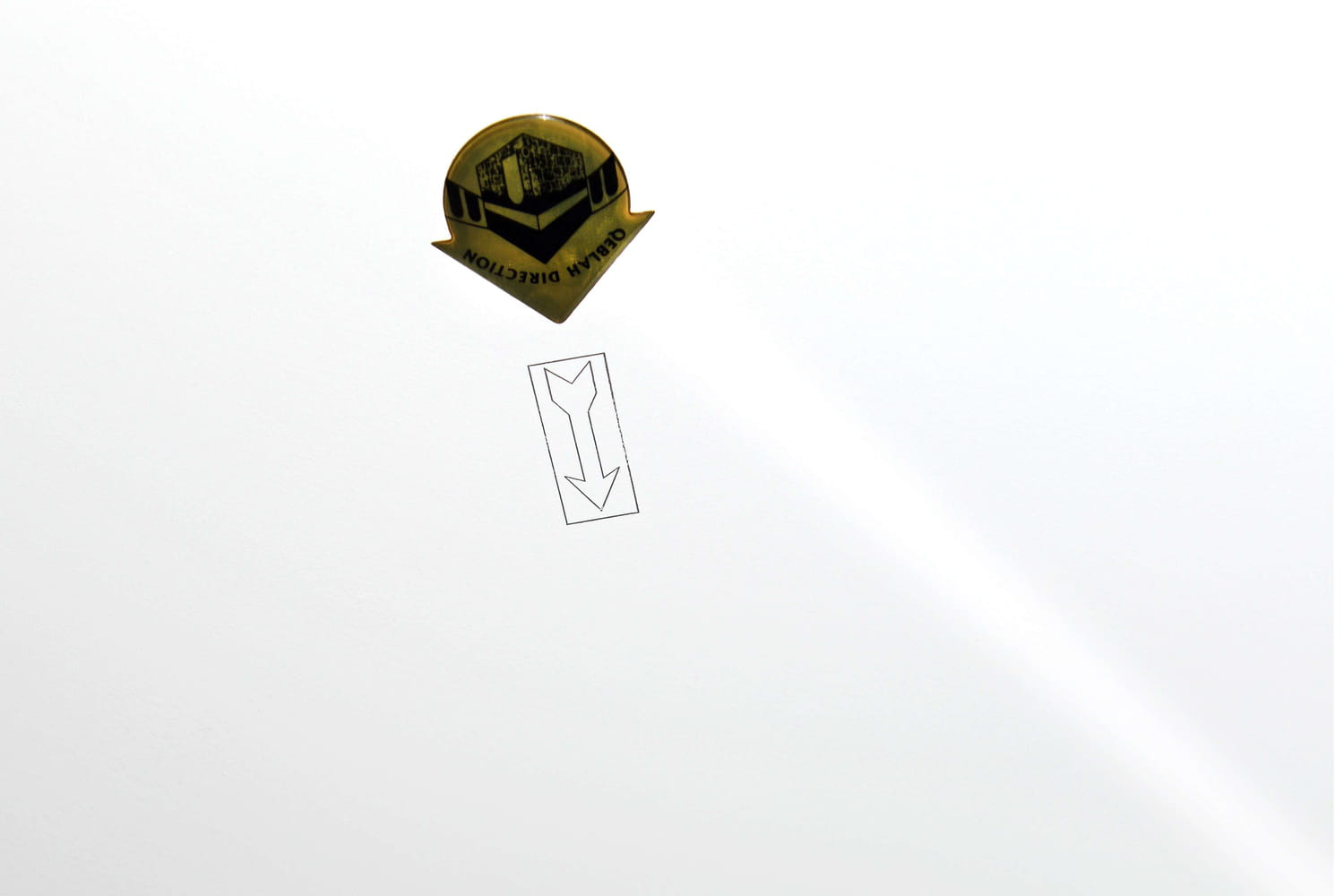
Maybe you’ve already seen that sticker on the ceiling of your hotel room without really knowing why it was there? Intriguing, he has a very useful role.
If you are used to traveling, certain details in hotels and resorts probably no longer hold any mystery for you. But have you already spotted this sticker stuck to the ceiling of your room? It is sometimes found in establishments in a small handful of countries around the world. And for good reason: it is very useful for only part of the clientele…
In a hotel room, we find more and more stickers indicating a lot of information ranging from changing sheets and towels only on request for ecological reasons, to the QR code to access room service, including the essential sign reminding us of the ban on smoking. But some hotels also display an arrow-shaped sticker on the ceiling. Above, we can read the word “Kiblat” also spelled Qibla, Kibla or Kiblet depending on the country in which we are staying. Sticker which will not always be positioned in the same place.
This sticker then proves very useful for nearly 2 billion people around the world. For what ? Because it is aimed at Muslim customers. It in fact indicates the direction of Mecca, towards which Muslims turn to pray. During this period of Ramadan, when many are committed to respecting the five prayers a day, knowing directly where to settle in your hotel room to perform this ritual makes things easier. Moreover, some establishments sometimes even offer prayer rugs in the bedroom wardrobe.
Why is this important? Because Kiblat is a condition for the validity of prayer (salat). Barring exceptions (such as illness or a trip where one cannot orientate oneself correctly), a Muslim must physically turn towards the Kaaba for his act of worship to be accepted. With this sticker, hotels allow their believing guests to be able to say a valid prayer.
The countries of the Middle East – Saudi Arabia, Qatar, Kuwait, Oman and even Bahrain – are those where this practice is the most standardized. In the majority of hotels, a small arrow is stuck to the ceiling, on the desk or even inside a drawer. In Southeast Asia, particularly Indonesia and Malaysia, this is a service standard, even in mid-range establishments.