




In the spring of 1945 Europe was an exhausted continent, suspended between the end of the war and the beginning of a peace yet to be built. Red Army troops advanced and retreated across devastated territory, crossing Poland like a raging river. But that passage, which should have marked liberation, also brought with it a shadow of violence that would remain silent for many years.
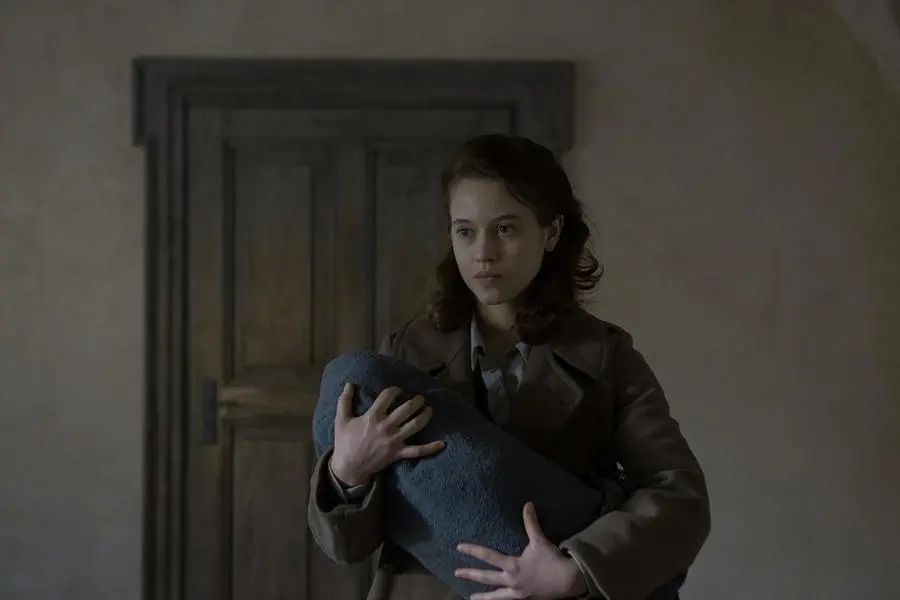
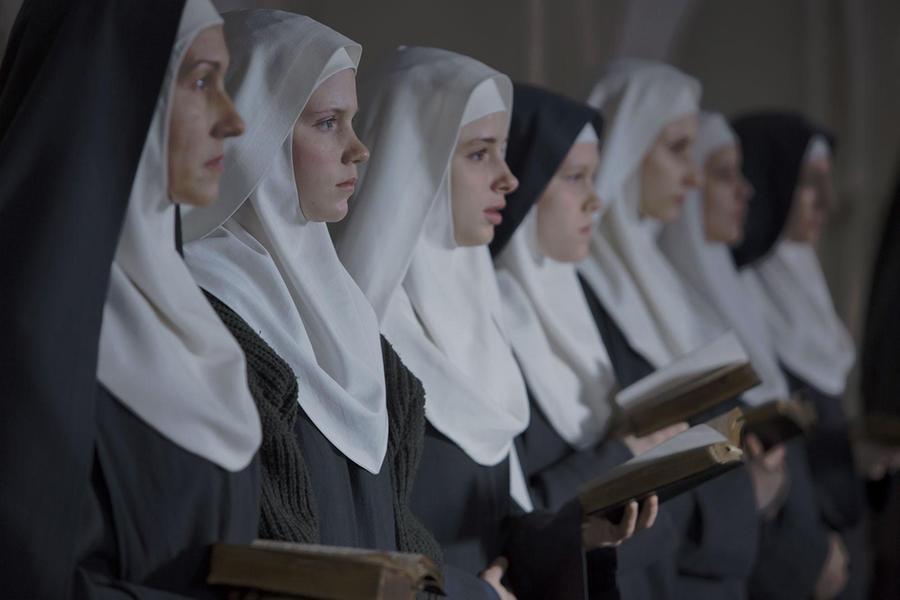
In a Polish convent, far from the spotlight of official history, a tragedy occurred. A group of Soviet soldiers broke into those walls of silence and prayer. For days the nuns were victims of systematic violence. Twenty-five nuns were raped repeatedly: some up to forty, fifty times. Many did not survive. Others remained forever marked in body and soul. Five found themselves pregnant. It is this historical event that inspires the film Agnus dei (2016), original title The innocents, by director Anne Fontaine, a Franco-Polish-Belgian production, made in collaboration with the Polish Film Institute.
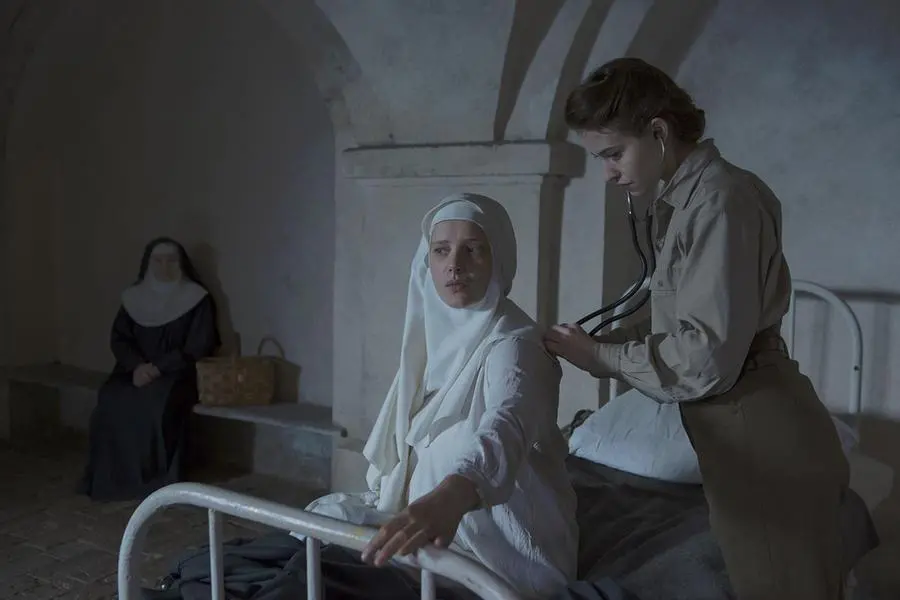
It was a young French woman doctor who allowed this story to not end up in oblivion. Madeleine Pauliac. Pauliac was born in 1912 in Villeneuve-sur-Lot. His father, Roger Pauliac, died in 1916 during the Battle of Verdun. At the age of 27 he was a hospital doctor in Paris. He became involved in the Resistance by providing support to the French clandestine organization. He then participated in the Liberation of Paris and in the Vosges and Alsace campaign. In early 1945, with the rank of medical lieutenant in the French army, Pauliac left for Moscow under the authority of General Catroux, French ambassador to Russia. On April 19, she was appointed head of the Warsaw hospital, which was in ruins. He became responsible for the repatriation mission at the head of the French Red Cross. He carried out more than 200 missions throughout Poland and the Soviet Union with the Blue Squadron, a volunteer ambulance unit of the French Red Cross, whose job was to search for, assist and repatriate French citizens remaining in Poland. On 19 June 1945 Pauliac wrote and sent a report on his trip to Danzig to Étienne Burin des Roziers, chief of staff of General de Gaulle, to which the recipient replied on August 25, 1945. And it is from this diary that we learned the story of the Benedictine Sisters who were victims of the brutality of the Soviet soldiers.

Madeleine Pauliaca was in Warsaw, among the rubble of a destroyed city, to assist the survivors and repatriate the prisoners. It was there that the nuns looked for her. She, one of the few female doctors present, crossed the threshold of the convent and wrote everything down in her diary, with dry words, almost incapable of containing the abyss: fifteen nuns killed after the violence, the others survived repeated rapes, some pregnant.
But behind those numbers there were faces, stories, wounded consciences. Women who, in addition to physical pain, carried the weight of spiritual torment: shame, guilt, the fear of being lost in the eyes of God. Madeleine did not judge. He did what a doctor can do: treat, listen, stay close.
She came and went from that convent, while she continued to work tirelessly in the French hospital and travel along unsafe roads to help the wounded. For those women, her presence was a fragile but concrete possibility of salvation, a thread of humanity within the horror.
Madeleine Pauliac died shortly afterwards, in 1946, in a car accident in Sochaczew, near Warsaw. She is buried in the Saint-Étienne cemetery in Villeneuve-sur-Lot, France. Madeleine Pauliac was posthumously awarded the Legion of Honor and the War Cross 1939–1945 (France), with the rank of knight.

Why was that story, like many others, kept quiet for a long time? Too uncomfortable. Too painful. It cast a disturbing light on the liberators, cracking a memory built on simpler patterns. Yet, as the historian Lucetta Scaraffia observed, silence does not protect: “If we don’t talk about it, it will not be possible to punish those responsible.”
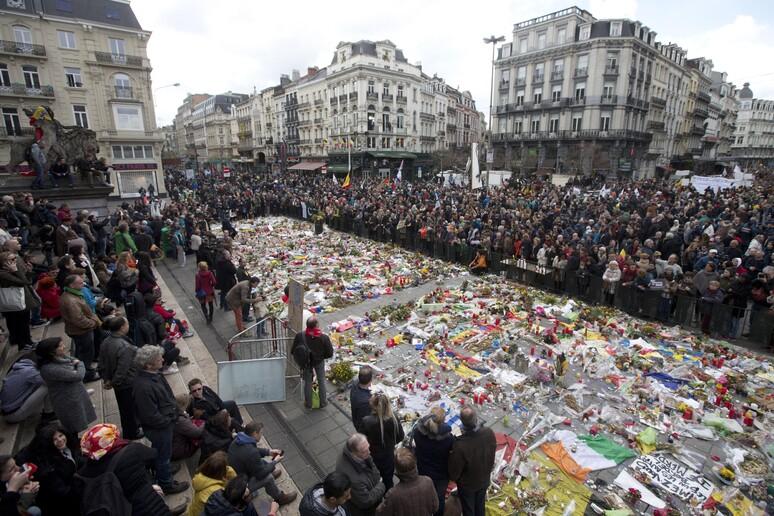
This is not an isolated incident. From Bosnia to Africa, from Asia to other more recent war scenarios, violence against women – even against consecrated women – continues to repeat itself, often accompanied by marginalization and rejection. The victims, in addition to the offense suffered, must face exclusion, suspicion, sometimes oblivion.
Telling about that spring of 1945 therefore means doing something more than giving back a fragment of history: it means breaking a silence. Remember that even in moments when the war seems to end, violence can continue in other forms, more hidden but no less devastating.
And perhaps, as this story suggests, the first step towards true justice is precisely this: having the courage to look, to tell, not to look away.