






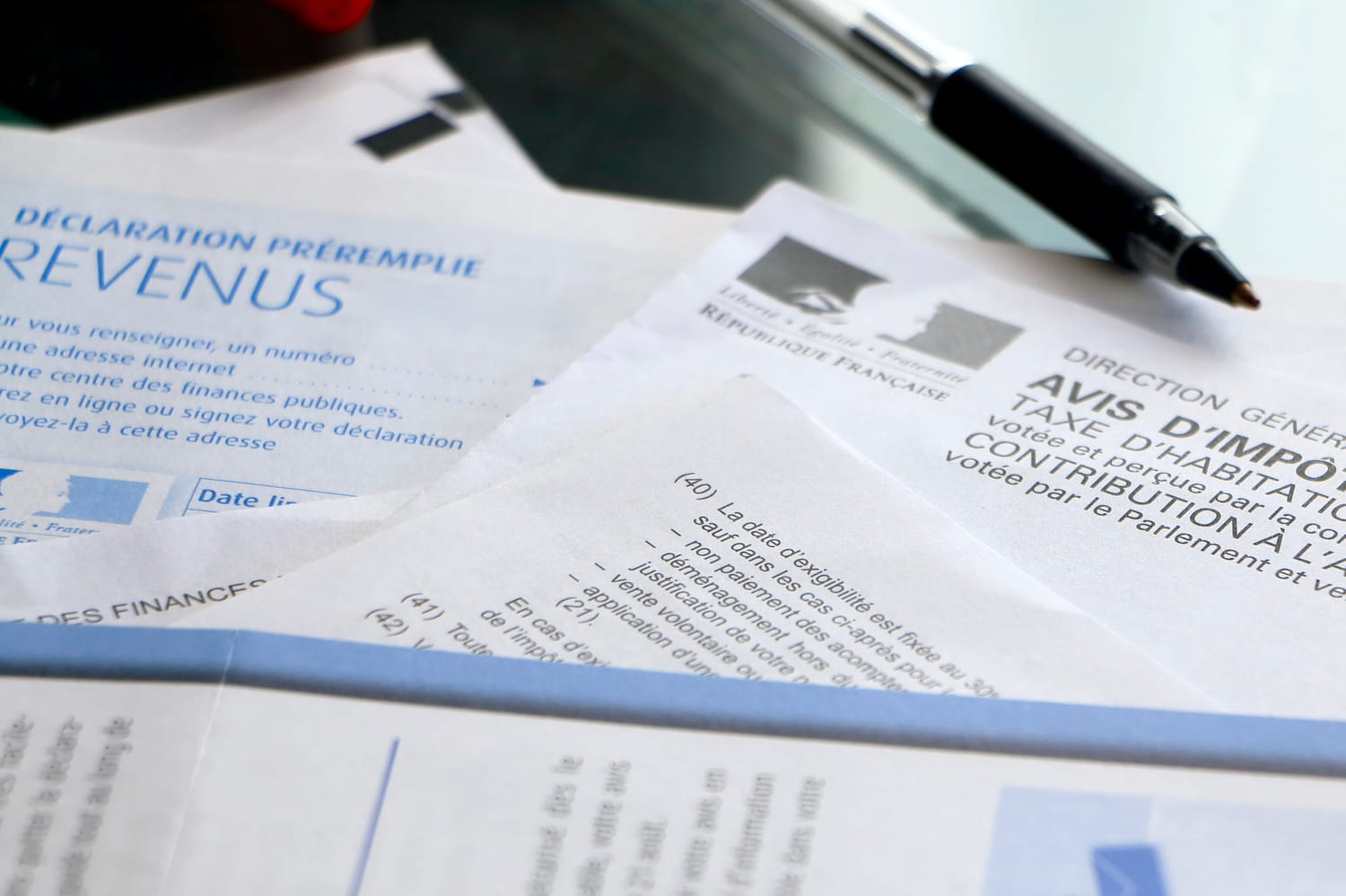
Every spring, the tax return comes back with its share of obscure boxes. One of them, in particular, could well have a significant impact on the final grade.
Completing your tax return is not a pleasant experience, but it is often in the details that savings are at stake. Many taxpayers focus on income, deductible expenses or tax credits, forgetting that a simple choice can change the amount of the bill.
This choice concerns in particular certain financial income: interest received on taxable bank investments, stock dividends or even capital gains realized on the sale of transferable securities. For example, if you sold a security for more than you bought it, the difference constitutes a taxable gain. Likewise, the interest paid by certain savings products falls into this category.
These amounts are, by default, subject to a flat-rate deduction. This levy applies a rate of 12.8% for income tax, to which social security contributions are added. This mechanism was designed to standardize and simplify the taxation of this income. On paper, it offers readability. In fact, it may turn out to be more or less favorable depending on your situation. However, there is the possibility of choosing another taxation method, by checking the 2OP box on your declaration.
The alternative then consists of renouncing this fixed rate and integrating these gains into the progressive income tax scale. Concretely, if they are subject to the scale, they are added to your other resources and are taxed according to your marginal tax bracket.
If you are not taxable, or located in a low bracket, the portion corresponding to income tax may be very low, or even zero. In this case, choosing the progressive scale may allow you to pay less than the 12.8% provided by default. Conversely, if you are in a 30%, 41% or 45% bracket, the flat-rate deduction often becomes more attractive, since it caps the tax at 12.8% for this portion.
However, it is important to understand that this option applies to all earnings concerned over the year. It is not possible to choose the flat rate for one type of income and the scale for another. The decision must therefore be made taking into account your overall situation. A simulation, directly from the online declaration service, allows the two scenarios to be compared before validation. Depending on the amounts declared and your tax bracket, the difference may be real.