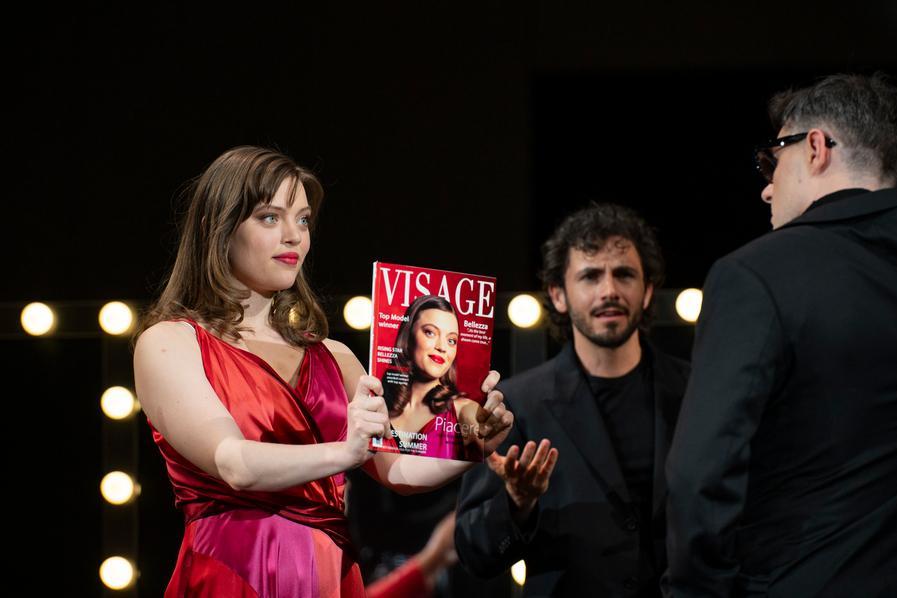





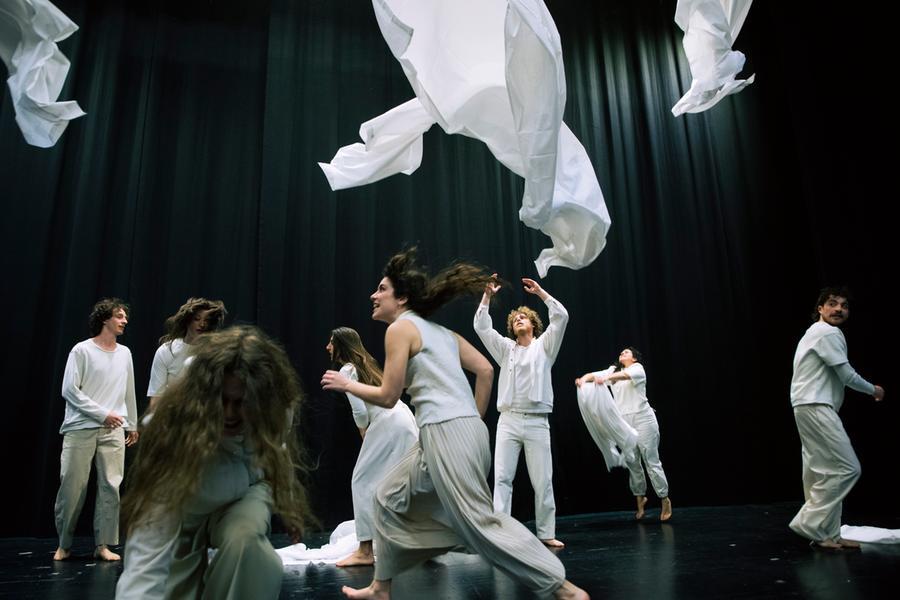
With the debut of Gospelssecond act of Trilogy of Books, Gabriele Vacis and the PoEM group bring the relationship between man and the sacred back to center stage (8-19 April at Fonderie Limone Moncalieri in Turin). In a horizon dominated by wars and the fragmentation of values, the company investigates our Judeo-Christian roots not as a legacy of the past, but as a living and political matter. We explored the meaning of this theatrical challenge with the director which combines faith, philosophy and civil commitment.
How did the interest in such a dense corpus arise and what deep connection exists with your previous trilogy dedicated to war?
«The link is actually a logical consequence. We came from a series of works on the war. Precisely during the staging of Seven in Thebes, we came across James Hillman’s reflections on the love of war: there is always a “God” involved when a conflict breaks out. It doesn’t matter which deity it is, the fact is that religions always play a role in wars. Starting from this awareness and looking around, we felt the need to question ourselves about our Jewish-Christian roots. Hence the proposal of the Teatro Stabile di Torino for a new trilogy dedicated to monotheistic religions was born: after having tackled the Old Testament, we are now working on the New and next year we will close the circle with the Koran”.
PoEM is made up of young people from a “post-religious” generation. How can this data be reconciled with the interest in spiritual themes?
«The apparent disinterest of young people in these issues is a misunderstanding similar to that surrounding politics. If you offer them a technical debate on the primaries, it is obvious that they will be bored. But if you bring the discussion to an existential level, the answer is vibrant. We verified this in high school meetings: when we talk about Antigone, about a woman willing to die for an idea, the kids get fired up. The question becomes: “Is there anything today for which we would be willing to die?”. We used the same approach for faith. In working on the Old Testament we started from biblical suggestions to get to their lives. We asked ourselves: “Where is Eden? When were we there?”. Each brought their own story, which we then intertwined with the Scriptures. We asked ourselves, for example, why, today, a father would go so far as to kill a son. The result is a short circuit between the children’s daily lives and the verses of the Bible.”
How has your working method changed when faced with the Gospel text?
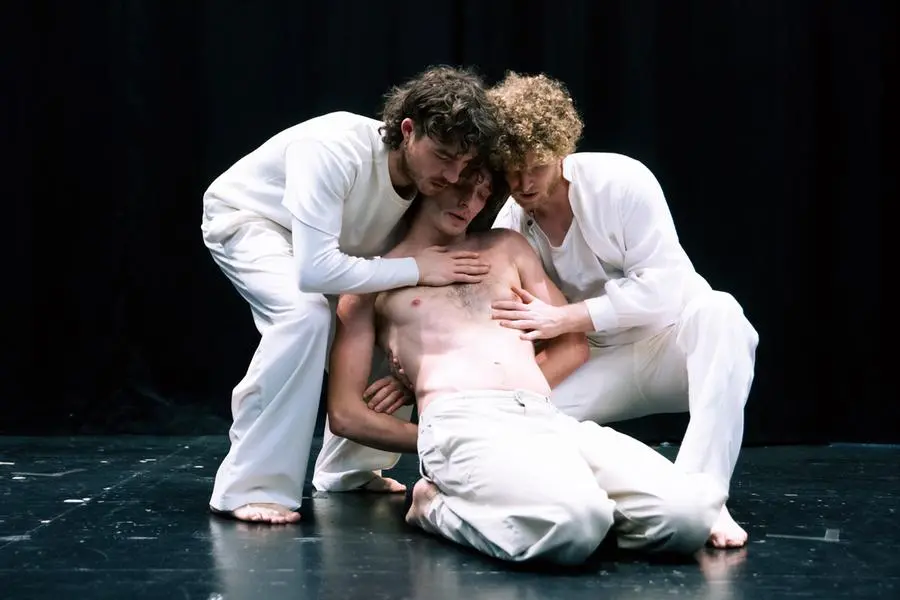
«With the Gospels, we realized that the original text was enough. The evangelical words possess an intrinsic unsettling power. Initially we thought of following the same pattern, using the text as a framework for other narratives. Instead, in the end, we chose to let the evangelical word dominate the scene.”
Why did you choose the Gospel of John as a reference?
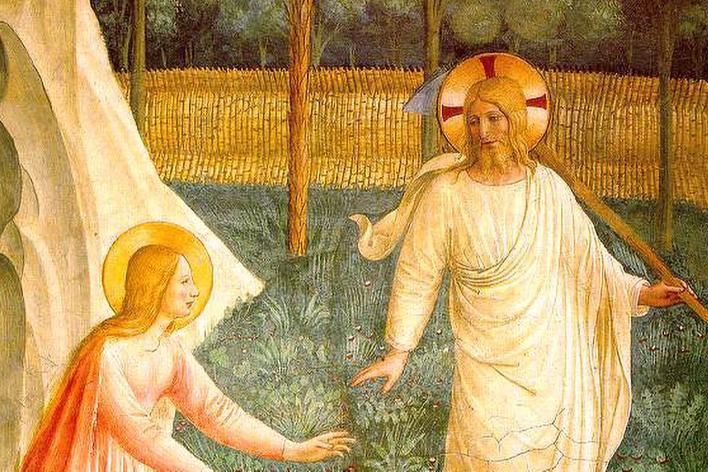
«John seems the least narrative but, as Enzo Bianchi suggests, he is actually the most narrative of all: only that he doesn’t narrate human events, he narrates God. We therefore started from the Logos, the incarnate word. If the Old Testament is the law, the New is grace and truth. The truth is much trampled on these days. We are now talking about a post-truth. And instead, by reasoning and starting from the words of the Gospel, we have established precisely the need for truth. And then there is grace, which we have discovered is linked to presence: being present to oneself, to others, to time and space.”
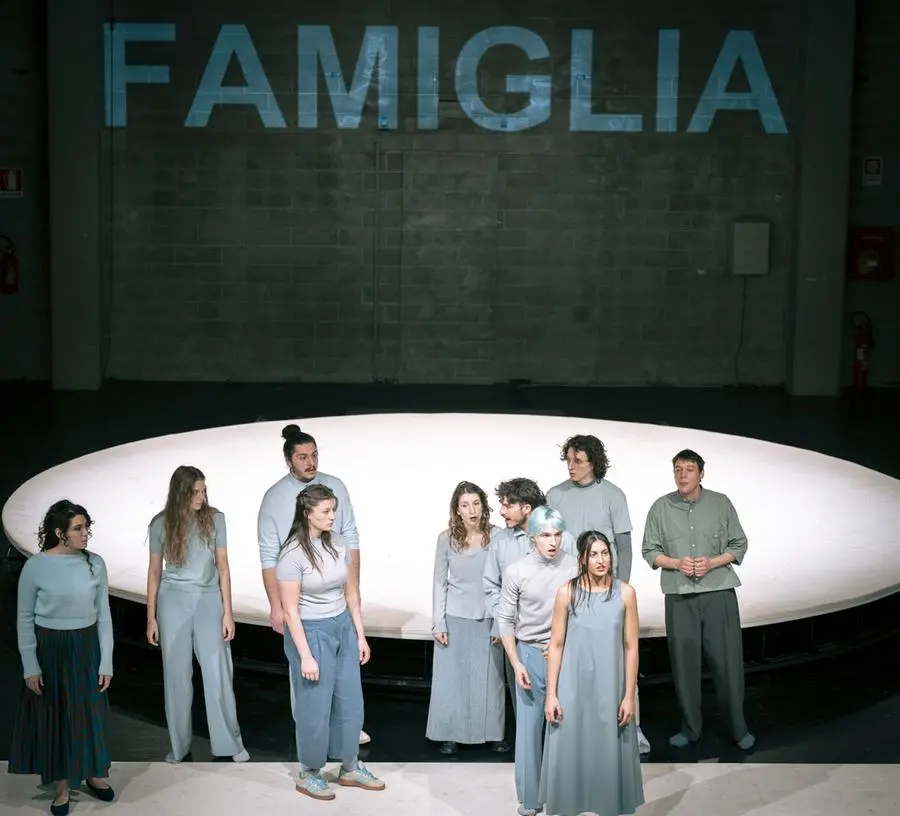
How does the sacred enter into purely theatrical reasoning?
«Theatre has three sources: the game, the narrative and the ritual. It was born as a cure: the great theater of Epidaurus was part of the most important hospital of antiquity; it was catharsis and healing. As a group, we seek this relationship with the sacred in an age that easily tramples on it. We also explored Matthew’s Sermon on the Mount. They are words so evident that they do not require comment, yet they are betrayed every day by those who proclaim themselves Christian. This work is a moment of collective and political reflection that goes beyond age or creed. It is a discussion on pure spirituality, a way of making the evangelical words resonate with the strength that we would like to hear every Sunday at Mass.”