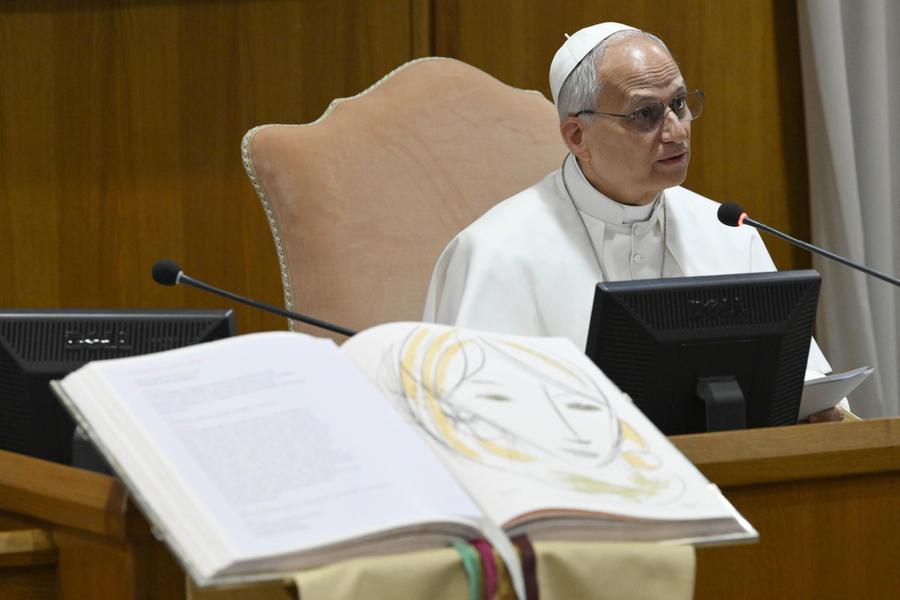




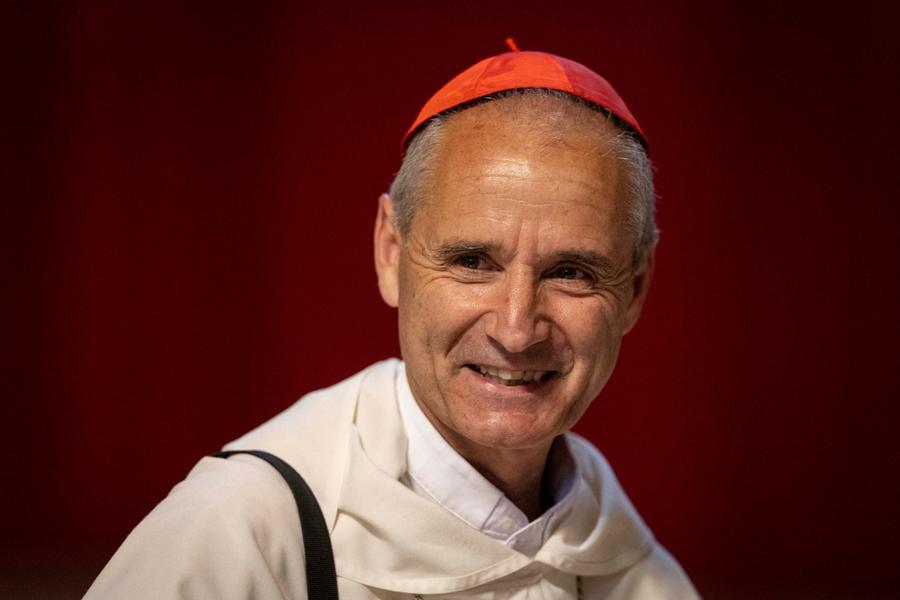
«In the joy of Easter, on April 13th and 14th, the Pope will meet all the Algerian people, of whom the vast majority are Muslims»: Cardinal Jean-Paul Vesco, archbishop of Algiers, recalls that this was also the wish of the late Pope Francis “because openness to others was fundamental.” Vesco recalls that the first words of Leo XIV on the day of his election were: «May peace be with you all!». And this will be precisely the cornerstone of his apostolic journey to Algeria «as a greeting of peace addressed to the suburbs, but according to Algerian custom: “Al salam aleykoum!”. In short, a Muslim people welcoming a Christian brother and the Virgin Mary, so loved in Islam, will lead this historic visit following in the footsteps of our father Saint Augustine, known as the “Doctor of love”».
The universal Church will soon look to this part of North Africa, where less than 1% of the population is Christian, a rough estimate given that no official statistics exist. The Church is made up of irregular migrants, African students, sub-Saharan scholarship holders, workers from abroad and people born in this landwho seek to learn about Christianity as “friends of Saint Augustine”. Sub-Saharan Catholics make up, in fact, three-quarters of the Catholic community, which numbers around 6,000 faithful from Uganda, Zimbabwe, Tanzania and Burkina Faso. The Catholic Church in Algeria is therefore fully African, it no longer has any connection with the former French motherland, which colonized it.
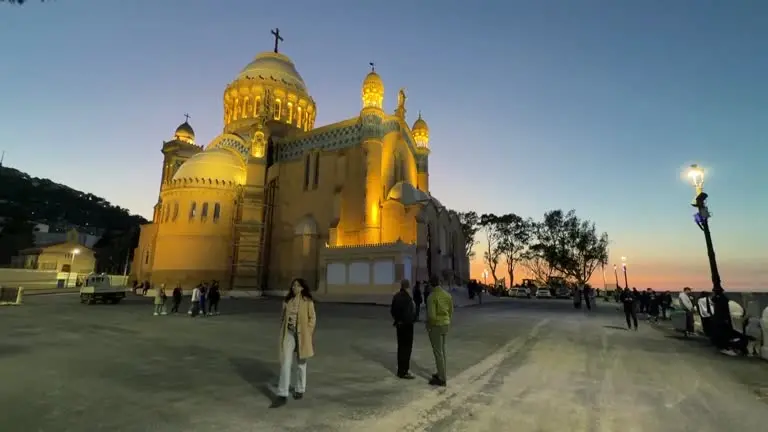
About ten days after Easter and after Ramadan, the Holy Father will begin with the meeting with the President of the Algerian Republic, Abdelmadjid Tebboune, and the highest representatives of the institutions. Then, the one will come with the Christian community in Notre-Dame d’Afrique, a sanctuary in the Algerian capital built in 1872located on the heights of Algiers and very frequented by the Muslim population, who have a great affection for Mary, the only woman mentioned by her name in the Koran, who Islam considers Virgin and Mother, chosen by God to give birth to the “prophet Isa”, as they call Jesus.
Precisely in this temple, according to the organizers who are busily preparing to welcome the Pope, Leo XIV will certainly evoke the episode narrated in the Gospel of Luke of Mary’s meeting with Elizabetha theme of in-depth and constant meditation by Blessed Christian de Chergé, prior of the monastery of Tibhirine, one of the 19 martyrs of Algeria proclaimed blessed by Pope Francis on 8 December 2018 with his brothers and religious men and women of other orders killed between 1994 and 1996 during the Algerian civil war. This figure of high spiritual depth sought, precisely in the Visitation, a way to understand the relationship between the Church and Islam, between the Christian and the Muslim.
What is hidden in Mary’s journey it is a bit of the mystery of the Church in Algeria: not a presence of domination, but a loving presence, not of power, but concentrated on servingnot made up of declarations that cause a stir, but of simple and joyful testimonies of a life lived in God, of small yet precious gestures, like those of Mary, who went to show her affection to Elizabeth and to bring her the love of the Son growing in her womb. This small Church shows that the Kingdom of God grows in relationships, in everyday life, in simplicity and in silence. The Holy Father will probably launch a warning from the sanctuary of Our Lady of Africa to all the rulers of the world and to the men who hold positions of power and responsibility.
Read also: Leo XIV in Algeria, for the Augustinians a dream that becomes reality
In Notre-Dame d’Afrique, Pope Leo will also gather in prayer in the chapel of the “nineteen blessed martyrs”, where their memory is honored with 19 blue majolica plaques. “The message of our martyrs is that Christians were killed together with Muslims, even before being killed by Muslims… In those years, one hundred imams were also murdered”, observes Cardinal Jean-Paul Vesco. The apostolate of these martyrs, animated by a strong Marian impetus, including the bishop of Oran Pierre Lucien Claverie, “was an apostolate of goodness, truly inspired by the message of the Visitation”. During the Algerian civil war of the 1990s, they did not want to abandon their suffering Muslim brothers. They lost their lives, like thousands of people in the same periodin circumstances that are still partly unclear: between 60 thousand and 200 thousand deaths in the so-called “black decade”, from 1992 to 2002.
«I think that in their blood mixed with that of the Algerians, they were artisans of peace, almost as if to redeem many of the crimes committed during colonization. From their sacrifice a true Algerian Church was born, freed from ties with the colonizing European country. Thanks to them, the treasure of the Church here has been able to be shared with the world”, explains the Algerian journalist Mansour El Marsa, who has a profound knowledge of the reality of his country. «The message of these martyrs is friendship with the Algerian people, a friendship that Charles de Foucauld, a model for them, also wanted to live. Let us not forget that the saint converted, at the age of 28, in October 1886, 140 years ago, in the church of Saint Augustine in Paris and that his life program was summed up by the words of the holy Bishop of Hippo, father of the Church and doctor of love, so dear to Leo XIV: “For us, to live is to love”. His canonization, in 2022, was also welcomed by Algerians, although he had long been seen as a spy of colonization”, continues Mansour El Marsa. «Following the example of these men and women, the Church in Algeria leaves itself to reach out to others, inspired by the evangelical episode of the Visitation. It is not a Church of silence, but, as my friend Blessed Pierre Claverie said, a “Church of encounter””.