







Executive Summary
How much does an employee wellness program cost and what should you expect to pay?
Employee wellness programs typically cost between $24 and $54 per employee per year for a platformwith total annual costs ranging from about $100 to $750 per employee, depending on program depth. Additional services like biometric screenings, coaching, and incentives can increase costs, but programs can be scaled to fit almost any budget. Many organizations see a return of $1.47 to $3 for every dollar spent by reducing health risks and improving productivity. The most effective programs balance cost with strategy, focusing on behavior change and high-impact components rather than simply adding expensive features.
If you’re thinking about launching an employee wellness program, you’ve probably wondered how much it’s going to cost. The truth is, there’s a wide range, mostly because the price depends on the depth and breadth of what you want to offer.
First, it would help to answer a few questions to narrow down exactly what you are looking for.
- Do you want a singular component like an HRA? Just Challenges? Just Rewards?
- Are you looking for an out-of-the-box, easy-to-start, low-cost (low customization) option?
- All the bells and whistles? Comprehensive program with culture strategy built in?
Let’s break down the real numbers so you can plan with confidence and set realistic expectations.
What does a typical wellness program cost?
The annual cost of a comprehensive wellness program usually falls somewhere between $150 and $1,200 per employee. That broad range reflects whether you’re offering just the basics or a full suite of services, from simple health challenges to advanced coaching and biometric screenings (WellSteps; Wellable; Vantage Fit).
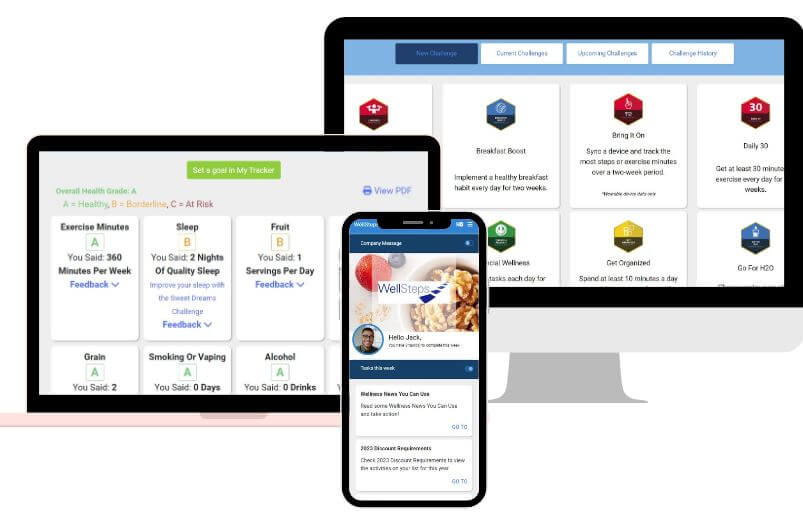
If you use a proprietary wellness platform like WellSteps, most companies pay between $2 and $4.50 per employee per month, or $24 to $55 per employee per year. This typically includes a mobile app, health risk assessments, incentive management, fitness challenges, and device integrations. Larger organizations often pay toward the lower end of that range due to economies of scale.
Related: The Costs and Advantages of an Employee Wellness Program
What About Add-On Services?
The core platform cost doesn’t include everything. Here’s what to expect for common add-ons:
Biometric screenings (blood work analysis): $36–$80 per employee, depending on the provider and the number of employees screened (Medical Screenings Unlimited).
Health coaching (6 sessions): $140–$165 per employee.
Benefits-based incentives: $200–$800 per employee annually. Some companies, for example, offer $50/month insurance premium discounts, totaling $600 per year for each qualifying employee, but this can be dialed up or down based on your budget and goals.
It’s also worth noting that lower-cost incentives, think gift cards or company swag, can still drive participation, especially when paired with engaging wellness challenges.
Balancing Cost and Return

You don’t have to go all-in on expensive options to see a benefit. Many companies find that wellness challenges and simple incentives can drive engagement without the heavy price tag of health coaching or on-site fitness centers. Studies suggest that while premium offerings are appealing, high costs for coaching and facilities don’t always guarantee a stronger return.
The average ROI for wellness programs in 2024 lands between $1.47 and $3 for every dollar spent (Select Software Reviews; SHRM). Some organizations report even higher returns, especially if they focus on prevention and early intervention (SFMIC).
Reseller Model: A Cost-Saving Option
If you’re a large employer or broker looking to scale, a reseller model can drop costs significantly. WellSteps, for instance, offers this option starting as low as $6 per employee per year, letting you manage wellness in-house and reducing the need for dedicated staff.
Related: Resell Wellness? Being a Wellness Reseller Might Make Sense
Sample Budget for a Mid-Sized Company
Say you have 350 employees and choose a $26 per employee per year platform:
Wellness platform: 350 x $26 = $9,100
Add biometric screenings, health coaching, and incentives as needed.
Related: One Powerful Wellness Platform for Mid-Size Companies
Why Invest Now?
Three big reasons stand out: increasing evidence that wellness is a successful business strategy, rising rates of obesity and diabetes, and the relentless climb of healthcare costs. Even during tough times, the cost of poor health and lost productivity makes wellness programs a necessity—not a luxury.
Key Elements to Maximize Impact
To get the most from your investment, your program should include:
Medical screenings
Incentives for healthy behaviors
Behavior change campaigns
Health coaching
Fitness, nutrition, and weight loss support
Social support and gamified wellness challenges
Is It Worth It?

Poor employee health leads to higher costs and lower morale. Wellness programs help people make healthier choices, reduce risk, and foster a more positive, productive workplace. When you weigh the cost of action against the price of doing nothing, the value is clear, especially with today’s focus on prevention and employee engagement.
At WellSteps, we help companies build affordable, scalable wellness programs that actually deliver results. If you’re ready to see how a data-driven approach can transform your workplace, reach out for more details or a personalized demo.
Frequently Asked Questions
The cost of a workplace wellness program with incentives included typically ranges from $100 to $750 per employee per yeardepending on how comprehensive the program is. Basic programs with limited features cost less, while full-service programs that include coaching, screenings, and incentives cost more. Most companies using a wellness platform pay between $2 and $4.50 per employee per month ($24–$54 annually), with lower costs often available for larger organizations.
In addition to the core platform, many companies invest in add-on services to enhance results. Common additional costs include:
Biometric screenings: $36–$80 per employee
Health coaching: $140–$165 per employee (for multiple sessions)
Incentives: $200–$800 per employee annually
These optional services can improve engagement and outcomes, but companies can scale them up or down based on budget and goals.
Most workplace wellness programs generate a return of $1.47 to $3 for every dollar spent. Some organizations see even higher returns when programs focus on prevention and early intervention.
ROI typically comes from lower healthcare costs, reduced absenteeism, improved productivity, and better employee retentionmaking wellness programs a strategic investment rather than a discretionary expense.
Yes—companies can control costs and still achieve strong results by focusing on high-impact, lower-cost strategies. Wellness challenges, simple incentives, and behavior-change campaigns often drive meaningful engagement without requiring expensive services like on-site facilities or intensive coaching. Additionally, options like reseller models can reduce costs significantly—sometimes to as low as $6 per employee per year, while still providing access to effective wellness tools and infrastructure.