






“Father, you know that I love you.” Salvatore Cernuzio says it shouting, in his last meeting with Pope Francis, a few days before April 21st. He shouts this to make himself heard better, seeing as the Pontiff didn’t want to use his hearing aid. But Bergoglio knows that language of the heart even without feeling. He makes a gesture with his hand to lower his voice with an expression that means: “I love you too.” It was an intimate and at the same time universal relationship that linked the Vatican correspondent from Vatican News to the Argentine Pontiff. Born almost by chance, with a letter that Salvatore wrote to him before the trip to Iraq. «I’ll give it to you on the plane. We were in the Covid phase, he didn’t even shake hands. He motions for a gendarme to take her. I feel a little bad about it because it seemed like a cold reaction to me.” And instead, in one of the most complicated phases of the journalist’s life, between work problems, the discovery that he is expecting his fourth child, a move in progress, «just as I was lying down for a moment on the sofa after carrying yet another box, I get a call from an unknown number. The line goes dead, he calls me back. His unmistakable voice: “I am Pope Francis, Doctor Salvatore Cernuzio? What can I do for you?”. Not for a moment did I think it wasn’t him. It came naturally to me to call him “father” and tell him that I needed a blessing. We went to him with the whole family. And that’s where a filial relationship began that has never stopped.”
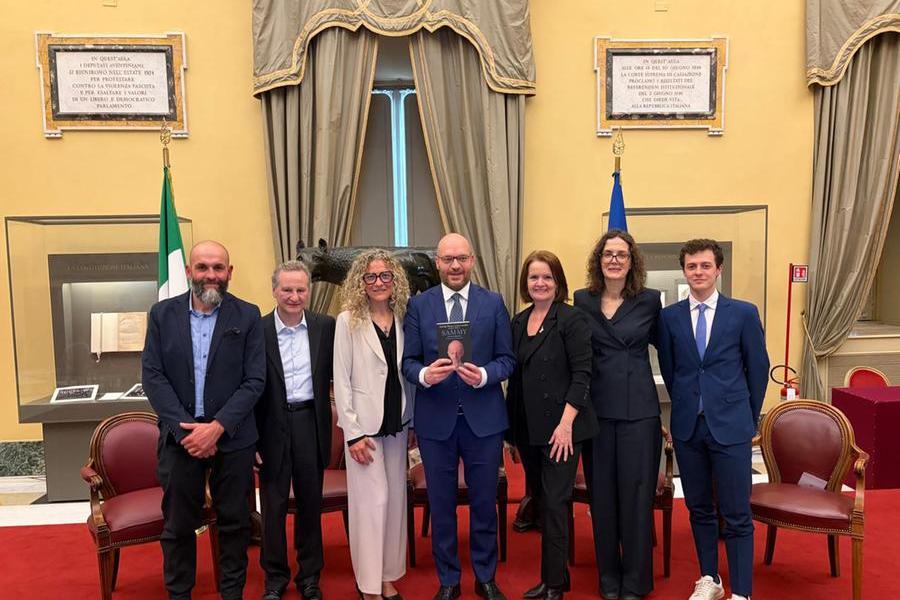
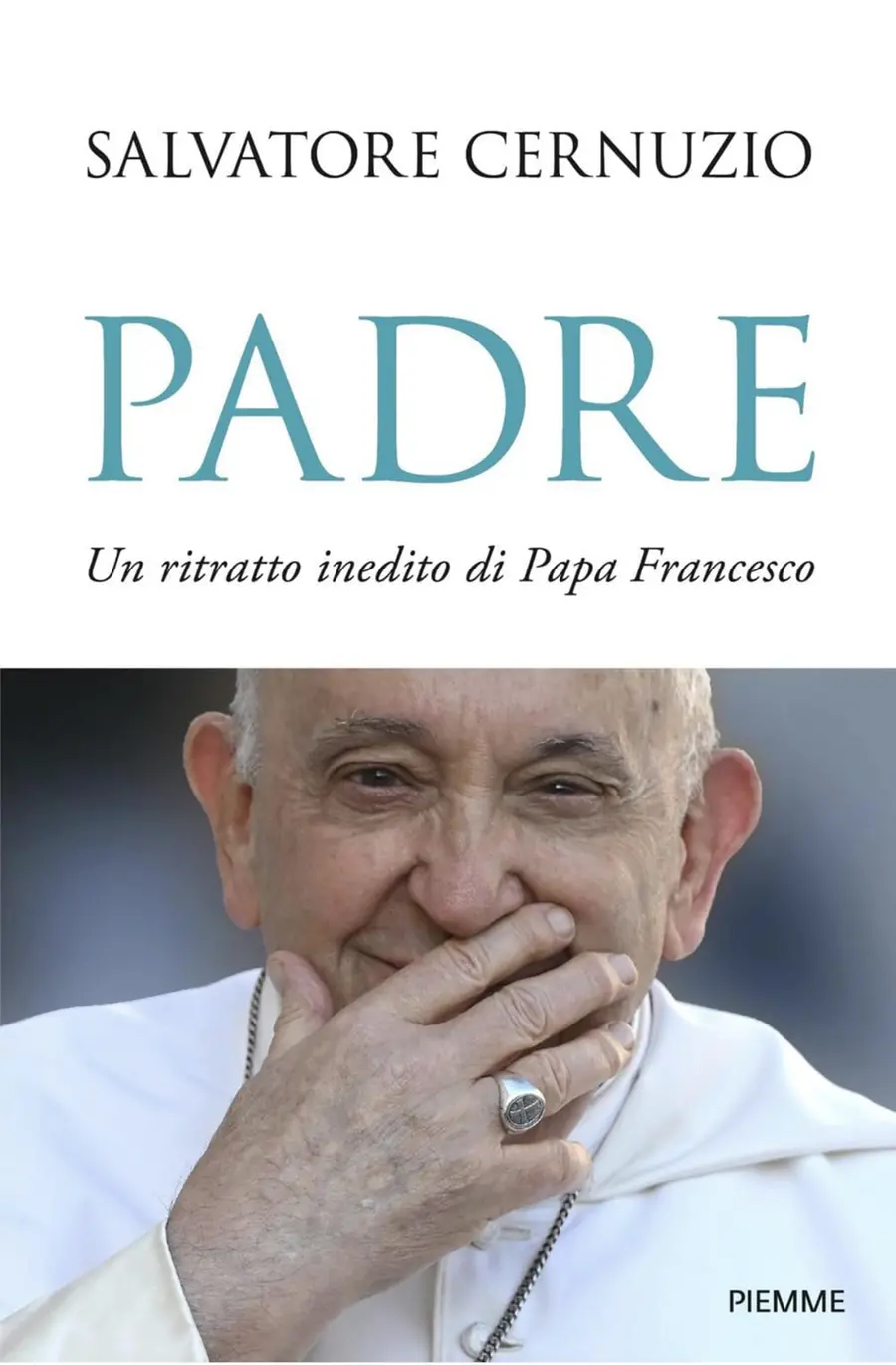
Cernuzio speaks with a mixture of gratitude and emotion. And precisely “out of gratitude” fixed in a book, not surprisingly entitled “Father. An unpublished portrait of Pope Francis” (Piemme publisher, €18.90, pp. 144), images and stories of small and large gestures.
What is the last memory you have?
«The last image is that of Holy Thursday in the Regina Coeli prison. We didn’t speak to each other, we had done so the day before, but he, leaving the prison before getting into the 500, gave me a wink and a thumbs up to say goodbye.”
There is a small video, after the days of hospitalization at Gemelli, in which he greets some children before entering the Vatican. Those children are your children.
«I also tell this in the book. It was unscheduled. We were returning from a football match. From social media I saw that he had left the Vatican. It was one of his last surprise outings to go to Santa Maria Maggiore. At a certain point, while we were walking around to go home, I saw the car and the whole procession and then I said to the children: “Let’s stop and wave to the Pope”. He stopped the car at the corner, before the Perugian. He was very fragile at that moment – even the boys noticed that he wasn’t well – but he wanted to make a gesture with his hand, give a small caress. That was the farewell to my children. Children who had the opportunity to meet him, hug him, receive toys and sweets from him. Even the eggs from what would have been his last Easter.”
Why did you write this book?
«It started spontaneously. I actually didn’t want to write it because I didn’t want to give the idea of reselling something that was also very personal, very intimate and private. Then a colleague, relatives and friends urged me to write so as not to forget. In reality I had already written something, but they were notes for me, advice on spiritual direction. I had all the rest in my mind and then I thought that perhaps it was true that sooner or later I would forget. I started writing straight away, in two weeks, I put everything in black and white. And I thought that, in the end, it was good to share these memories. It is my sign of gratitude, because there is certainly no need for me to strengthen the image of greatness that is already present in public opinion.”
You have followed the Pontificate from the beginning, but only in 2021 did you decide to contact him. Why?
«It’s true, apart from kissing my hand I didn’t have any contact with him. Then I thought of writing him this letter before the trip to Iraq, it was 2021. I had a thousand second thoughts as I went to print it from the tobacconist near my house. I told myself that I shouldn’t disturb the Pope. Then, however, one of his phrases came to mind: “I like being a priest”. So I wrote to him to let him know something about my personal story in a difficult moment. A month later he called me back. We chatted, he told me that my letter had impressed him, that it had “been good for him as a priest”. After we went to him with the whole family there were cards, good wishes, a few phone calls, the book on the nuns that I had written for San Paolo and which had impressed him. The bond has grown stronger and stronger. Maybe also because I didn’t ask him anything. He even told me once that I was strange because everyone went to him to ask for something and I didn’t. But he was very generous with me.”
In what sense is it generous?
«Meanwhile with his time, with his availability, with his affection. And then I also started confessing to him, he acted as my spiritual director. I told him, laughing, that he had an attraction for human cases and that perhaps he considered me a bit at risk if he had become so attached”
What struck you about him?
«The fact that he knew how to read people’s hearts. And that he was “smart” as he said by making that gesture with his hand which means shrewd, smart, perceptive. I don’t know what he saw in me, but his closeness was a gift from God for me.”
What did you learn from him?
«The ability to listen. Each person has their own inner world, they have their difficulties, they have their fears, their joys, and he had this ability to be present with everyone. Even if, as I write in the book, he had some defects, some angular sides of his character, however, they were present. When you talked to him, whether it was about work, family matters or anything else, he was there. And even if he heard Zelensky first and then had to meet a cardinal, the moment he was with you there was only you. You felt understood. He had this ability to value others, to never make people feel rushed.”
And then?
«Moving forward. It is a phrase that he always said and which he accompanied with the gesture of the hand of going. There is a whole world in that sentence because it means that, among many worries of the future and questions of the past, among many difficulties, the important thing is to continue moving forward. What has already been is already past, I also write it in the book. We need to move forward. Are there attacks, criticisms, fears? Forward, among questions of the past a world, because precisely so many worries of the future and questions of the past, so many difficulties and he is always ahead. There is what has already been, I close the book just like this, what has already been is already gone. We need to move forward. Are there attacks, criticisms, fears? It doesn’t matter, we need to look forward”
You called him father, how do you title your book?
«Yes, it came naturally to me. I’ve called him that since that first phone call. And he liked it because he had this strong origin from his religious order. And he was a father, certainly always with the necessary distance of respect. He was always the Pope and I didn’t go to occupy his time. But there was confidence. And if I went on a trip, if there was a project, or if I had a daily difficulty I naturally thought of telling him about it. This feeling was created, which, I repeat, was a grace from God.”
Pope Francis also wanted you at Gemelli during the first days of hospitalization.
«It was the first time I understood how much he cared about me. Not that he hadn’t shown it to me in every way before. But there I really felt in his heart. I was about to leave for Lebanon, he knew about this trip. I received the phone call from Gemelli and I immediately ran to him. He wanted to greet me because, as he said about his health: “It could be that yes… and it could be that yes.” He was afraid he wouldn’t make it, the forecast was bad from the start. He gave me this sort of farewell and I started crying like a desperate man. He made fun of me, gesturing as if to say “what are you crying about?”. It was ironic, but it broke my heart in that moment. Then, fortunately, everyone’s prayers worked. And he managed to get out of Gemelli and return to the Vatican.”
Did he also give you something at Gemelli?
«Yes, he gave me the white rose of Santa Teresina. Stefania Falasca had sent it to him from Lisieux. Before leaving he motioned for me to open a nightstand in front of his armchair. He gave me the idea that he wanted me to keep it so that it wouldn’t get lost among the many things that were there: medicines, but also shelves, packages. For him, Santa Teresina was a fundamental presence, she marked all the most important stages of his life. Now I have it along with many other memories. As I write in the book also together with the poster of Fellini’s film La Strada. He always quoted it, he told me to show it to the children because it was an almost evangelical parable and I had given it to him for his birthday together with a black cardigan because I had seen that the one he was wearing was a little worn. Now I have everything together with many rosaries that he gave me. I even write it in the book. I gave him this on his birthday, December 17th, I gave him a street poster, the Fellini film, which he always quoted, said it was an almost evangelical parable.”
Why was it important for him to return to the Vatican?
«Personally I wanted the world to see him again, to applaud him, for him to be able to take a tour of the square and not for him to die in hospital, no one knows how, with the last image of the hearing a month earlier. I thought it was right that the world saw him again and said goodbye, because he gave so much and it was right to say goodbye. When I learned that he had died, on Easter Monday, I felt immense pain, but, at the same time, I thought it was the perfect ending: he blessed us in the square, he greeted the faithful with that last round. It was the happy ending of a grandiose pontificate.”
What now remains of that Pontificate?
«The fact remains that it made all Christians take a leap. Which gave a different perspective on the value of life, which is not just pro-life defense, but life in all its forms: migrants, children at war from any side. In a podcast we had done he said exactly this: “I don’t care about Ukrainians, Russians, they are kids who don’t go back to their mothers”. He taught us the value of life, the value of hospitality, of brotherhood. And he did it at a time when we are shouting, dividing ourselves, shouting, it seems that the law of the strongest, almost of the jungle, applies. Instead he worked to establish relationships.”
Some criticize, however, the fact that he opened so many trials without closing them.
«I think he did everything with great freedom. It was as if he threw a stone into the pond to see how the water moves and from there also understand what crises there are, what needs to be reviewed a little also in the Church, in the world”.
What do you hope your book generates in readers?
«Pope Francis is so alive in the hearts of the people that there is no need for me to urge anything. I repeat, I wrote this book out of gratitude and because I thought it was a duty to also share this private side which was almost as fabulous as the public one. We all remember with affection many of his words and many gestures, many difficulties and many difficult situations that were swept away. Only this light remains that he gave to the world and to the Church.”