






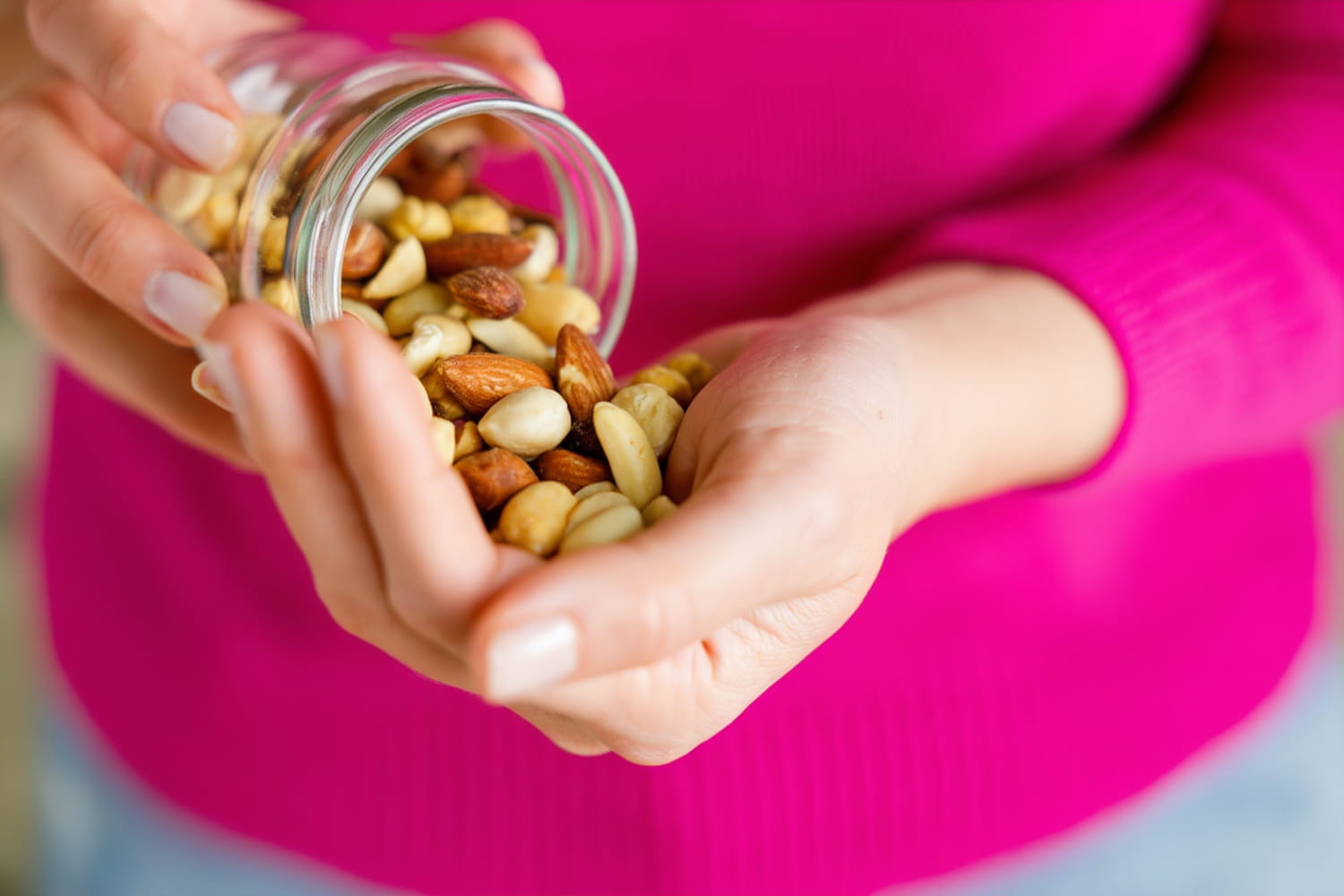
It would have exceptional abilities to “clean” the arteries in record time, according to a new study.
10 million French people have too much “bad” cholesterol (LDL). Often invisible because it causes no immediate symptoms, excess bad cholesterol is a risk factor for cardiovascular diseases such as stroke or heart attack. If genetics plays a role, our lifestyle remains the number 1 lever of action to protect the heart. One dried fruit in particular, often relegated to the status of a simple treat in desserts, has shown exceptional abilities to “cleanse” the arteries in record time, in a new study.
Researchers at the University of Georgia followed 52 adults aged 30 to 75 who had bad cholesterol levels between 1.30 g/L and 1.60 g/L. This is the range where doctors worry and generally advise changing diets before prescribing medications. For 8 weeks, the participants were divided into two groups: the first group had to add a portion of this dried fruit to their usual diet, while the second group did not eat it.
Their results, published in The Journal of Nutrition, showed that after just one month, participants in the first group saw their bad cholesterol levels drop by 9%. Concretely, an individual displaying a level of 1.30 g/L at the start of the experiment saw their cholesterol drop to 1.18 g/L. In comparison, a daily consumption of oatmeal (80 g) reduced cholesterol by only 5%. And oatmeal has the disadvantage of being able to contain the dangerous cadmium. This anti-cholesterol dried fruit is the pecan.
Perceived as greedy and fatty, it nevertheless remains a good source of monounsaturated fatty acids and plant sterols which prevent the absorption of cholesterol into the blood. Pecan has a naturally buttery taste and crunchy texture. A handle can easily replace industrial biscuits during snack time.
To benefit from these protective effects, you don’t need to consume astronomical quantities. Most nutritionists agree that around fifteen nuts are already beneficial for cardiovascular health without disrupting the day’s calorie intake. And unlike the majority of nuts, the pecan is the only one truly native to North America. Its name comes from the Algonquin (Native American language) word “pecan”, which literally means: “a nut so hard that it takes a stone to crack it”.
Alongside regular consumption of pecans, favor “living” fats: replace butter and cream with quality vegetable oils (olive, rapeseed or walnuts) and eat fatty fish (sardines, mackerel) twice a week to stock up on omega-3. Move after meals: a 15-minute walk after lunch helps the body better process fats and sugars, thus avoiding their storage in the form of blood lipids. Focus on antioxidants: cholesterol is especially dangerous when it oxidizes. Accompany your pecans with colorful fruits (berries, apples, citrus fruits) to protect your artery walls thanks to polyphenols.