


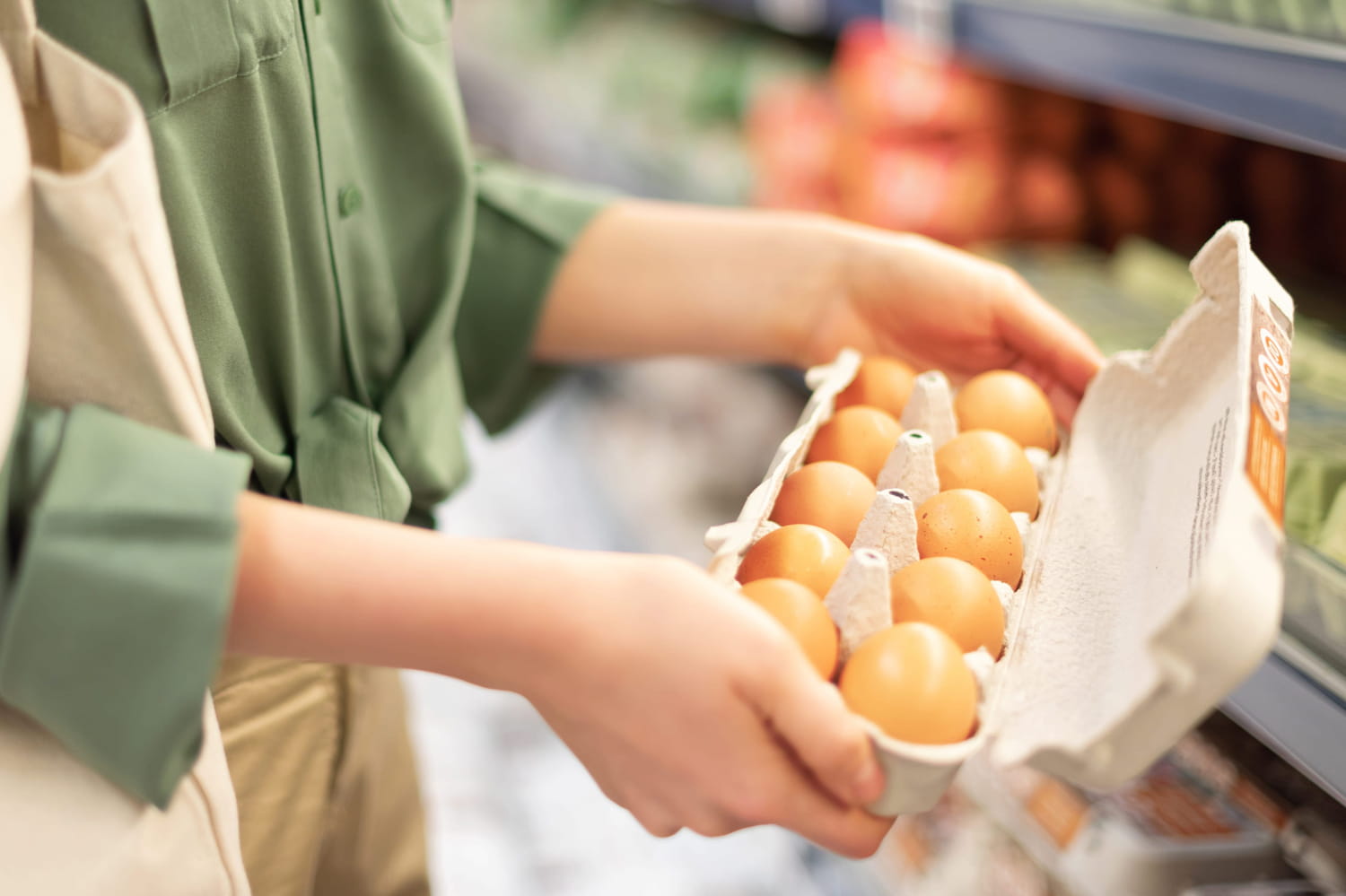
Rich in protein and essential for a balanced diet, eggs are good… but we eat so many of them that France has to import them. Here’s how to spot them.
The French are consuming more and more eggs. It is an inexpensive food in a context of inflation and excellent for your health (even when you have cholesterol). It provides many essential nutrients for fitness, including proteins. Result of this craze: French production can no longer keep up, which creates supply tensions in supermarkets. Who hasn’t found their egg aisle almost empty lately?
France is a very large producer of eggs – it is even number 1 in Europe – but it no longer fully covers its needs. Therefore, it must import eggs from its European neighbors. These eggs come mainly from Spain – the leading supplier – but also from Germany, the Netherlands, Poland and Portugal. Imported eggs are not necessarily seen on the shelves. A large part is used in the food industry (cakes, prepared meals, etc.) and catering. It is therefore rare for consumers to see eggs sold under brands other than the famous French producers Matines, Lustucru, Cocorette or even the distributor brands. But it’s possible. Virginie discovered it while shopping on Sunday May 3 in her Leclerc store.
“Going to the egg section, I headed as always towards the “Outdoor” products and there, I noticed a box with an inscription in another language “Matinados”. I opened the box to check the category of the egg and it was written “1PT” instead of “1FR” like on French eggs. That’s when I understood that these eggs did not come from France but from Portugal. I had never seen them before” she tells the Journal des Femmes. The young woman put this box down to favor a French producer. Are eggs from a European country other than France less good for your health?
No, an egg imported from a European neighbor is no less good for your health than a French egg. Within the European Union, the rules are harmonized, including for countries like Portugal. Farming and marketing conditions are regulated by the European Commission, with health controls based on the opinions of the European Food Safety Authority. In France, these rules are verified by the DGCCRF and relayed by the Ministry of Agriculture. This framework guarantees the same level of food safety, whatever the origin. What can vary are the farming methods: organic (code 0), free range (code 1), on the ground (code 2) or in cages (code 3).
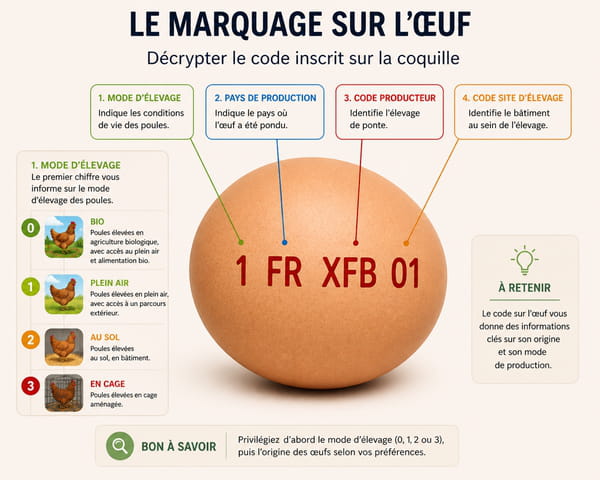
The most reliable marker remains this code written on the egg. An imported free-range (1) or organic (0) egg will often be a better choice than a caged egg (3) produced in France. Just after this code appear the first two letters of the country of origin of the egg: FR for France, ES for Spain, PT for Portugal, DE for Germany, NL for Netherlands or even PL for Poland.
But with equal codes, it is better to choose French eggs. First, this guarantees better freshness: a shorter circuit reduces transport time. Then, this supports the local sector in a context where French breeders are struggling to keep up with demand. Finally, readability: the origin is often clearer and the specifications (Label Rouge, French organic) more familiar.