




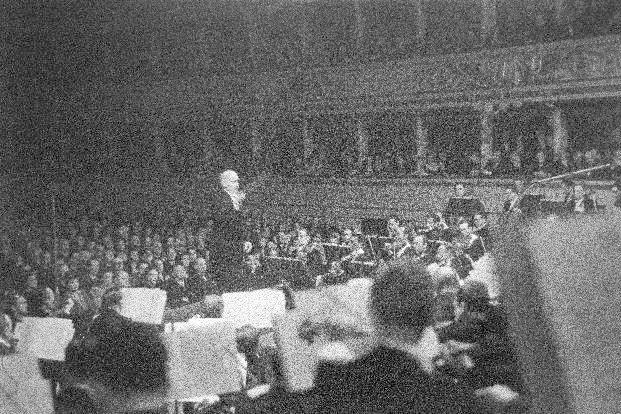
Less than three years. From the bombings in August 1943 to the reopening in May 1946. The “rush” to rebuild La Scala is incomprehensible if you don’t go in depth to understand what this theater means for Milan and the Milanese. “La Scala must be rebuilt as it was, where it was and immediately”, was the imperative that the Milanese administration had given itself. So it was decided, so it was done. On 11 May 1946 the triumphal return of Arturo Toscanini accompanied the reopening of the theater with a historic concert. Eighty years later we return to that event in our minds accompanied by superintendent and artistic director of the Scala Fortunato Ortombina.
According to an anecdote attributed to Winston Churchill, when asked to cut funding for arts and entertainment to support the war effort, he replied: “So what are we fighting for?”. Is this the mentality that led to the reopening of La Scala?
«Absolutely yes. We must all still be grateful today for that choice which was made first by the Municipality of Milan, then with the approval of Alcide De Gasperi and the central Government. We were only 20 days away from the referendum that would have asked Italians to choose between monarchy and republic, and the rebuilding of this symbol shortly before was a unifying factor. It was not only an event of architectural and functional significance within a community, but a great sign for the future of culture.”
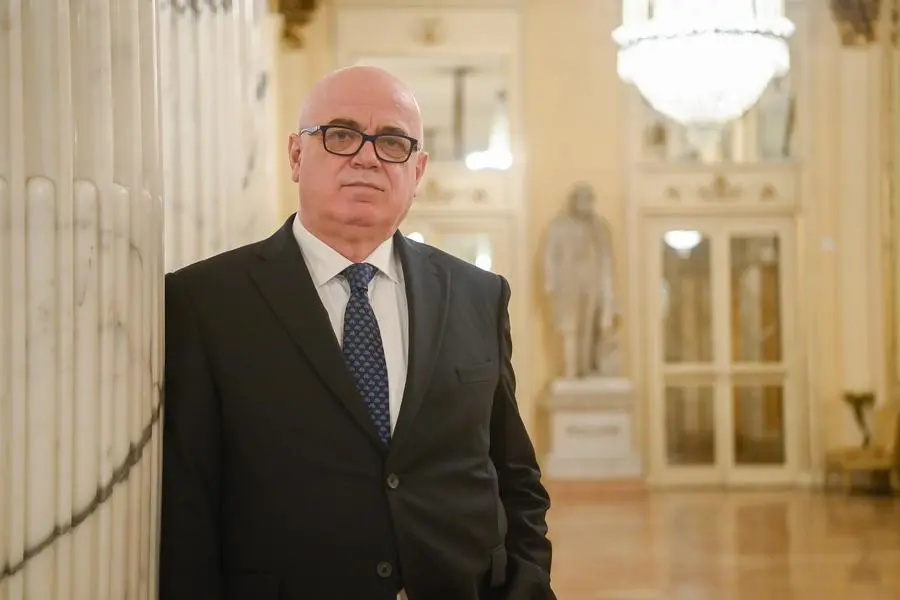
Why give priority to La Scala over other city services, undoubtedly creating a sacrifice?
«The civilization of that time, of this city and of the Government, deemed it worth it and I, personally, am almost moved by the idea of that decision: when you are faced with such a test, you have to ask yourself every day whether you deserved this sacrifice or not. I think I can say that the Milanese and non-Milanese welcomed in Milan deserved this enormous sacrifice. And Toscanini’s return is clearly the completion of a circle in history.”
In fact, we come to the day of the concert. Toscanini was the most famous Italian conductor at that time, but the motivation for his appointment was also political.
«Toscanini was perhaps the quietest anti-fascist of all, in the sense that no one dared to persecute him. After the “Bologna slap” the Duce ordered not to touch him. This also gives us a sign of the sovereignty of music, of Italian opera in particular. Toscanini felt his role as conductor with a great sense of political responsibility and immediately demanded that the figures who had been removed by the racial laws be reinstated and be present for that occasion. The maestro has always been linked to Milan, he lived in via Durini where there is still a plaque at the house number: “Arturo Toscanini lived and worked in this house from 1909 to 1957 in the name of music and freedom”. Then, we talk about May 11th, but May 11th overshadows everything that had been thought of…”.
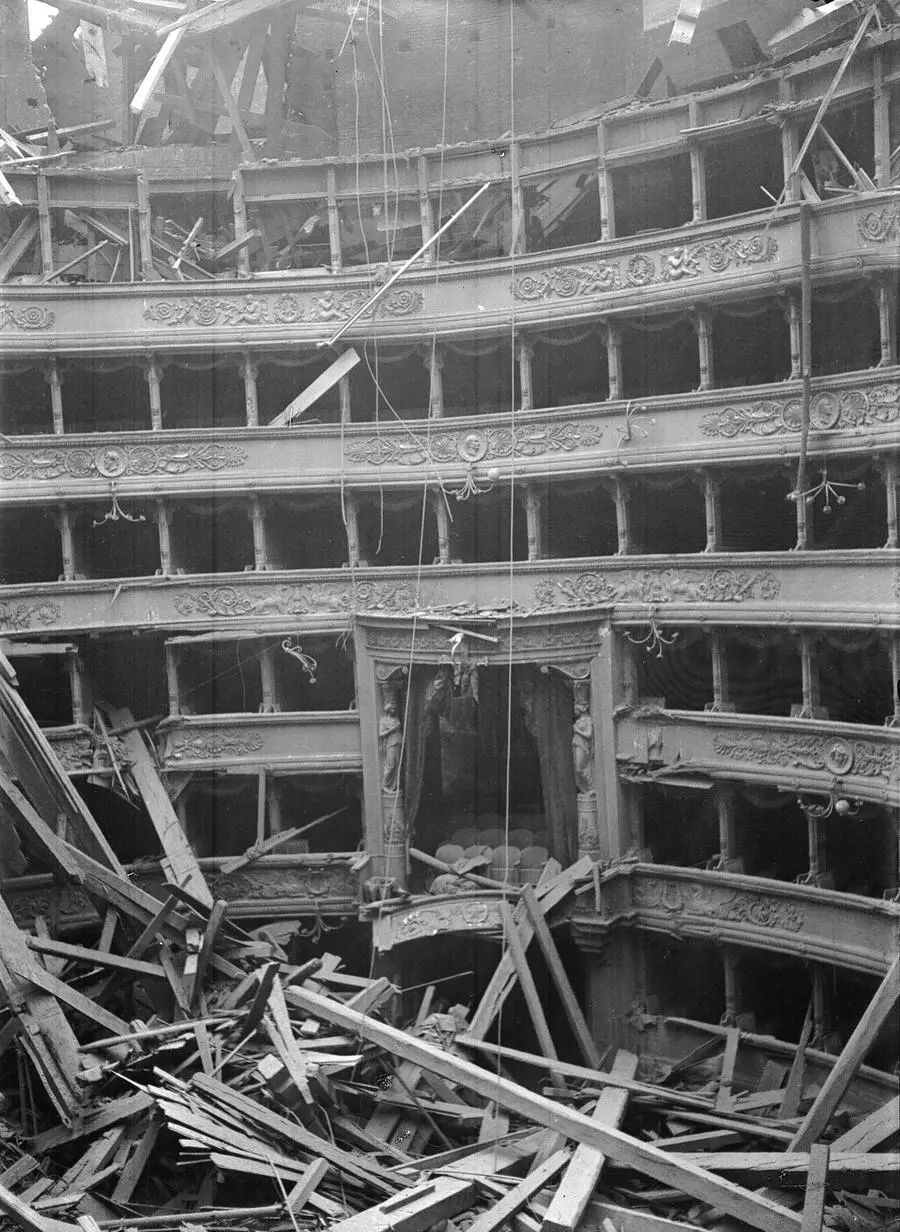
La Scala destroyed by the bombings of August 1943 (Publifoto/Olycom)
Didn’t that concert exhaust the celebrations?
«No, a festival was planned with seven programs – Toscanini directed five – which ended in late June, with each program being repeated several times, and every time it was a huge crowd. They didn’t just think of May 11th as a date on which everything would run out, they wanted to ensure that everyone could witness this miracle of La Scala “resurrecting”, as the Corriere della Sera wrote on the front page. Once Fedele Confalonieri, who was 9 years old at the time of the concert, revealed to me a fact that no one had passed on.”
Which?
«That, in addition to the audience in the theater, behind the scenes they had placed rows and rows of chairs for a few hundred spectators who could listen without seeing. His father had managed to get two seats back there and he went to listen to the concert. Precisely between the length of the initiative, the innovative programs – the world premiere in Italy of An American in Paris, for example – and this fact of the audience behind the scenes make us understand that La Scala was resurrected to look into the future. As he always had.”
This building is also taken as a symbol of the city. Why does a theater have such a predominant role in Milan?
«Things never happen by themselves in history. When someone asks me “but why is La Scala La Scala?”, I reply: “Because La Scala is in Milan”. It had been built by will of Maria Teresa of Austria, but following the cultural push of the Milanese enlighteners which the empress certainly had to take into account. And then Milan with La Scala equipped itself with what was the largest public theater in the world, which could accommodate 3 thousand people. La Scala lives in the lifeblood of Milan and Milan truly feels La Scala is everyone’s home and it is a mutual living and feeding each other as the expression of the other”.
Returning to the present day, the next season will open with a new musical director, Myung-Whun Chung. Chailly leaves the direction but remains for future collaborations. A change in the name of continuity?
«The musical director changes, but, for the first time in the history of La Scala, whoever leaves maintains a relationship with the theatre. This happens due to the desire to try to pursue continuity, with the highest quality. Moreover, the choice of maestro Myung-Whun Chung is already in the sign of continuity, who, as a non-musical director, is the one who has conducted the La Scala orchestra most often. It is a very long relationship with this orchestra born in the late 1980s and with a wide repertoire. And I believe Chailly’s collaboration will be good for the theatre, the orchestra, the city.”
Three days of celebrations
The anniversary of the reopening is celebrated with three days of initiatives. Saturday 9 May at 3pm the exhibition opens in the Toscanini Ridotto 1946, La Scala is reborn – The reconstruction of the Theatre, the City, the Countrywhich documents the journey from the bombings to the reconstruction until Toscanini’s return. Sunday 10 May at 2pm maestro Riccardo Chailly will open the general rehearsal Nabucco to students. The inauguration of Marco Lodola’s installation is scheduled for 8.30pm Notes of lighta project that blends contemporary art, historical memory and musical tradition. The celebrations will culminate Monday 11 May at 12 with a public ceremony attended by the mayor Giuseppe Sala, the superintendent Fortunato Ortombina, the senator Liliana Segre and the musical director Riccardo Chailly, who will conduct the orchestra and choir in excerpts from Nabucco by Giuseppe Verdi. The ceremony will be open to citizens upon registration on the Theater website.