





Regularizing half a million invisible people: this is the challenge that Spain has decided to face, amid hopes and political tensions. The government led by Pedro Sánchez has started an extraordinary procedure that could change the lives of around 500 thousand migrants who are currently without documentsbut the path is proving to be complex and controversial.
The heart of the measure is simple in its ambition: to transform those who already live and work in the country into citizens with rights. To do this, Madrid has provided a procedure that allows you to obtain a residence and work permit by demonstrating that you have been present in Spain for some time and that you have no relevant criminal record. Once the application has been submitted, any expulsion procedures are suspended and provisional authorization can be obtained.
But the reality, as often happens, is more complicated.
The knot of bureaucracy
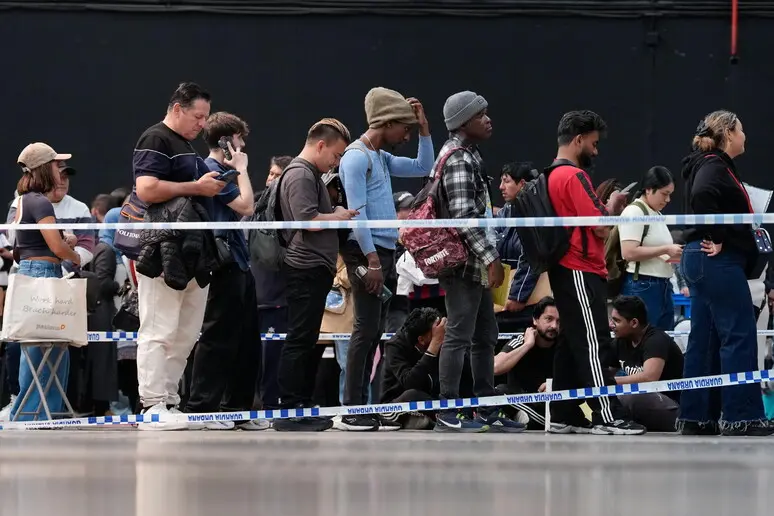
The most critical point has become a document: the so-called “vulnerability certificate”, necessary to access the procedure. This is where the system broke down. In many cities, long queues formed in front of municipal offices and social organizations responsible for issuing it.
The result is a paradox: a measure designed to simplify risks producing new administrative precariousness. Thousands of people, despite having the requirements, remain stuck waiting for a document that certifies their fragility.
Yet, despite the difficulties, requests are arriving in droves: over 130 thousand in the first days, with estimates aiming to exceed 500 thousand.

A divided society
Regularization is not just an administrative issue, but a political and cultural one. Spanish society appears divided: around a third are in favour, another third against, while a significant share remains uncertain.
The criticism comes mainly from right-wing parties, who speak of a risk for public services and “magnet effect” for new migratory flows. There is no shortage of institutional appeals and attempts to block the provision in the courts.
On the other hand, the government and a vast network of associations, unions and ecclesial bodies defend the measure as an act of realism: these people already live in Spain, often work illegally and contribute to the economy without rights.
A question of dignity
For many migrants, regularization represents an existential turning point. “Having documents saves our lives,” some of them say, summarizing a condition of precariousness, irregular work and constant fear.
What is at stake is not only economic, but human: emerging from invisibility means being able to access care, regular contracts, education, family reunification.

A laboratory for Europe
The Spanish case reopens a broader question: is it possible to govern immigration only with controls, or are structural integration tools also needed?
Regularizations are not new in Europe, but they remain extraordinary measures, often criticized because they are considered emergency. However, many experts point out that ignoring the presence of hundreds of thousands of people without legal status produces more problems than solutions: illegal work, exploitation, social marginalization.
In this sense, Spain is attempting a political and social experiment that could set a precedent, or become a warning.
Because the real question remains open: is making the invisible visible an act of government or a surrender to reality?