



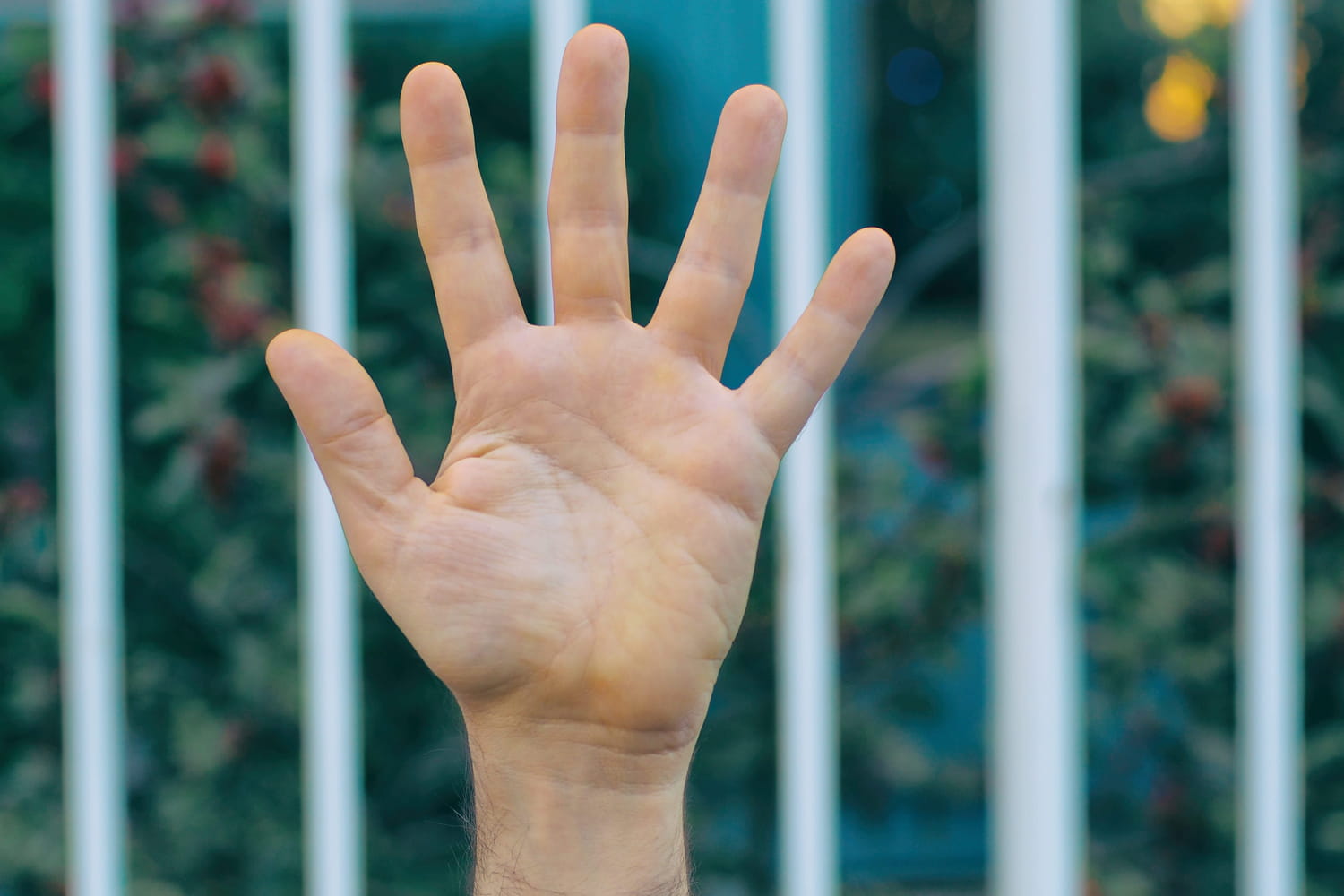
Why are 90% of the Homo sapiens species right-handed? An Oxford study upends theories of biological evolution about our manual preference.
Nine out of ten people in the world favor their right hand. This biological phenomenon is found in all cultures and on all continents. And yet, no other primate than man shows such a marked preference across its entire species. Why is Homo sapiens an exception? A study conducted by the University of Oxford and published in PLOS Biology provides an unexpected answer.
Dr. Thomas Püschel and his team analyzed data from 2,025 individuals belonging to 41 species of monkeys and great apes. The researchers reviewed all the major hypotheses put forward so far: use of tools, diet, body size, social life, brain volume and even mode of travel. Their conclusion: neither tools nor group life alone explain our massive preference for the right hand. “Our results suggest that it is likely linked to two of the things that make us human.”explained Dr. Püschel.
The first fundamental characteristic: “walking upright (on two legs, editor’s note)”. The researchers propose a two-stage scenario. By standing up on both legs, our ancestors freed their hands from walking, allowing more precise gestures and a progressive specialization of one hand (right in this case) in relation to the other. Then, with the increase in brain size (second important characteristic), this preference for the right would have strengthened until it became almost universal. If 90% of humans are right-handed today, this would be directly linked to the way our ancestors learned to walk. The 10% of left-handers are thus an exception.
Our early ancestors, such as Ardipithecus or Australopithecus, probably had only a slight right-wing preference, comparable to that observed in today’s great apes. This trend would strengthen with Homo erectus then the Neanderthals, before reaching its current level among Homo sapiens. Interesting case: Homo floresiensis, the famous “hobbit” discovered in Indonesia, had a small brain and still partially walked on four legs. His manual preference would have been much less marked, which reinforces the researchers’ theory. “This is the first study to simultaneously test several major hypotheses about hand preference in a single setting,” underlines Dr Püschel.
Questions remain open: why did left-handers persist despite everything? Has human culture further accentuated this tendency? And why do certain species, such as parrots or kangaroos, also show lateralized preferences? The Oxford team already has new avenues to explore.