




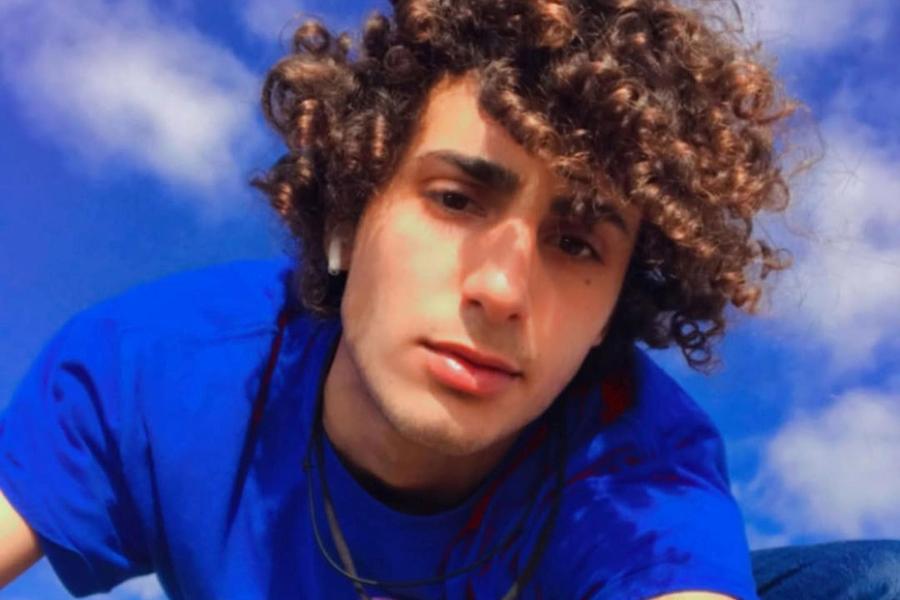
There are wounds that never heal completely. And there are pains that, instead of turning into hatred, become testimony to humanity. It is the story of Davide Cavallo, the 22 year old boy stabbed during a robbery in Corso Como, in Milan, on the night of 12 October 2025.
A very violent attack, carried out for just fifty euros, which caused him “very serious damage and a permanent disability that will change every future day”, as his father writes Except Horse in an intense and moving letter delivered to the press through the lawyer Luca Degani.
In recent days the Court of Milan has condemned Alessandro Chiani was sentenced to twenty years and ten months for attempted murder, while Ahmed Atia was convicted of manslaughter. But what was most striking, inside and outside the courtroom, was the gesture made by Davide immediately after the sentence: the young man approached his attackers and hugged them.
A gesture that finds its deepest meaning precisely in the father’s words. «Davide chose to speak to the defendants, and they apologized with sincere and profound words. In that moment I saw my son free himself from an enormous burden”, writes Salvo Cavallo, “On the judicial level, I would first of all like to thank the police forces, the investigators and the judiciary: they worked with great professionalism to identify those responsible and carry out a serious and rigorous judicial process”.
And again: «I have profound respect for the sentence and for the work of the judge who, evaluating facts, evidence and responsibility and applying the penal code, issued a severe decision, also as a warning and deterrent so that similar wicked acts are never repeated.”
Clear words, which do not erase the immediate evil. Because the drama remains all, in the daily suffering of a boy whose life has changed forever and in the struggle of a family called to reinvent the future: «The care, the assistance, a home suited to his conditions, the support that will be needed over the years: all this will involve enormous human, psychological and economic sacrifices», writes Davide’s father, “Our greatest concern is to guarantee him a dignified life even when we parents can no longer be at his side.”
Within these lines we can feel the concrete weight of disability, but also the silent fear of many parents who wonder about “after us”. Yet, right in the heart of this pain, the Cavallo family chooses not to stop at anger: «Forgiveness does not erase the harm suffered, it does not restore lost health and it does not eliminate responsibilities. But it prevents hate from continuing to destroy more lives and generate more pain.”
This is perhaps the strongest passage in the entire letter. A message that goes beyond the private dimension alone and challenges the whole of society. For Salvo Cavallo, in fact, what happened to his son cannot remain just a page of judicial news: «This affair cannot remain just a judicial news story. It can and must become a collective reflection.”
Davide’s father thus recalls the responsibility of families, schools, institutions and the adult world in the face of the growing discomfort of many young people: «I hope that it can open a serious discussion between children, families, teachers and institutions on the profound reasons for such senseless violence: emotional distress, the inability to manage emotions, isolation, certain aggressive models also fueled by social media algorithms and pack culture».
Words that touch on central themes of our time: relational fragility, loneliness, educational difficulties, the climate of aggression that runs through many existential and urban peripheries. But in the letter there is also space for a concrete reminder about safety: «We need to truly listen to young people, but we also need more concrete security: more patrols in the area, more checks and more cameras to discourage those who bring weapons into our cities.”
Finally, the brightest image remains that of Davide. A boy wounded in the body, but capable of a gesture that shocked everyone: «Davide is leaving footprints of a forgotten humanity, and as a father I can only be immensely grateful and happy».